
Fast, Reliable Attic Insulation Across Compton
Attic insulation in Compton usually costs between $1,800 and $4,500 for a full replacement in a typical stucco bungalow, with most jobs finished in a single day. We work across 90220, 90221, 90222, and 90223, from the blocks off Rosecrans Avenue to the neighborhoods north of Artesia Boulevard. If your attic hasn’t been touched since the house went up, call us at (877) 521-4987 and we’ll come measure, inspect the venting, and give you a straight answer on what needs to happen first.
Compton’s housing stock is different from what you’ll find in Carson or Gardena. Most of these homes were built between the 1920s and the 1960s, low-pitch roofs, stucco exteriors, and attic spaces that were barely vented when they were framed. That changes how we approach the work. We’ve spent enough time in attics across Compton to know that half the job is often correcting what was never done right in the first place.
Why Porch Light Insulation Is Compton’s Preferred Attic Insulation Company
We’re insulation specialists, which means we don’t split our attention between roofing, HVAC, and whatever else walks through the door. Insulation is all we do, which means it’s all we’ve mastered. When a homeowner in Compton asks us whether blown-in fiberglass from GreenFiber or a closed-cell spray foam from Demilec makes more sense for their roof pitch and venting situation, they’re getting an answer based on building science, not on what we happen to have sitting in the truck.
Gil Tanner leads our crew, and his approach is simple: match the material to the home, not to our inventory. That matters in Compton, where a 1948 bungalow near Compton Boulevard and a 1960s ranch tract off Long Beach Boulevard need completely different treatments. We carry products from eight manufacturers, including Owens Corning, Johns Manville, and Demilec, so we’re not steering you toward the highest-margin option. We’re choosing what actually fixes your summer heat problem.
The team at Porch Light Insulation knows that Compton homes are full of surprises: painted-shut gable vents, collapsed batts from the Eisenhower administration, knob-and-tube wiring in the oldest blocks. Those aren’t problems to work around. They’re the job. Our Attic Insulation team has handled enough of them that we can usually tell you what we’ll find before we even get the ladder off the truck.
Attic Mold Removal in Compton
Attic mold removal in Compton is a job we see frequently in older low-pitch homes where the venting was never opened properly. When warm, moist air from the living space drifts up into an unvented attic and has nowhere to escape, condensation settles on the underside of the roof sheathing. Over a few Compton summers, that turns into mold growth. Removing the visible mold is only half the fix; if we don’t correct the ventilation, the mold returns. Typical mold remediation in a Compton attic runs $1,200 to $3,000 depending on the size of the affected area and whether the insulation itself is contaminated and needs to come out.
When Remediation Is Needed Before New Insulation
Painted-shut vents and decades of trapped humidity create consistent moisture on the roof deck. We inspect for mold before any new insulation goes in; burying mold under fresh batts doesn’t kill it, it just hides it. If the contaminated area is small and the moisture source is corrected, we can treat it and move forward. If the mold is widespread or the insulation is saturated, the old material has to come out first.
Remediation and Vent Correction Together
We don’t do mold removal as a standalone service without addressing the airflow problem. In Compton’s low-pitch stucco homes, that usually means opening the original vent openings, adding soffit intake where none existed, and installing baffles to keep the new insulation from blocking airflow. It’s the only way to keep mold from coming back.
Attic Insulation Removal in Compton
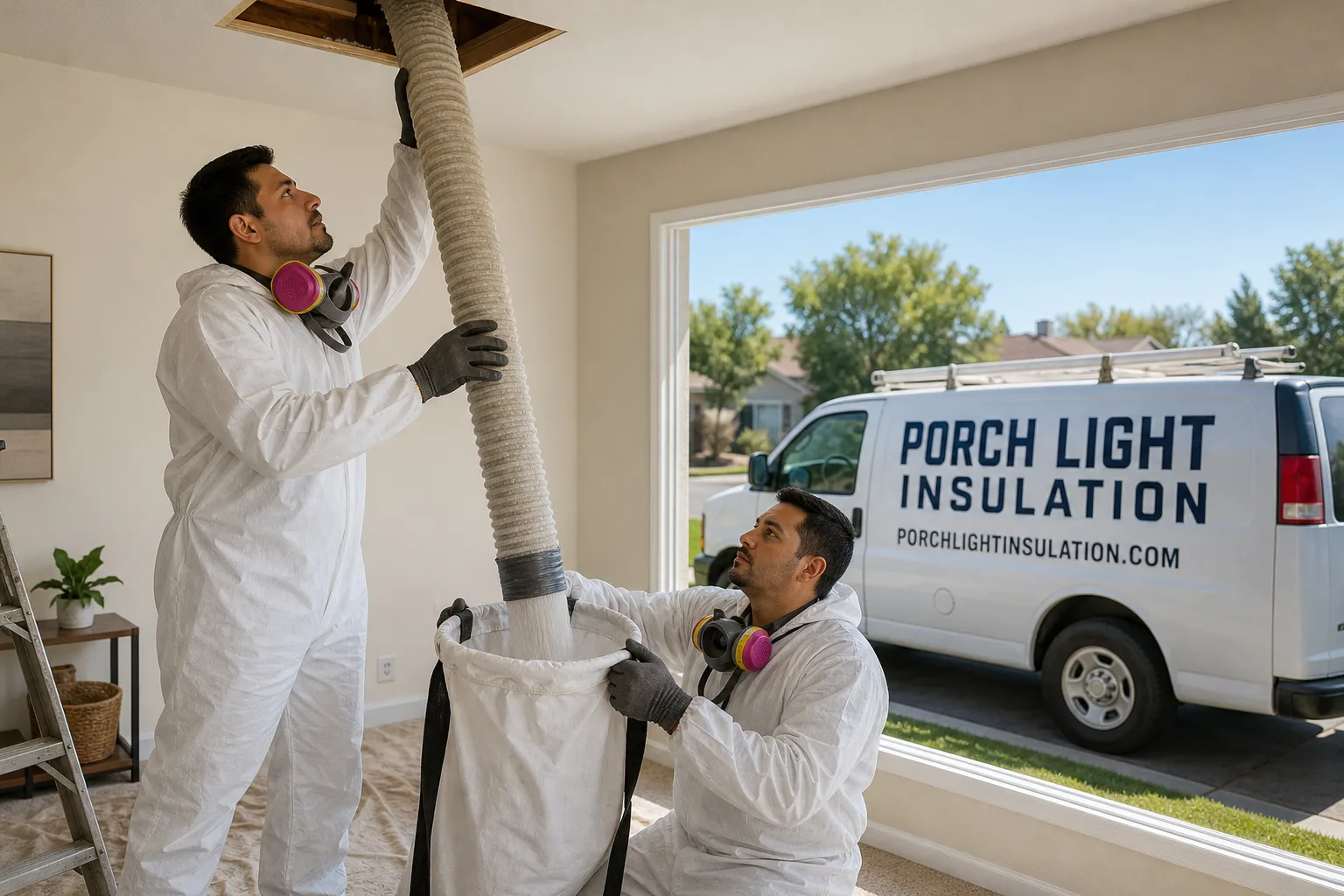
Attic insulation removal in Compton is often the necessary first step before a proper upgrade, especially in pre-1960 tract homes. We frequently pull out original rock wool or fiberglass batts that have collapsed to an inch thick, mixed with rat droppings, dust from decades of smog drift, and sometimes the remnants of knob-and-tube wiring. Full removal for a typical 900-square-foot attic in Compton runs $1,500 to $3,000, including bagging, HEPA vacuuming, and disposal. It’s not glamorous work, but skipping it means installing new insulation on top of a contaminated, underperforming base.
Aging Material and Air-Leak Sealing
Old insulation that’s compressed or torn doesn’t insulate much. Removing it lets us see the actual ceiling plane, seal around light fixtures, plumbing penetrations, and the top plates of interior walls, and then install fresh material at full depth. Air sealing is where most of the cooling-cost improvement actually comes from. In Compton’s summer heat, an unsealed attic leaks conditioned air constantly.
Knob-and-Tube Wiring Complications
In the oldest Compton blocks, we still find knob-and-tube wiring running through attic joists. Laying insulation directly over live knob-and-tube is a code violation and a fire risk. Our crew knows how to identify it, coordinate with an electrician, and plan the insulation install around the wiring. We won’t bury it and call it done.
Trusted Brands We Service in Compton
Porch Light Insulation is authorized to install products from eight leading manufacturers, which means we’re not locked into one brand’s limitations. For Compton’s low-pitch, difficulty-to-vent attics, we often recommend Owens Corning fiberglass batts for their consistency and availability. For homeowners who want air sealing and insulation in one pass, closed-cell foam from Demilec makes sense. Johns Manville loose-fill works well for attics with irregular joist spacing, which shows up constantly in older Compton construction. Eight manufacturers, one goal: the right fit for your specific situation.
Common Attic Insulation Problems We See in Compton Homes
- Painted-shut or undersized attic vents. Decades of exterior repainting leaves gable and eave vents sealed. Heat builds past 140°F in summer and any new insulation traps moisture instead of shedding it.
- Collapsed original insulation. A 1950s ranch tract off Long Beach Boulevard might still have the original rock wool installed when the house was built, now compressed to a fraction of its rated R-value.
- Knob-and-tube wiring in the attic. The oldest bungalows near downtown still have active or abandoned knob-and-tube. It complicates removal and re-insulation, and it can’t just be covered over.
- No air sealing between the living space and the attic. Holes around ceiling fixtures, unsealed wall top plates, and open plumbing chases let cooled air pour into the attic all summer. Insulation without air sealing is a half-fix.
Pricing for Attic Insulation in Compton, CA
A full attic insulation replacement in a typical Compton stucco bungalow runs $1,800 to $4,500 depending on the attic’s square footage, accessibility, and whether the old material needs to come out first. Attic Insulation Top-Up, where we air-seal and blow additional loose-fill over existing material, typically runs $900 to $1,800. Attic baffles and ventilation prep add $300 to $700 when the existing vents need correction. Blown-in installation in Compton averages $1.50 to $2.75 per square foot. Call (877) 521-4987 for a free estimate; we’ll give you written line items, not a vague number.
We Also Serve Cities Near Compton
If you’re just outside Compton in East Rancho Dominguez, West Rancho Dominguez, or parts of Carson and Gardena, we make the short drive regularly. Our Attic Insulation in Compton schedule routes us through the surrounding neighborhoods weekly. The same venting issues we see off Alameda Street show up in every postwar stucco tract around here.
Serving Compton, CA — Our Local Coverage Area
We’re based in the Compton area and know this community well. Use the map below to see our service coverage — if you’re nearby, we can almost certainly help.
FAQs About Attic Insulation in Compton
Compton’s older stucco bungalows were built with minimal attic venting, and years of exterior repainting have sealed many of the original gable and eave vents shut. If we add insulation without opening those vents, the attic runs hotter than before and moisture gets trapped against the roof sheathing. Vent correction first is the only sequence that actually lowers summer cooling costs. Call (877) 521-4987 and we’ll inspect the venting as part of the free estimate.
Yes, but we handle it carefully. We identify the wiring before removal starts, coordinate with a licensed electrician if needed, and design the new installation to keep any live knob-and-tube clear of contact with insulation. It adds time and coordination, but it’s the only code-safe way to do the job in Compton’s oldest homes.
For Compton’s inland heat, we recommend materials that hold their R-value without sagging. Owens Corning fiberglass batts and Johns Manville loose-fill both perform well in hot attics. Where air sealing is the bigger issue, closed-cell spray foam from Demilec handles both insulation and air infiltration in one application. The right choice depends on your roof pitch and venting, not on what’s popular.
Mold removal comes before any new insulation, every time. In a Compton attic with painted-shut vents, the mold is a symptom of the airflow problem. We remove the mold, correct the venting, and then install the new insulation. If you skip the mold step, you’re sealing the problem into the attic.
Many Compton homeowners fall within Southern California Edison territory and may qualify for energy-efficiency rebates on attic insulation upgrades. The specific rebate amounts change, so we recommend checking SCE’s current program details or asking us during the estimate. We’ll point you toward the programs that apply to your house.
Written by Gil Tanner, Owner at Porch Light Insulation, serving Compton since the company’s founding.
Ready to get your Compton attic working right? Call us at (877) 521-4987 for a free, no-pressure estimate. We’ll inspect the venting, measure the space, and give you a written plan with real numbers.