Fast, Reliable Attic Insulation Across North El Monte
If you live in North El Monte, you already know what July and August feel like inside a 1950s tract home. Attic insulation in North El Monte needs to solve two problems at once: heat pouring down through the ceiling and aging, settled batts that stopped doing their job years ago. Porch Light Insulation works in the 91780 zip code every week, and our crews know exactly what these houses hide above the drywall. Attic Insulation is all we do, so the quote you get reflects what’s actually in your attic, not what a general contractor hopes is there. Call (877) 521-4987 for a free estimate, and we’ll walk your attic before we price a thing.
Why Porch Light Insulation Is North El Monte’s Preferred Attic Insulation Company
North El Monte’s housing stock is uniform in ways that make insulation work predictable, and that predictability is exactly why homeowners call us. The post-WWII single-story stucco tracts off Peck Road, Doreen Avenue, and Rio Hondo Parkway were built fast with 2×4 ceiling joists, shallow roof cavities, and whatever insulation was cheapest in 1956. Gil Tanner, who runs Porch Light Insulation, built the company around one trade for this reason: an insulation specialist sees a 16-inch-on-center 2×4 attic and knows the R-38 batt quote someone got over the phone is worthless. We don’t split our time between roofs, HVAC, and insulation. Our estimators and installers study your attic cavity, your ventilation, and your air-sealing gaps before recommending a product. That’s why North El Monte homeowners keep our number.
We carry products from eight manufacturers: Owens Corning, Johns Manville, Knauf, Rockwool, CertainTeed, Icynene, Demilec, and GreenFiber. That range means the material gets matched to your home, not to what we have in the warehouse. If your shallow joist bays need blown-in fill, we quote GreenFiber. If you want fire resistance and sound deadening between rooms, Rockwool batts are on the table. We’re the only insulation contractor covering North El Monte that can put a closed-cell spray foam quote and a blown-in quote side by side and explain the tradeoffs honestly.
Attic Ventilation in North El Monte
Attic Ventilation in North El Monte is the difference between insulation that lasts 20 years and insulation that cooks apart in three. On a summer afternoon in the San Gabriel Valley, attic temperatures inside these 1950s and 1960s tract homes routinely climb past 140°F. Without proper airflow, that heat has nowhere to go. It bakes the underside of your roof sheathing, degrades fiberglass batts, and pushes heat down through the ceiling into rooms that should have been cooled by your insulation in the first place.
Clearing Choked Vents and Undersized Soffit Runs
Homes built between 1950 and 1970 in North El Monte were often vented with short soffit runs and a couple of static roof vents that haven’t been touched since installation. Over decades, dust from the San Gabriel Valley, rodent nesting, and blown-in insulation drift clog those openings. Our crews start ventilation work by checking what’s actually moving air. Then we clear or replace what’s blocked.
Prepping Baffles Before Blown-In Fill
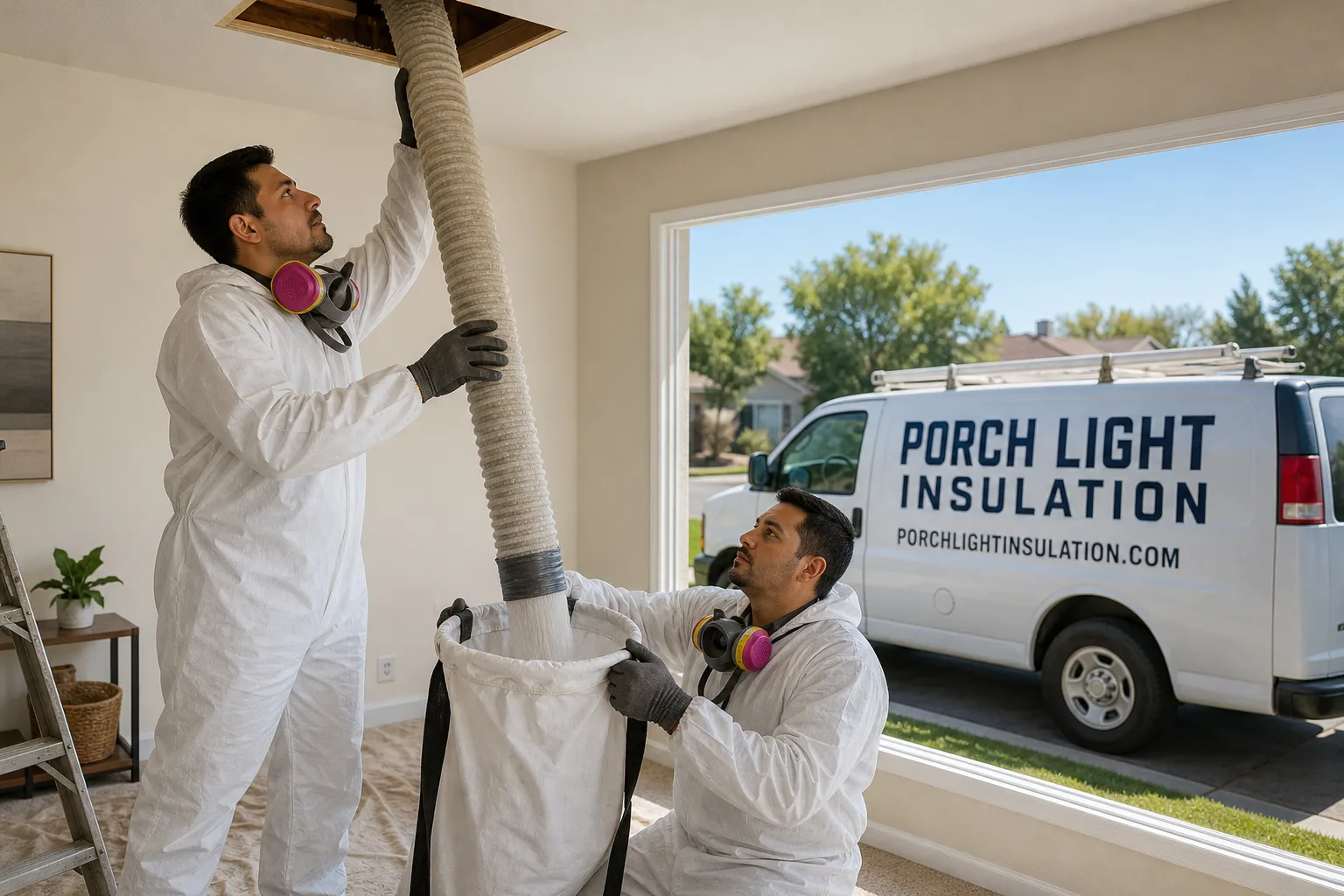
This step gets skipped by every cut-rate estimate, and it’s the one that determines whether your new blown-in insulation performs. In a 2×4-framed North El Monte attic, baffle installation keeps eave vents open and channels airflow from the soffit up through the roof. Without baffles, loose-fill gets pushed into the eaves and chokes your intake air. We install baffles and air-seal the top plates before a single bag of GreenFiber goes in.
Radiant Barrier in North El Monte
Radiant Barrier in North El Monte is not a replacement for insulation. It’s a layer that reflects radiant heat back toward the roof instead of letting it radiate down into the attic and through the ceiling. Given how hot these attics get, and how shallow the 2×4 ceiling joist cavities are, a radiant barrier often makes more difference for summer comfort than another layer of fiberglass. We install it on the underside of the roof decking or across the attic floor, depending on the attic layout and whether the space is used for storage.
Pairing Radiant Barrier With Blown-In Fill
A North El Monte attic with 2×4 joists will never hold enough R-value to match a modern 2×10 or 2×12 ceiling cavity. That’s a framing fact, not an insulation failure. Radiant barrier picks up the slack. It cuts radiant heat gain before it reaches the insulation, so the blown-in fill you do have works at a lower starting temperature. On the homes we’ve done near Peck Road and Santa Anita Avenue, the combination of GreenFiber blown to depth plus a radiant barrier keeps upstairs rooms five to ten degrees cooler than insulation alone.
When a Radiant Barrier Is a Better First Step Than New Insulation
Some North El Monte attics still have original fiberglass batts that have settled but not been rodent-compromised, making them candidates for Reflectix repair in North El Monte rather than full replacement. In those cases, adding a radiant barrier before ripping out old material can drop indoor temperatures enough that a full replacement can wait. Our estimators will spend time in your attic and tell you what’s actually worth doing now. We match the material to your home, not to the job we’d prefer to sell.
Trusted Brands We Service in North El Monte
We’re authorized to install products from Owens Corning, Johns Manville, Knauf, Rockwool, CertainTeed, Icynene, Demilec, and GreenFiber. What that means for North El Monte homeowners is practical: if your attic calls for blown-in cellulose because the joist bays are shallow and the bays are irregular, we quote GreenFiber. If your priority is sound attenuation between bedrooms or increased fire resistance, Rockwool mineral wool goes on the quote. If you want air sealing plus high R-value in one application, Demilec and Icynene closed-cell or open-cell spray foam are options. No other Attic Insulation contractor serving 91780 carries that spread of product lines. We stock common materials locally and can typically have specialty products on site within days, not weeks.
Common Attic Insulation Problems We See in North El Monte Homes
- Settled, rodent-tunneled fiberglass batts. The original 1950s and 1960s batts in North El Monte attics have compressed to half their labeled depth in most homes. Rodents tunnel through them, leaving bare drywall that radiates attic heat straight into bedrooms.
- Crushed R-38 batts in 2×4 cavities. A standard R-38 batt is 12 inches thick. A 2×4 ceiling joist bay is 3.5 inches deep. When a general contractor stuffs R-38 into that space, the installed R-value drops to roughly R-13 or less. We see this constantly, and it’s why phone quotes without an attic inspection are wrong for this city.
- Choked or undersized ventilation. Attic temps past 140°F in the San Gabriel Valley accelerate batt degradation and warp the underlayment beneath composition shingles. Vents clogged with dust and nest debris make it worse.
- Air-sealing gaps around top plates and penetrations. The wood-frame tract homes here were never air-sealed when built. Conditioned air leaks from the living space into the attic through top plates, can lights, and plumbing penetrations all day, every day. Insulation over holes doesn’t fix the leak.
Pricing for Attic Insulation in North El Monte, CA
Attic insulation pricing in North El Monte runs on the square footage and the attic framing condition. A straightforward blown-in top-up over existing batts in a 1,200-square-foot home typically runs $1,800 to $2,600. Full removal of old fiberglass and blown-in GreenFiber to code depth usually lands between $2,800 and $4,500, depending on attic access and rodent remediation. Radiant barrier installation adds roughly $1.50 to $2.50 per square foot of attic floor. If your home is a 1950s 2×4-framed tract with shallow joist bays, expect the quote to include baffle installation and air-sealing, not just insulation depth. Call (877) 521-4987 and Gil or one of our estimators will inspect your attic in person and give you a written, line-item estimate. Estimates are free.
We Also Serve Cities Near North El Monte
Porch Light Insulation covers North El Monte and the surrounding San Gabriel Valley communities: Temple City, Rosemead, San Gabriel, and Arcadia. Same attic-era housing stock, same summer heat, same need for an insulation-only contractor who actually knows what’s above the ceiling. If you’re in one of those cities, same number applies: (877) 521-4987.
Serving North El Monte, CA — Our Local Coverage Area
We’re based in the North El Monte area and know this community well. Use the map below to see our service coverage — if you’re nearby, we can almost certainly help.
FAQs About Attic Insulation in North El Monte
Sometimes yes, but in most North El Monte attics built in the 1950s and 1960s, the answer is no, not before the old batts come out. If the original fiberglass has settled, been tunneled by rodents, or soaked up dust and moisture for 60 years, blowing cellulose over it buries the problem instead of fixing it. The dead air space in settled batts is minimal, and rodent trails leave bare channels against the drywall. We’ll open the attic hatch, look at what’s actually there, and tell you straight whether a top-up makes sense or a full removal and blow-in is the honest path. Call (877) 521-4987 to arrange an inspection.
Because your ceiling joists are 2x4s spaced 16 inches on center, and R-38 batts are 12 inches thick. A 2×4 bay is only 3.5 inches deep. When someone crams a 12-inch batt into a 3.5-inch cavity, the insulation compresses and loses most of its R-value, often dropping from R-38 to R-13 or lower. The correct fix in these homes is air-sealing, installing baffles, and blowing in loose-fill insulation to the proper depth over the joists. That’s the standard we use for North El Monte’s tract housing stock, and it’s why our quotes don’t come from a phone call.
On a 95°F day in North El Monte, a poorly ventilated attic regularly reaches 140°F to 150°F. Dark composition shingle roofs common on these 1950s tract homes absorb solar radiation all afternoon, and without working ventilation, that heat has nowhere to go. The result is accelerated degradation of fiberglass batts, warped roof sheathing over time, and heat transfer down through the ceiling that makes rooms feel 10 degrees warmer than the thermostat setting. Radiant barrier and proper attic ventilation address the heat load directly, and we include both in our recommendations for this specific housing stock.
In North El Monte’s post-WWII homes, the answer is often both, but the sequence matters. A radiant barrier reflects radiant heat before it reaches the insulation, reducing the temperature differential the insulation has to fight. Given that your 2×4 ceiling joist bays won’t physically hold as much insulation as a modern home, a radiant barrier is one of the most cost-effective comfort upgrades available here. We recommend it most often for attics with shallow cavities, dark shingle roofs, and rooms that overheat by early afternoon. Call (877) 521-4987 for an attic assessment, and we’ll lay out what each option costs for your specific floor plan.
We’re authorized to install products from eight manufacturers: Owens Corning, Johns Manville, Knauf, Rockwool, CertainTeed, Icynene, Demilec, and GreenFiber. In North El Monte’s 2×4-framed tract homes, the most common product we install is GreenFiber blown-in cellulose, because it fills shallow and irregular joist bays far better than any batt. For homeowners who want enhanced fire resistance or sound control, we quote Rockwool mineral wool. For maximum R-value per inch and air sealing in one step, Demilec and Icynene spray foam lines are available. Eight manufacturers, one goal: the right fit for your specific situation. Estimates are free, so call (877) 521-4987.
Written by Gil Tanner, Owner at Porch Light Insulation, serving North El Monte and the San Gabriel Valley since day one.