
Attic Insulation in West Hollywood: What It Costs and Why It’s Different Here
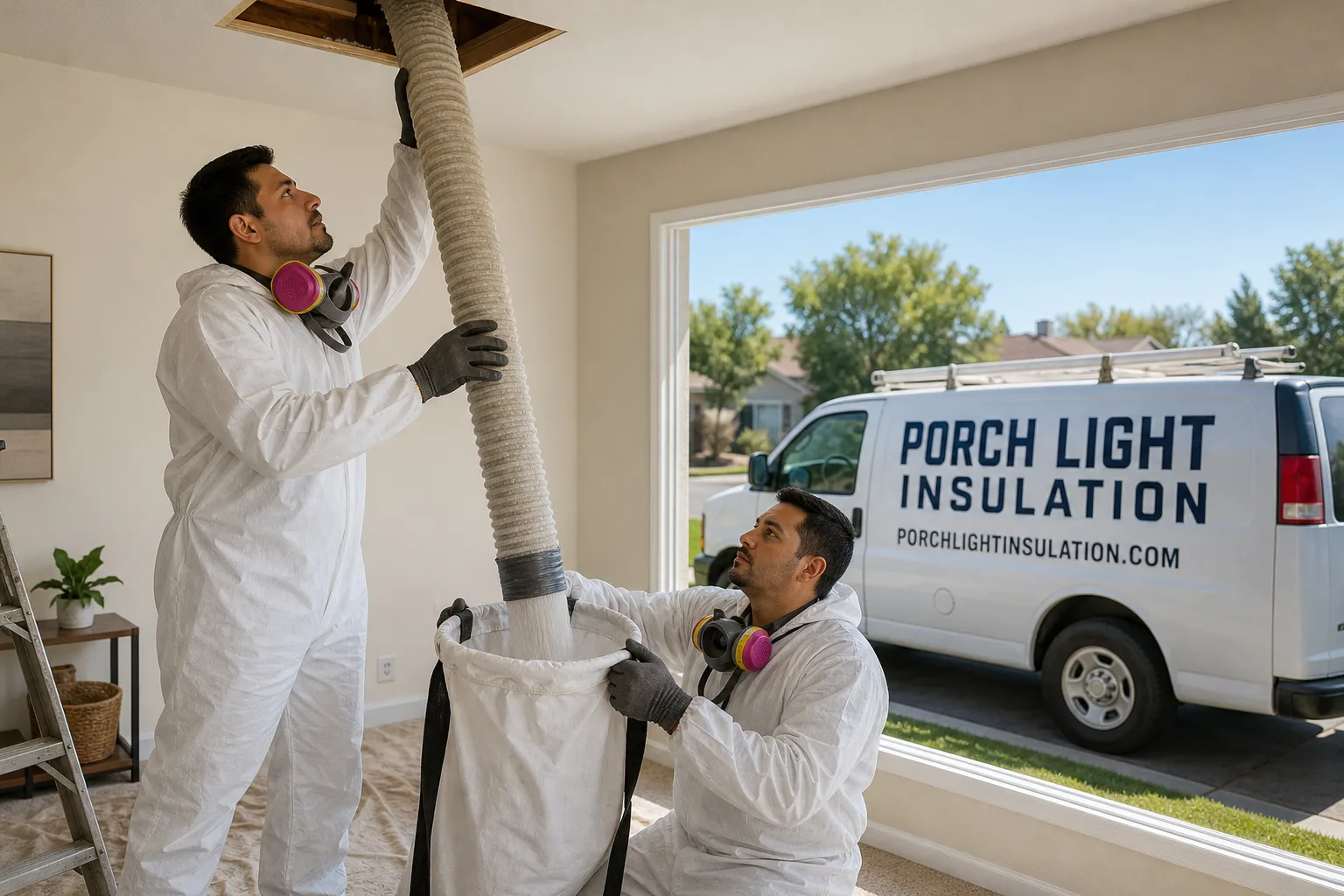
Attic insulation in West Hollywood typically runs $1,800 to $4,200 for a full retrofit on a courtyard apartment or dingbat unit, with top-ups starting around $900. Most jobs in the 90069 ZIP take one to two days, and the work is scoped differently than in single-family neighbors like Beverly Hills: here, the attic above a stacked flat isn’t just about heat, it’s about what your upstairs neighbor’s footsteps sound like through your ceiling. That shared-wall and shared-ceiling reality means sound separation gets equal billing with R-value, which is exactly how we approach every job in WeHo. Call (877) 521-4987 for a free estimate from a team that works this city every week.
Why Porch Light Insulation Is West Hollywood’s Preferred Attic Insulation Company
We work the courtyards, tuck-under parking alleys, and narrow side entrances that make West Hollywood different from anywhere else in the LA basin. Our crews stage blower hoses through back alleys off Santa Monica and Melrose so tenants can still park, and we schedule around WeHo’s strict quiet-hours rules so a morning retrofit doesn’t turn into an afternoon stop-work. Gil Tanner, who runs Porch Light Insulation, built the company around one trade: insulation is all we do, which means it’s all we’ve mastered. That single-trade focus shows up the first time an estimator walks your building and points out a party-wall top plate that’s leaking sound between units, not just a bare attic joist.
Porch Light is authorized to install products from eight leading manufacturers spanning open-cell spray foam, closed-cell, mineral wool, and loose-fill, so we’re never steering a WeHo condo board or landlord toward whatever happens to be in stock. We match the material to your building, not to our inventory. For a 1930s courtyard dingbat, that might mean GreenFiber loose-fill and party-wall sealing. For a newer mixed-use infill project near Sunset, closed-cell spray foam against the roof deck makes more sense. Both answers come from the same estimator on the same visit, which is what you get when insulation is the only thing the company does.
Radiant Barrier in West Hollywood
Radiant barrier in West Hollywood is a roof-deck or attic-floor reflective layer that blocks radiant heat from baking down through your ceiling during those hot, dry Santa Ana stretches and July-through-September heat waves. In a 90069 dingbat with a black composition roof and thin attic air space, afternoon attic temperatures can hit 140 degrees even when the outdoor air stays in the 80s, and that heat radiates straight into the top-floor flat. A radiant barrier stops that transfer before it reaches the insulation below. For a typical West Hollywood attic, a radiant barrier job runs $1,200 to $2,800 depending on access and roof geometry, and we often install it alongside loose-fill or batt work so you handle both heat pathways in one visit.
Where radiant barrier pays off in a courtyard or dingbat
The flat or low-slope roofs common on 1920s and 1930s courtyard buildings absorb direct sun all afternoon with almost no attic ventilation to bleed it off. That’s why we see the biggest comfort difference on the top-floor units, where the ceiling reads as hot even hours after sunset. A radiant barrier stapled to the underside of the roof deck or laid over existing insulation cuts that downward heat load immediately, and in a stacked-flat building it means the upstairs tenant stops running the window AC from 3 p.m. to 10 p.m. straight.
Radiant barrier with existing insulation
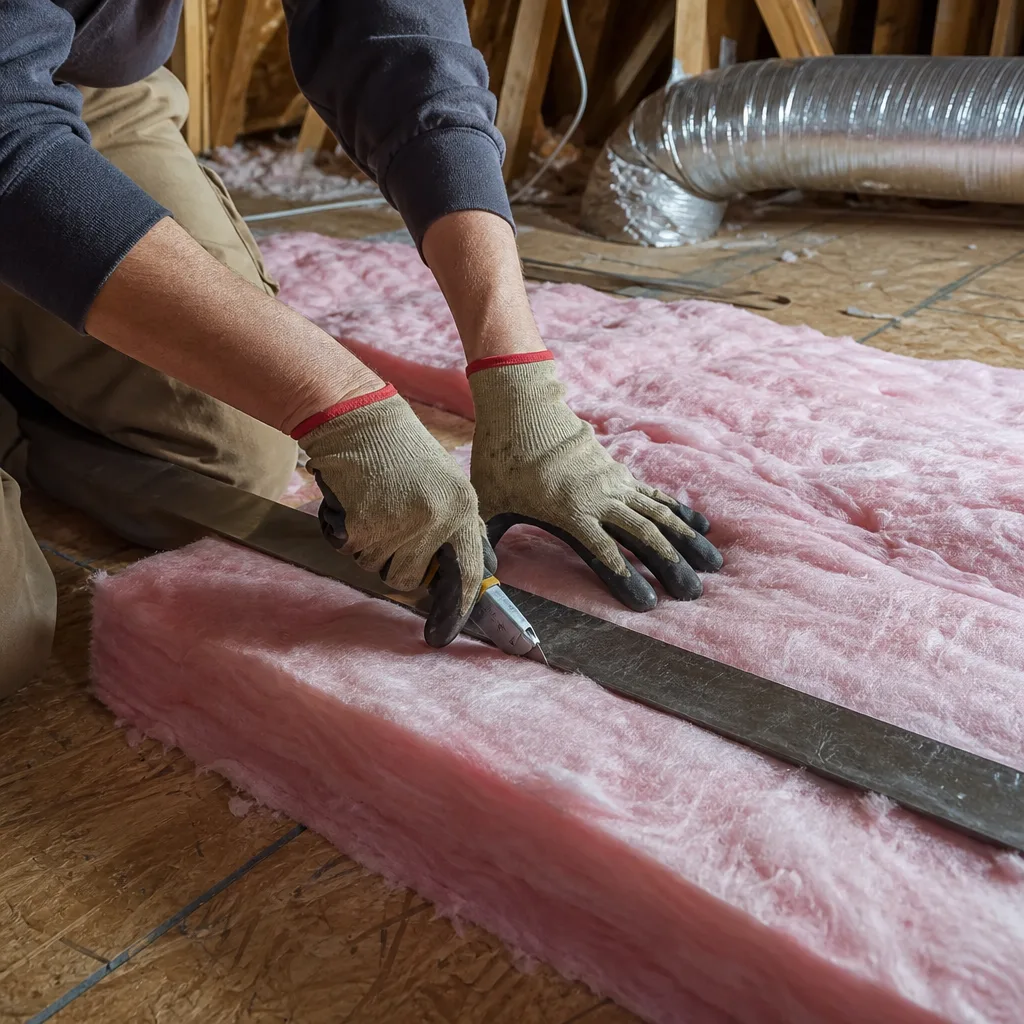
If your attic already has loose-fill or batts, we don’t tear it out to add a radiant barrier. In most WeHo buildings the barrier goes above or below the existing layer, and we check for the dust accumulation that kills reflectivity over time. Poking through a small access hatch in a hallway closet or a pull-down ladder in a top-floor unit is usually all the access we need.
Attic Cleaning Services in West Hollywood
Attic cleaning services in West Hollywood mean removing rodent droppings, old loose-fill that’s gone flat, construction debris, and the fine dust that accumulates in 60-to-100-year-old courtyard building attics, then treating the space before any new insulation goes in. We pull out contaminated material, vacuum and sanitize where needed, and prep the joist bays so new insulation performs at its rated R-value instead of sitting on top of a layer of broken-down debris. A typical attic cleaning job in a 90069 dingbat runs $700 to $1,600 before insulation, and it’s the step most general contractors skip entirely. Skipping it is the most common reason a retrofit underwhelms: you can’t insulate over rat droppings and expect the air quality or the R-value to be right.
Why old WeHo buildings need cleaning before retrofit
The 1920s through 1960s stock around Melrose and Santa Monica has attics that have been collecting dust, pest sign, and sometimes old knob-and-tube-era debris for decades. Much of that material is a respiratory irritant, especially in the tight attic spaces where our crew is crawling. Cleaning first also exposes bare spots and party-wall gaps we’d otherwise miss, so the insulation estimate gets more accurate after the space is actually visible.
Tenant-in-place attic cleaning
Most of the buildings we clean in West Hollywood are occupied, and the tenants stay put. We seal the work area, run a negative-air setup where needed, and stage waste bags out through the back alley so nothing goes through the front entry or shared lobby. That matters on a Melrose courtyard block where six units share one stairwell and the landlord doesn’t want a dust cloud in the hallway.
What happens when you call
- 1
A real person answersNo phone trees — you reach a local pro.
- 2
You get an upfront price rangeHonest numbers before anyone is dispatched.
- 3
A background-checked tech heads outLicensed & insured, dispatched right away.
- 4
You approve before work beginsNothing starts until you say go.
Trusted Brands We Service in West Hollywood
We install and service GreenFiber loose-fill, Owens Corning batts, Johns Manville batts and loose-fill, and Demilec’s open-cell and closed-cell spray foam lines in West Hollywood buildings. That bench means a 1931 courtyard apartment with zero cavity insulation gets a different product than a mid-century condo building on Kings Road that just needs an attic top-up, and different again from a new mixed-use project near the Sunset Strip that’s chasing Title 24 envelope performance. We keep the common loose-fill and batt stock staged for same-week West Hollywood work, and quote the spray foam jobs on a measured board-foot basis so you’re paying for coverage, not a guess.
Common Attic Insulation Problems We See in West Hollywood Homes
- Party-wall sound transfer in stacked flats. The attic above a dingbat’s top floor often runs continuously across two or three units, and the joist bays don’t stop at the demising wall. Fiberglass batts laid without sealing the top plates and shared-wall penetrations do almost nothing for between-unit noise, even though the R-value number looks correct on paper.
- Flat or airless attics that bake in summer. Many WeHo courtyard buildings have almost no eave ventilation, so the attic air stagnates and the roof deck radiates heat straight down. Without a radiant barrier or adequate loose-fill depth, the top-floor flat becomes a hotbox from mid-afternoon until well after dark, and the cooling load pushes window ACs and central units hard all summer.
- Access through narrow tuck-under parking and alley-loaded entries. There’s no wide driveway in most West Hollywood blocks, and a blower hose that blocks the tuck-under parking stalls brings the whole building to a halt. We stage through the alley, keep the shared drive clear, and work one unit at a time so tenants can come and go.
- Old loose-fill that’s compacted and contaminated. Insulation installed during a 1980s re-roof has often compacted to under R-19 and is full of dust, pest sign, and roof debris. Topping it up without cleaning just buries the problem, and in a rent-stabilized building the owner ends up paying for comfort they never actually got.
Pricing for Attic Insulation in West Hollywood, CA
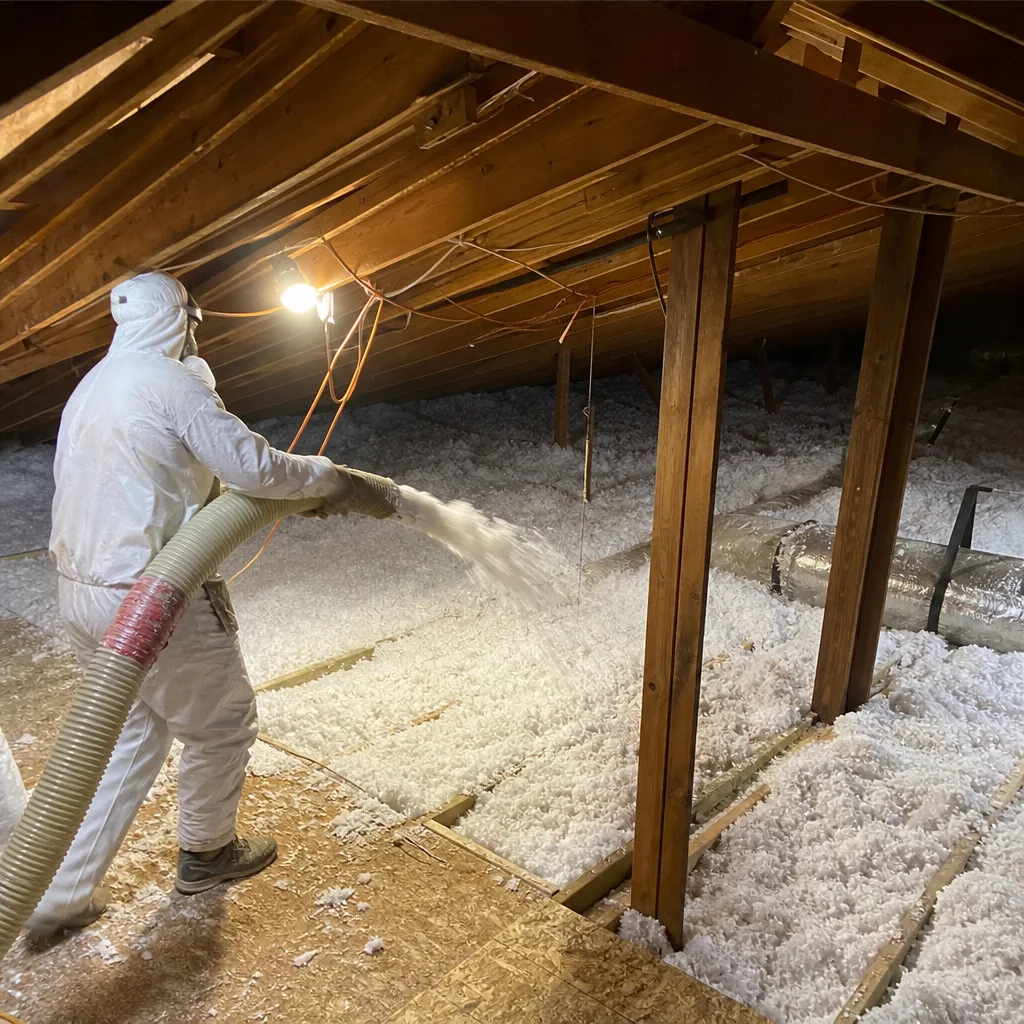
Here’s what you should expect to pay in the 90069 market. A blown-in attic insulation top-up over existing loose-fill runs roughly $900 to $1,800 depending on square footage and depth. Full attic insulation replacement, where we remove old material, clean, air-seal, and blow in new GreenFiber or Johns Manville loose-fill, typically runs $1,800 to $4,200. Radiant barrier work adds $1,200 to $2,800. Attic cleaning alone is $700 to $1,600. What moves the number most in West Hollywood is access: a dingbat with a good hatch and alley staging costs less than a courtyard building where the hose has to run up three flights through a tenant-occupied stairwell. We give free, itemized quotes that break out labor, material, and access. Call (877) 521-4987 and one of our estimators will walk the building with you, no obligation.
Attic Insulation in the City and Beyond
We serve all of West Hollywood, from the courtyard blocks off Melrose and Santa Monica to the condo buildings near the Sunset Strip and the newer mixed-use infill along La Cienega. When our West Hollywood schedule has room, we also take jobs in Beverly Hills, Century City, Hollywood, and Universal City. Same crew, same single-trade focus, same eight-brand product bench. If you’re in a neighboring city and need attic insulation, blown-in, or spray foam, call us and we’ll fit you in.
Serving West Hollywood, CA — Our Local Coverage Area
We’re based in the West Hollywood area and know this community well. Use the map below to see our service coverage — if you’re nearby, we can almost certainly help.
FAQs About Attic Insulation in West Hollywood
We scope it as a shared-wall and acoustic-separation retrofit, not a simple R-value top-up. First we clean and assess the full attic space, then we seal the party-wall top plates and any plumbing or electrical penetrations between units before blowing in loose-fill or laying batts. The sealing stops sound and air from moving between the stacked flats, which is the part most insulation-only crews skip. After sealing, we blow or lay insulation across the full joist bay and check the acoustic transfer with a blower-door test where the building allows it. Call (877) 521-4987 and we’ll talk through your building’s specific layout, whether it’s a dingbat, a courtyard apartment, or a mid-century condo.
Yes, and we plan around them from the start. West Hollywood enforces quiet hours and construction noise rules more aggressively than neighboring cities, and on a tight courtyard block off Santa Monica a blower running at 8 a.m. will draw complaints before the first bag is opened. We typically start staging at 8 a.m., run the blower only during permitted hours, and schedule the loudest work in the morning window. On a unit-by-unit dingbat retrofit, that usually adds a half-day to the schedule compared to a single-family home, but it keeps the job from being shut down mid-way. Call (877) 521-4987 and we’ll give you a realistic timeline for your building and block.
Because most of the housing stock within that 1.9-square-mile city is stacked multifamily with shared ceilings, walls, and attic spaces, so the insulation layer is the only acoustic barrier between one unit and the next. In a single-family home, R-value is the whole story. In a WeHo courtyard apartment, the tenant below hears every footstep, dropped object, and late-night conversation from above unless the joist bays are fully filled and the party-wall gaps sealed. That’s why we spec acoustic performance alongside thermal performance on almost every West Hollywood attic job, and why we’ll recommend a mineral wool or blown-in blend that a general contractor would never mention. Call (877) 521-4987 to get an estimate that treats sound the same way it treats heat.
Yes, and this is where our local experience shows up. We typically stage the blower hose through the back alley or the side of the tuck-under parking, not through the front door or the shared driveway. On a recent job on a courtyard block off Melrose near Santa Monica Blvd, our crew found a 1930s dingbat with bare attic joists and zero cavity insulation above two rent-stabilized flats, so we blew GreenFiber loose-fill between the joists and sealed the party-wall top plates to cut sound transfer between the stacked units. We staged the blower hose through the tuck-under parking alley to avoid blocking the shared driveway, and worked the units back-to-back so tenants never had to vacate. That’s the standard, not the exception. Call (877) 521-4987 and we’ll assess your building’s access before quoting.
We install GreenFiber loose-fill, Owens Corning batts, Johns Manville batts and loose-fill, and Demilec open-cell and closed-cell spray foam, plus several other lines. For older courtyard buildings with shared attics and party walls, loose-fill like GreenFiber is usually the right fit because it fills irregular joist bays fully and drops into tight access hatches, but we’ll quote the full range so you can compare. We’re an authorized installer across all eight manufacturers, so the product is matched to your building, not to our inventory. Call (877) 521-4987 for a free estimate and we’ll bring samples and a straight answer about what works in your specific attic.
Written by Gil Tanner, Owner at Porch Light Insulation, serving West Hollywood since day one.