
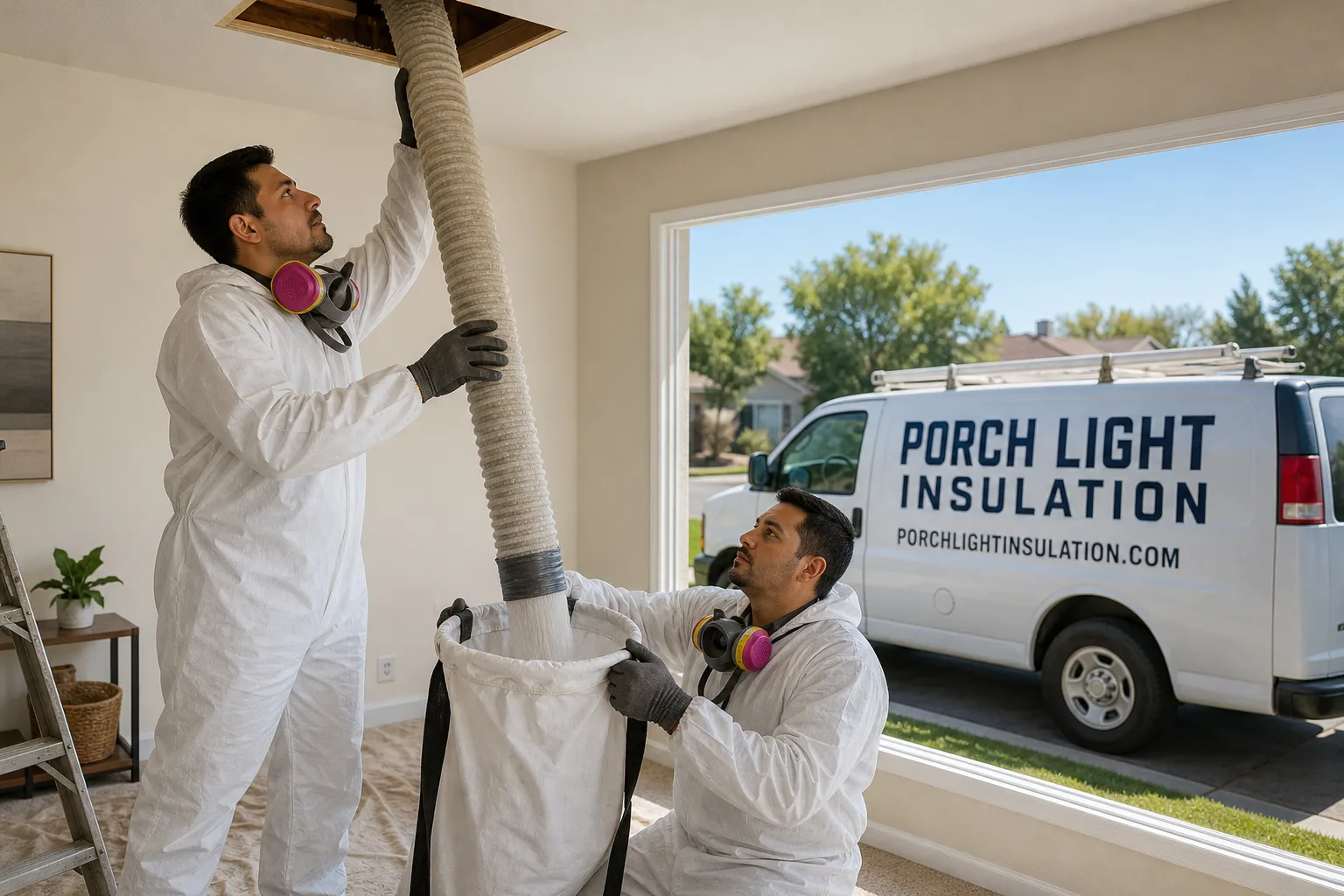
Fast, Reliable Spray Foam Insulation Across Encino
Spray foam insulation in Encino homes typically costs between $2,800 and $7,200 for a full attic application, with most jobs completed in one day. The real question most Encino homeowners face isn’t whether foam works – it’s whether their attic’s existing insulation history makes spray foam the right call. Our crews know this neighborhood’s housing stock: 1940s-60s ranch homes with exposed-rafter attics, 1970s-90s rebuilds on the same lots, and hillside properties south of Ventura Blvd with their own set of complications. When you call Porch Light Insulation at (877) 521-4987, the person who answers knows the difference between a 91436 hillside attic and a 91316 flat-lot ranch. That matters more than most people realize until they open their attic hatch in July.
Why Porch Light Insulation Is Encino’s Preferred Spray Foam Insulation Company
Most Encino homeowners we meet have already had someone in their attic. The problem is rarely that no one tried to insulate – it’s that the insulation was patched, layered, and left to settle over forty years without anyone asking what was actually going on under the old fiberglass. Our estimators walk every attic before recommending anything, and in Encino that means assessing what’s already there: original no-insulation framing, first-generation retrofit batts, blown-in fiberglass drifted to one corner. Gil Tanner built Porch Light around a single idea: insulation is all we do, which means it’s all we’ve mastered. We’re not a roofing crew that also sprays foam, and we’re not an HVAC shop that adds insulation on the side. When we give you a recommendation for your Encino home, it comes from someone who has spent years thinking only about insulation. Eight manufacturers on our product bench – including Icynene, Demilec, and Owens Corning – means we match the material to your home, not to our inventory.
Spray Foam Attic Insulation in Encino
Spray Foam Attic Insulation in Encino is the highest-impact insulation job most local homeowners can do, because the San Fernando Valley sun is the primary enemy, not winter cold. In July and August, attic temperatures in Encino routinely push past 150°F, and that heat radiates down through your ceiling all afternoon and evening. Open-cell foam on the attic floor or closed-cell foam sprayed directly to the roof deck creates an air seal that fiberglass batts simply cannot match. The difference is air movement: fiberglass slows heat transfer, but air still moves through it. Foam stops the air itself.
Roof-Deck Spraying for Low-Slope Ranchers
Encino’s original 1940s-60s ranch homes almost universally have low-slope or shallow-pitch roofs with exposed-rafter attics. That’s actually a good candidate for closed-cell foam applied directly to the underside of the roof deck. Sealing the deck brings the attic inside the home’s thermal envelope, which means your ductwork – often running through that hot attic – stops losing cool air to a 150°F space.
Foaming Over Legacy Fiberglass
Here’s the Encino-specific complication: many of these attics hold layered 1970s-80s retrofit fiberglass that has settled, compacted, and in some cases been partially removed. You shouldn’t just spray foam over compromised material. Our assessment-first approach means we document what’s there, remove or mitigate what needs to go, and then spray into a clean, air-sealed cavity. In Encino, skipping that step is how you get moisture trapped against the original uninsulated framing.
Spray Foam Wall Insulation in Encino
Spray Foam Wall Insulation in Encino is the second most common request we get from homeowners on the 91436 side, where hillside homes sit on slopes with vented crawlspaces and complex multi-level rooflines. Wall cavities in older Encino homes often have little or no insulation – many of these houses were built before code required wall insulation at all. Closed-cell foam injected into existing wall cavities stops air infiltration that shows up as hot rooms in summer and cold drafts in winter.
Hillside Wall Cavities and Slope-Side Airflow
South of Ventura Blvd, the homes change. Slopes create wind patterns that push air through wall cavities and crawlspaces in ways flat-lot Valley homes don’t experience. We routinely find wall insulation that has been blown out, settled to one side, or chewed through by rats coming off the hillside chaparral. Spray foam – particularly closed-cell – adheres to the framing and won’t settle, shift, or blow out. For those homes, it’s the most durable answer available.
Matching Open-Cell vs. Closed-Cell
Not every Encino wall needs closed-cell foam. Open-cell Icynene or Demilec products do excellent work for interior walls where sound control matters, and they’re a better value for certain cavity applications. The point is that we don’t push one product. We carry both because one-size answers are how Encino homeowners end up with the wrong assembly. With eight manufacturers and both foam types, your quote shows you the options.
Trusted Brands We Service in Encino
We’re authorized to install products from Owens Corning, Johns Manville, Knauf, Rockwool, CertainTeed, Icynene, Demilec, and GreenFiber. In Encino, the spray foam work most often comes down to Icynene and Demilec for foam, with Rockwool and Owens Corning available when a home needs fire-resistant mineral wool but still wants spray foam’s air-sealing performance elsewhere in the assembly. Because we stock parts and materials for Encino jobs specifically – we know what these attics look like before we even open the hatch – turnaround is faster than ordering through a general contractor who subs out insulation. If a product is right for your home, we can usually have it installed inside the week. That’s the benefit of an insulation-only contractor with a deep product bench.
Common Spray Foam Insulation Problems We See in Encino Homes
- Foam sprayed over layered, settled 1970s-80s fiberglass. Without an assessment first, new foam traps moisture against old material and hides gaps in the original uninsulated framing. This is the most common failure mode we correct in Encino, especially in flat-lot ranch homes built before 1960.
- Closed-cell foam applied to an unsealed, vented crawlspace attic. On the 91436 side south of Ventura, homes sit on slopes with vented crawlspaces. If that space isn’t properly sealed first, closed-cell foam can trap condensation against cool slope-side surfaces and create moisture problems that didn’t exist before.
- Standard-cell or non-ember-resistant materials in wildfire-adjacent attics. Encino’s hot, dry, wildfire-adjacent climate puts a real premium on fire-rated assemblies. Radiant heat from a nearby fire or wind-driven embers landing on a roof can ignite under-rated foam products. Closed-cell foam with a thermal or ignition barrier is the standard we recommend here.
- Rat-damaged insulation in hillside homes off the chaparral. Hillside streets south of Ventura Blvd back up to open brush. Rats come off the chaparral, get into attics and wall cavities, and destroy existing insulation. Spray foam is less attractive to rodents than fiberglass, but air-sealing and exclusion work has to happen first or you’re foaming over a problem that will come back.
Pricing for Spray Foam Insulation in Encino, CA
We Also Serve Cities Near Encino
Porch Light Insulation works throughout the central and west San Fernando Valley. Beyond Encino, we regularly schedule Spray Foam Insulation work in Sherman Oaks, Van Nuys, Valley Glen, and Northridge. Many of those neighborhoods share Encino’s vintage housing stock, so the same assessment-first approach applies. If you’re a few blocks over the city line, we’re still your local crew – Encino is home base for a lot of the homes we serve.
Serving Encino, CA — Our Local Coverage Area
We’re based in the Encino area and know this community well, offering services like Reflectix repair in Encino. Use the map below to see our service coverage — if you’re nearby, we can almost certainly help.
FAQs About Spray Foam Insulation in Encino
Can you spray foam over the old settled fiberglass already in my Encino ranch attic?
No – we don’t recommend spraying foam directly over settled fiberglass, and in Encino’s 1940s-60s ranches that’s exactly what’s usually up there. The old material has to be assessed first: we check for compaction, moisture, rat damage, and gaps in the original framing. In many Encino homes we remove or partially remove the old material before foaming, because spraying over it traps moisture and hides air leaks. If your attic insulation was installed in the 1970s or 80s and hasn’t been touched since, plan on an assessment step before any foam goes in. Call (877) 521-4987 and we’ll walk your attic with you.
Why does spray foam make more sense than added batts for an Encino attic over 100°F summers?
Because Encino’s problem is radiant heat gain from a 150°F attic, not winter heat loss. Fiberglass batts slow conductive heat transfer, but they do nothing to stop hot air from moving through them. Spray foam air-seals the attic, which stops the actual flow of superheated air down through your ceiling. In a climate where summer is the dominant season, that air-sealing benefit matters more than added R-value alone. Our Spray Foam Insulation recommendations for Encino start with the attic because that’s where most of your summer cooling load comes from.
How do you handle the vented crawlspaces and rat damage in hillside homes south of Ventura Blvd?
We treat hillside homes on the 91436 side differently than flat-lot Valley houses. First, we inspect for rat damage in the attic and wall cavities – homes backing up to chaparral regularly have chewed-through insulation and displaced material. Second, we don’t spray closed-cell foam into an unsealed, vented crawlspace without addressing the venting and moisture path first. Sealing the crawlspace and ensuring proper drainage on the slope side comes before any foam. Our crews have opened enough Encino hillside attics to know what to expect, so the estimate accounts for the condition most of these homes are actually in.
Does spray foam have to be fire-rated for Encino’s wildfire-adjacent climate?
Yes – Encino’s wildfire-adjacent location means spray foam, especially closed-cell foam on the roof deck, should have a proper thermal or ignition barrier. Open-cell and closed-cell foam are both combustible materials, and in a hot, dry, ember-prone climate that’s not a detail you skip. When we install closed-cell foam on an Encino roof deck, we specify the assembly with the fire-rating conversation on the table from the start. For homeowners who want an extra layer of fire resistance, Rockwool mineral wool is on our product bench and can be combined with spray foam where it makes sense.
Do you spray foam the attic or the walls first in an older Encino home?
Attic first, almost always. The attic is where Encino homes lose the most conditioned air and gain the most heat, so sealing the attic plane delivers the biggest comfort and energy improvement per dollar. Walls come second for a reason: in an older ranch, wall work often requires drilling and patching, and it’s more expensive per unit of comfort gained. We’ll give you a phased recommendation if budget matters – many Encino homeowners do the attic one season and walls the next. Call (877) 521-4987 for a free estimate and we’ll lay out the sequence that makes sense for your specific house.
Contact Porch Light Insulation for Spray Foam in Encino
If you’re tired of rooms that won’t cool down, utility bills that climb every summer, or an attic you’re afraid to open in July, let’s talk. Porch Light Insulation has been working in Encino attics long enough to know what’s up there before we even look. Call (877) 521-4987 for a free estimate. Gil Tanner and the team will walk your attic or wall cavities, tell you what’s actually going on, and give you an honest recommendation – even if that recommendation is that what you have just needs to be removed before anything new goes in. Comfort starts the moment you walk through the door.
Written by Gil Tanner, Owner at Porch Light Insulation, serving Encino and the San Fernando Valley.