
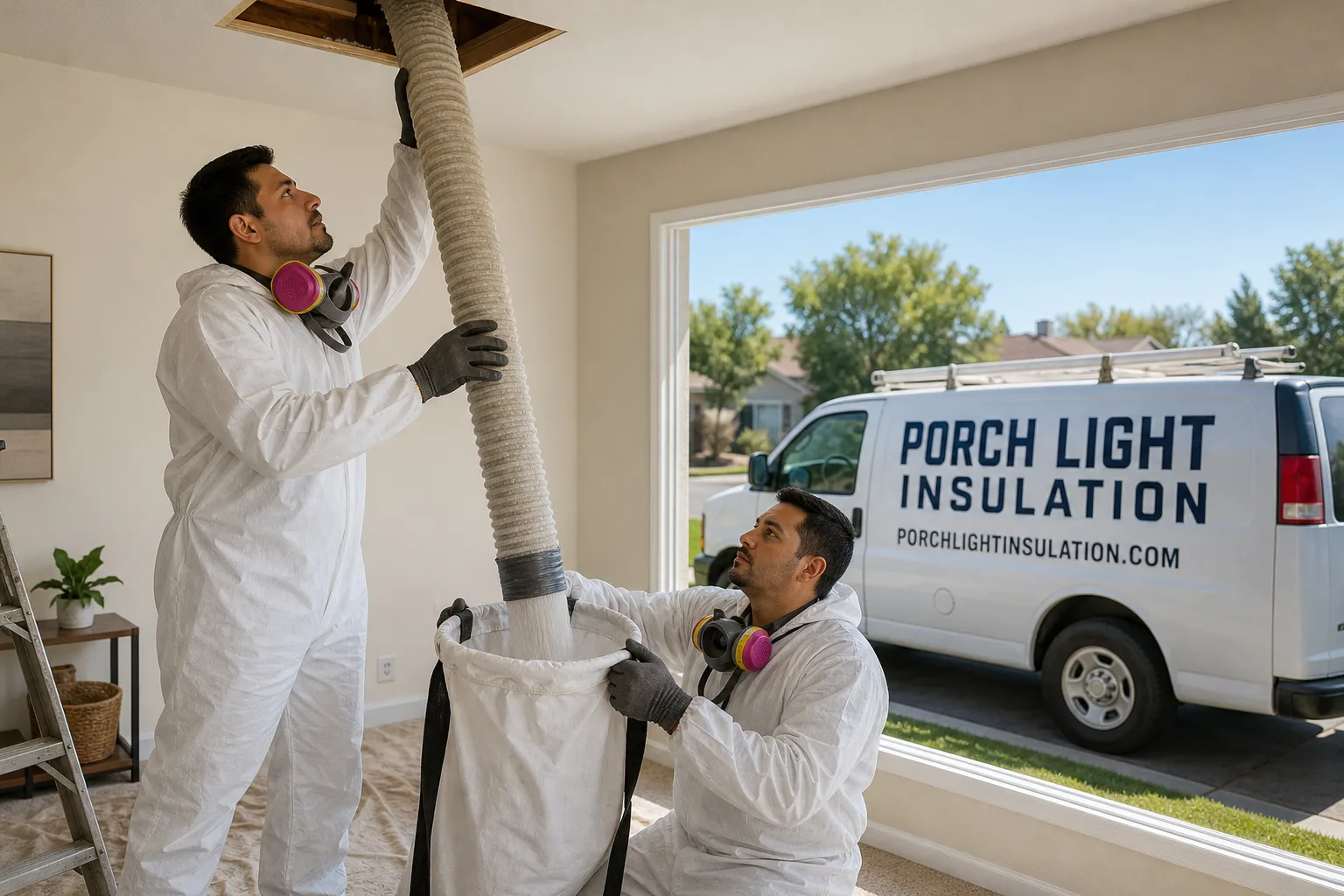
Fast, Reliable Spray Foam Insulation Across Valley Glen
Spray foam insulation in Valley Glen typically runs $2,200 – $6,800 depending on whether we’re sealing a detached workshop roof deck, the main house attic, or both. Most jobs on the ranch lots off Victory Boulevard and Van Nuys Boulevard take one day once the hose run is mapped. We know Valley Glen’s post-WWII housing stock: shallow vented attics, uninsulated stucco walls, and detached garages that cook in the summer heat. Call (877) 521-4987 for a free estimate, and we’ll tell you what’s actually worth foaming versus what isn’t.
Why Porch Light Insulation Is Valley Glen’s Preferred Spray Foam Insulation Company
Insulation is the only trade we practice. Our estimators, installers, and the person who answers the phone all think in terms of R-value, air sealing, and vapor control rather than dividing attention across roofing or HVAC side work. When a Valley Glen homeowner asks whether open-cell or closed-cell makes sense for a detached shop behind a 1950s ranch, the answer comes from someone who has handled that exact condition dozens of times.
We carry one of the broadest manufacturer rosters in the trade: Owens Corning, Johns Manville, Knauf, Rockwool, CertainTeed, Icynene, Demilec, and GreenFiber. That matters here because a shallow 1950s attic off Vanowen Street and a 1980s two-story near Valley College need different materials. We match the material to your home, not to our inventory. Gil Tanner leads our crews, and his approach is simple: quote the right system for the structure and document everything LADWP needs before we spray a single board.
Spray Foam Insulation Contractors in Valley Glen
Spray foam insulation contractors in Valley Glen have to plan around a layout most cities don’t have: detached garages and workshops sitting 30 to 60 feet behind the house, often with only a narrow side yard or a fence gate separating the driveway from the outbuilding. The job here isn’t just mixing foam and spraying a ceiling. It starts with mapping the hose pull, checking what condition the door frames are in, and photographing both structures before any application begins so the LADWP rebate file is complete. A typical detached shop plus primary attic in Valley Glen runs $4,200 – $6,800; a standard attached attic alone usually lands between $2,200 and $4,500.
Closed-Cell Roof Deck Sealing
Closed-cell spray foam on a roof deck turns the attic into a conditioned space, which matters in Valley Glen because July and August attic temperatures here can exceed 140°F. The foam stops radiant heat transfer from baking the ceiling below. It also adds structural strength, a benefit on older ranch roof decks that have settled or shifted over 60-plus years.
Detached Workshop and Garage Retrofit
When a shop behind a Valley Glen home is used as a workshop, music room, or home gym, it needs the same attention as the house. We air-seal the door perimeter before or during the foam application. Oversized roll-up doors leak at the frame, and if that perimeter isn’t sealed, the foam on the ceiling loses most of its value by mid-afternoon. One trip, both structures handled.
Spray Foam Attic Insulation in Valley Glen
Spray foam attic insulation in Valley Glen works differently than in colder climates because the enemy here is heat gain, not heat loss. The city’s hot-summer Mediterranean climate produces long stretches of 95 – 105°F from July through September, and valley heat radiates through the roof deck into whatever sits below it. On a 1950s stucco tract house with a shallow, vented attic, closed-cell foam on the roof deck can cut the cooling load dramatically. Costs for a typical Valley Glen attic span $2,200 – $4,500 depending on square footage and whether we’re foaming the roof deck or the floor plane.
Cathedralized Attic Conversion
Older Valley Glen homes often have shallow attics with ductwork running through unconditioned space. Foaming the roof deck brings those ducts inside the thermal envelope, so the air coming out of your registers isn’t pre-heated by a 140-degree attic before it reaches the room. This is one of the highest-impact upgrades we perform on pre-1978 ranch homes.
Air Sealing Before Insulation
Decades of electrical and HVAC retrofits leave holes around can lights, wire penetrations, and chimney chases. In Valley Glen, we see attics where blown-in fiberglass settled to a few inches and then got disturbed by a wiring update in 1987. Foam seals the gaps and stops the convection loops that make those old attics so inefficient. The inspection and documentation step is as much the job as the spray itself, especially with LADWP rebate paperwork on the line.
Trusted Brands We Service in Valley Glen
We install Demilec and Icynene closed-cell products on the performance end, and we keep GreenFiber loose-fill as a practical option when foam isn’t the right fit for a budget-conscious remodel. Owens Corning and Johns Manville round out the bench for homes where blown-in or batt work pairs with a foam air-seal detail. Because we stock materials for Valley Glen jobs specifically, turnaround on a typical ranch attic retrofit is usually one to two days from the time we finish the pre-upgrade walkthrough. Everything is ordered for your structure, not pulled from whatever is left in a warehouse.
Common Spray Foam Insulation Problems We See in Valley Glen Homes
- Detached shops ignored on the first visit. Crews that treat a back-house workshop as an afterthought schedule a second trip, leaving the hose-run logistics and door-frame sealing half-finished. By the time they come back, the homeowner has already lived with another week of baking heat.
- Oversized roll-up doors leaking air at the frame. Valley Glen’s acreage-style lots often carry heavy shop doors. Foam on the ceiling without sealing the door perimeter lets the Valley heat load straight back in, and the owner ends up with a marginally cooler shop and a bill that doesn’t match the result.
- Settled or disturbed attic insulation from decades of retrofits. Pre-1978 ranch homes here routinely have only a few inches of old blown-in material left. Homeowners assume the attic is insulated, but the R-value may be below R-11 after settling and electrical work.
- Rebate photos skipped because “the file only needs the house.” LADWP rebate documentation covers conditioned detached structures too. Skipping pre-upgrade photos of the shop because the rebate supposedly only applies to the main dwelling forces homeowners to redo paperwork after the foam is installed and no longer photographable.
Pricing for Spray Foam Insulation in Valley Glen, CA
Here’s what we see in Zip code 91404 and the surrounding Valley Glen blocks:
- Open-cell attic retrofit on a 1,200 – 1,600 sq ft ranch: $1,900 – $3,400
- Closed-cell roof deck on a standard 1950s attic: $3,800 – $5,800
- Detached workshop or garage ceiling (400 – 700 sq ft): $1,500 – $2,900
- Combined house attic plus detached shop in one visit: $4,200 – $6,800
- Rim joist and door-frame air sealing add-on: $400 – $900
What moves the number is square footage, access difficulty, and whether the existing material needs removal first. We give free estimates, and our quotes are line-itemed so you can see exactly where the money goes. Call (877) 521-4987 and Gil Tanner will walk you through what applies to your property.
We Also Serve Cities Near Valley Glen
Our Spray Foam Insulation team works throughout the San Fernando Valley. Beyond Valley Glen, we cover Van Nuys, Sherman Oaks, Encino, and North Hills. The drive times are short, so same-week scheduling is usually available for any of those neighborhoods.
Serving Valley Glen, CA — Our Local Coverage Area
We’re based in the Valley Glen area and know this community well. Use the map below to see our service coverage — if you’re nearby, we can almost certainly help.
FAQs About Spray Foam Insulation in Valley Glen
Yes, and we plan the hose run from the driveway to the outbuilding before we arrive. On a ranch property off Victory Boulevard, our crew foamed the cathedralized ceiling of a detached workshop behind the house by running the proportioner hose from the driveway past the main structure to reach the shop in one pull. The owner’s oversized roll-up door had warped the old fiberglass batt line and left the shop baking by mid-afternoon, so we closed-cell the roof deck and air-sealed the door frame in the same trip rather than scheduling a return. We shot pre-upgrade photos of both the shop ceiling and the house attic for the LADWP rebate file before a single board was sprayed. Call (877) 521-4987 to schedule a walkthrough of your house and any detached structures.
Yes, and this is the step most crews skip. Heavy shop doors on these acreage-style lots leak air at the frame, and foam applied to the ceiling without sealing the door perimeter lets the Valley heat load straight back in. We handle the door-frame sealing as part of the same visit, not as a follow-up line item. If your shop door has visible light gaps or you can feel heat radiating through it by mid-afternoon, the foam job won’t perform until those leaks are closed.
LADWP requires pre-upgrade photos and R-value documentation for every conditioned structure on the property, including detached workshops and garages. That means we photograph the shop ceiling, the house attic, and any other conditioned space before spraying. Skipping the detached structures because the rebate supposedly only covers the main house forces homeowners to redo documentation after the foam is already installed and unphotographable. We handle all the paperwork for Valley Glen clients, including the pre-upgrade photo file and the post-install R-value verification.
We install Demilec and Icynene closed-cell and open-cell products, and we keep Owens Corning, Johns Manville, and GreenFiber materials for jobs where a hybrid approach makes more sense. The brand depends on the structure: a shallow, vented 1950s attic usually gets closed-cell on the roof deck, while a budget-conscious remodel might pair an air-seal detail with GreenFiber blow-in. We quote the material by your attic’s specific condition, not by what we have surplus of.
Most Valley Glen ranch homes from the 1950s have shallow, vented attics that bake at 140°F in summer, and spray foam on the roof deck is usually the better performer because it brings the ductwork inside the conditioned space. Blown-in material on the attic floor helps but doesn’t stop radiant heat from cooking the ducts. If the ducts run through the attic, foam on the roof deck is the upgrade that actually cuts cooling bills. We’ll give you a straight comparison during the estimate.
Contact Porch Light Insulation for Valley Glen spray foam work. Call (877) 521-4987 and tell us about your house and any detached shops or garages. We’ll schedule a walkthrough, map the hose run, and give you a line-item quote the same day. Free estimates, LADWP documentation handled, and the job done in one trip.
Written by Gil Tanner, Owner at Porch Light Insulation, serving Valley Glen and the San Fernando Valley.