
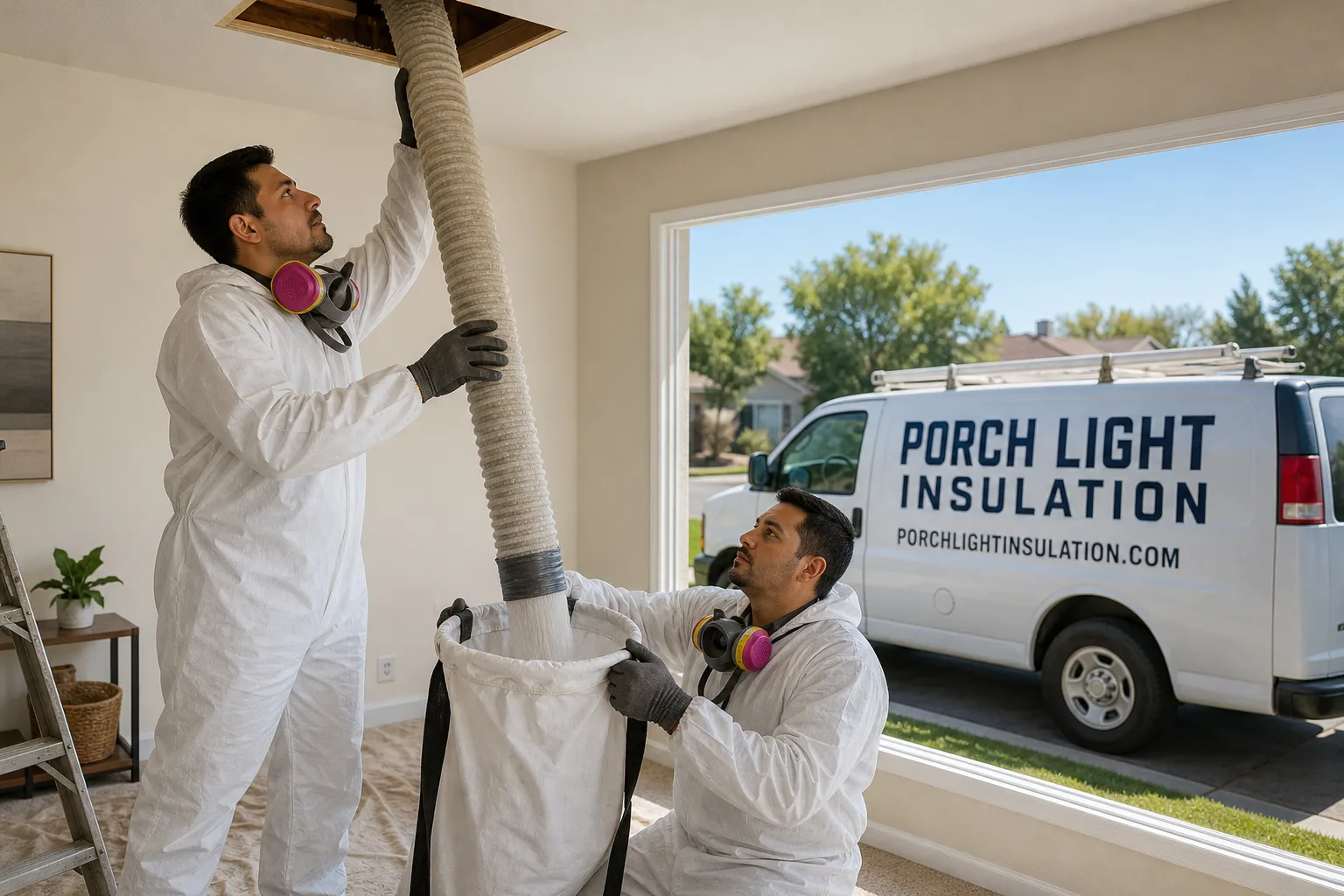
Fast, Reliable Attic Insulation Across Alondra Park
Attic insulation in Alondra Park usually costs between $1,800 and $4,700 depending on attic size, access, and whether we’re topping up old material or starting fresh. In this neighborhood, the real job is almost always about fixing what the 1950s builders skipped: proper air sealing, baffles, and ventilation that works with the marine layer, not against it. Our crews know the tract layouts off Prairie Avenue and Manhattan Beach Boulevard, and we can usually be on site in Alondra Park within 60 to 90 minutes for an estimate. Call (877) 521-4987 and we’ll walk your attic with you the same week.
Why Porch Light Insulation Is Alondra Park’s Preferred Attic Insulation Company
Insulation is the only trade we work in. That single-trade focus matters in Alondra Park because the houses here were built before anyone thought about thermal enclosure as a system. A general contractor who installs insulation on the side will often blow in new fiberglass and call it done. We look at the whole attic: the west-facing roof deck, the missing soffit vents, the unsealed top plates, the original plaster walls. Our estimator team, led by Gil Tanner, has walked hundreds of mid-century stucco ranchos in this neighborhood and the surrounding South Bay, and we’ve seen what the marine-layer damp does to insulation that wasn’t installed with ventilation in mind.
We match the material to your home, not to our inventory. We install products from Owens Corning, Johns Manville, Knauf, Rockwool, CertainTeed, Icynene, Demilec, and GreenFiber. That means a homeowner near Alondra Community Regional Park gets a straight answer about whether open-cell spray foam, blown-in fiberglass, or mineral wool actually makes sense for their specific attic, instead of a pitch for whatever product we happen to stock.
Alondra Park customers tell us the same thing over and over: they appreciate that we explain the “why” behind the recommendation. Insulation is all we do, which means it’s all we’ve mastered. We don’t split our attention across roofing, HVAC, or remodeling side work. Everything on your quote is about the thermal and moisture performance of your attic and walls.
Attic Ventilation in Alondra Park
Attic Ventilation in Alondra Park is the fix that most homes here need before any new insulation goes in, because the 1950s tract roofs were built with almost no intake venting and the marine layer keeps roof sheathing damp for months at a time. A homeowner near 90249 typically needs this work when their west-facing attic turns into an oven by early afternoon, or when they notice condensation on the underside of the roof deck, paint blistering on the ceiling, or a musty smell that won’t go away. The job involves installing soffit vents, baffles at the eaves, and often a ridge vent, plus air sealing the top plates where warm, moist indoor air leaks into the attic. Most attic ventilation projects in Alondra Park run between $600 and $1,800 depending on roof configuration, and the work usually takes a single day. Call (877) 521-4987 for an exact quote after we inspect your attic.
What We Inspect First
On most Alondra Park ranchos, we find the original soffits are either painted shut, blocked by stucco, or simply never had vent openings cut. We check intake area against exhaust area and we look for bathroom fans venting into the attic, which is a common problem in these older homes and a major moisture source. The fix usually starts with getting the intake side working, then adding exhaust at the highest point of the roof.
We also look at whether the original insulation is blocking the eaves. In homes where someone blew in loose-fill without installing baffles, the insulation often covers the soffit vents entirely. That’s a common reason attics in this neighborhood hold heat so late into the evening.
When Ventilation Should Come Before New Insulation
If your attic is damp or you’re seeing rust on roofing nails or dark streaking on the underside of the sheathing, ventilation and air sealing should happen before you pay for new insulation. Adding fresh insulation on top of a moisture problem just gives the mold a new home. We recently worked on a 1956 rancho near Alondra Park Drive where the homeowner heard popping from the attic ducts every afternoon. Our crew found the west-facing roof deck hit 132°F by 1 p.m. with no soffit intake, and the original fiberglass was compressed and dust-filled; we air-sealed the top plates, added baffles and a ridge vent, and blew in GreenFiber to a modest R-38 that leveled out the temperature swings.
Radiant Barrier in Alondra Park
Radiant Barrier in Alondra Park is one of the most effective upgrades for the west-facing attics that dominate this neighborhood, where the marine layer burns off by mid-morning and the roof deck soars past 130°F by early afternoon. A radiant barrier is a reflective foil, often installed on the underside of the roof rafters, that reflects radiant heat away from the attic floor and the ductwork sitting on it. Radiant barrier installation in Alondra Park typically runs $1,200 to $2,800 for a single-story tract home, and it’s often the difference between an attic that stays under 100°F in the afternoon and one that keeps punishing your AC through dinner. Call (877) 521-4987 and we’ll tell you if your roof orientation makes it worth the investment.
How It Works With the Marine Layer
The South Bay’s morning fog doesn’t mean radiant heat isn’t a problem. It actually makes the swing worse: the roof deck starts cool and damp, then the fog clears and the sun hits it hard. That rapid change is exactly what a radiant barrier addresses. The foil reflects most of the radiant energy before it ever reaches the attic floor, so your existing insulation doesn’t have to fight a 130-degree roof deck.
One thing we tell Alondra Park homeowners: a radiant barrier works best when paired with proper ventilation. The gap between the sheathing and the barrier is what carries the heat out through the ridge vent. Without that airflow, the barrier still helps, but you’re leaving performance on the table.
Combining Radiant Barrier With Blown-In Insulation
For homes in Alondra Park that still have the original fiberglass from the 1950s or 1960s, we often recommend doing the radiant barrier at the same time as a full attic insulation top-up. You handle the radiant heat at the roof deck and the conductive heat at the attic floor in one job. It costs more up front, but it means your attic is actually comfortable by the middle of the afternoon instead of just slightly less hot.
Trusted Brands We Service in Alondra Park
We’re authorized to install products from eight manufacturers, and for Alondra Park attics we find ourselves reaching for GreenFiber loose-fill, Owens Corning batts, and Demilec spray foam more often than anything else. GreenFiber’s cellulose fills the irregular joist bays in these older tract homes better than a rigid batt, Owens Corning gives us a dependable cost-effective batt for top-ups, and Demilec closed-cell foam handles the air sealing and vapor control that the marine layer demands. Because we stock multiple brands, we can tell you honestly which one fits your situation instead of steering you toward the only thing we sell. Eight manufacturers, one goal: the right fit for your specific situation.
Common Attic Insulation Problems We See in Alondra Park Homes
- Afternoon duct popping and cracking. West-facing roof decks on these 1950s ranchos heat up fast once the fog clears, and the original sheet-metal ducts expand against their hangers. The real fix is usually air sealing and ventilation, not more insulation piled on top of the ducts.
- Damp, matted insulation that never dries out. Marine-layer moisture sneaks in through unsealed attic bypasses, condenses on cool roof sheathing, and soaks compressed batts. By the time a homeowner notices the musty smell, the insulation has usually been holding water for months.
- Blistered ceiling paint and musty odors mistaken for plumbing leaks. The original plaster walls in these homes have minimal cavities, and moisture from the living space gets trapped against uninsulated framing. Homeowners often call a plumber first, and the plumber finds nothing because the problem is in the wall assembly.
- Almost no intake venting. Many homes along 90249 were built with tiny gable vents or none at all. Without soffit intake, even a brand-new ridge vent can’t pull air through the attic, and the space just bakes.
Pricing for Attic Insulation in Alondra Park, CA
A straightforward attic insulation top-up in Alondra Park runs about $1,200 to $2,300 for a typical 1,000 to 1,200 square foot attic. Full attic insulation replacement with air sealing and baffles usually lands between $2,800 and $4,700. Attic baffles and ventilation prep on their own are $600 to $1,800 depending on roof shape and how many eaves need repair. Radiant barrier installation is $1,200 to $2,800 for most single-story ranchos here. Access matters: if your attic hatch is in a tight closet or the roof has a low slope, the job takes longer and costs a bit more. Every estimate from us is free, and we give you a line-by-line quote so you can see exactly what you’re paying for. Call (877) 521-4987 to schedule a walkthrough with one of our Attic Insulation specialists.
We Also Serve Cities Near Alondra Park
Porch Light Insulation works throughout the South Bay and the communities around Alondra Park, including Gardena, Inglewood, Lawndale, and Hawthorne. If you’re in one of those neighboring cities, we’ll bring the same insulation-only expertise and the same material-agnostic approach to your attic. Call (877) 521-4987 to find out how soon we can get to your address.
Serving Alondra Park, CA — Our Local Coverage Area
We’re based in the Alondra Park area and know this community well. Use the map below to see our service coverage — if you’re nearby, we can almost certainly help.
FAQs About Attic Insulation in Alondra Park
Your west-facing roof deck is heating up to 130°F or more within a few hours of the marine layer burning off, and the sheet-metal ducts in your attic are expanding against their hangers and straps as they heat up. This is a common and easily fixed problem in Alondra Park’s 1950s tract homes, where the original intake venting is almost nonexistent. The fix is usually air sealing, soffit baffles, and a ridge vent, not more insulation. Call (877) 521-4987 and we’ll diagnose what’s actually causing the popping before you spend money on anything else.
Most Alondra Park homes do not need a traditional vapor barrier on the attic floor, because the real moisture threat here comes from the marine layer infiltrating through air leaks, not from winter vapor drive. What these attics actually need is air sealing at the top plates, properly vented soffits, and materials that can dry out if they get damp. Closed-cell spray foam from Demilec can act as both an air seal and a vapor retarder in specific situations, and we’ll tell you honestly whether that’s the right call for your attic.
Yes, we can insulate the walls of most original-plaster Alondra Park homes without demoing the plaster, usually by drilling small access holes from the exterior or interior and blowing in dense-packed cellulose or injecting foam. The minimal wall cavities in these 1940s and 1950s stucco tract homes mean the job is slower than it would be in a modern house, but it’s a well-established process. The bigger question is usually whether the walls should be insulated before the attic, and we’ll help you decide that without steering you toward the higher-margin option.
The best approach is to add continuous soffit or eave venting on the intake side, install baffles to keep insulation from blocking the airflow, and add a ridge vent or powered exhaust at the top so the system actually moves air. For Alondra Park’s west-facing ranchos, getting the intake side working is the part most contractors skip, because it’s more labor. We include ventilation prep as part of our attic insulation quotes because adding insulation without fixing the venting just makes the afternoon heat problem worse. Call (877) 521-4987 for a free attic inspection that checks both sides of the airflow equation.
It affects the hardware more than the insulation itself. The marine air near Alondra Park carries enough moisture and salt to corrode exposed metal components faster than inland locations: roof vents, baffle fasteners, duct straps, and especially any uncoated steel or aluminum in the attic. We use coated or stainless fasteners when we rebuild ventilation in these attics, and we check existing hardware for corrosion as part of every estimate, because a failed vent strap is a cheap fix that causes expensive damage if it lets a duct sag against the attic floor.
Written by Gil Tanner, Owner at Porch Light Insulation, serving Alondra Park and the South Bay since 2016.