
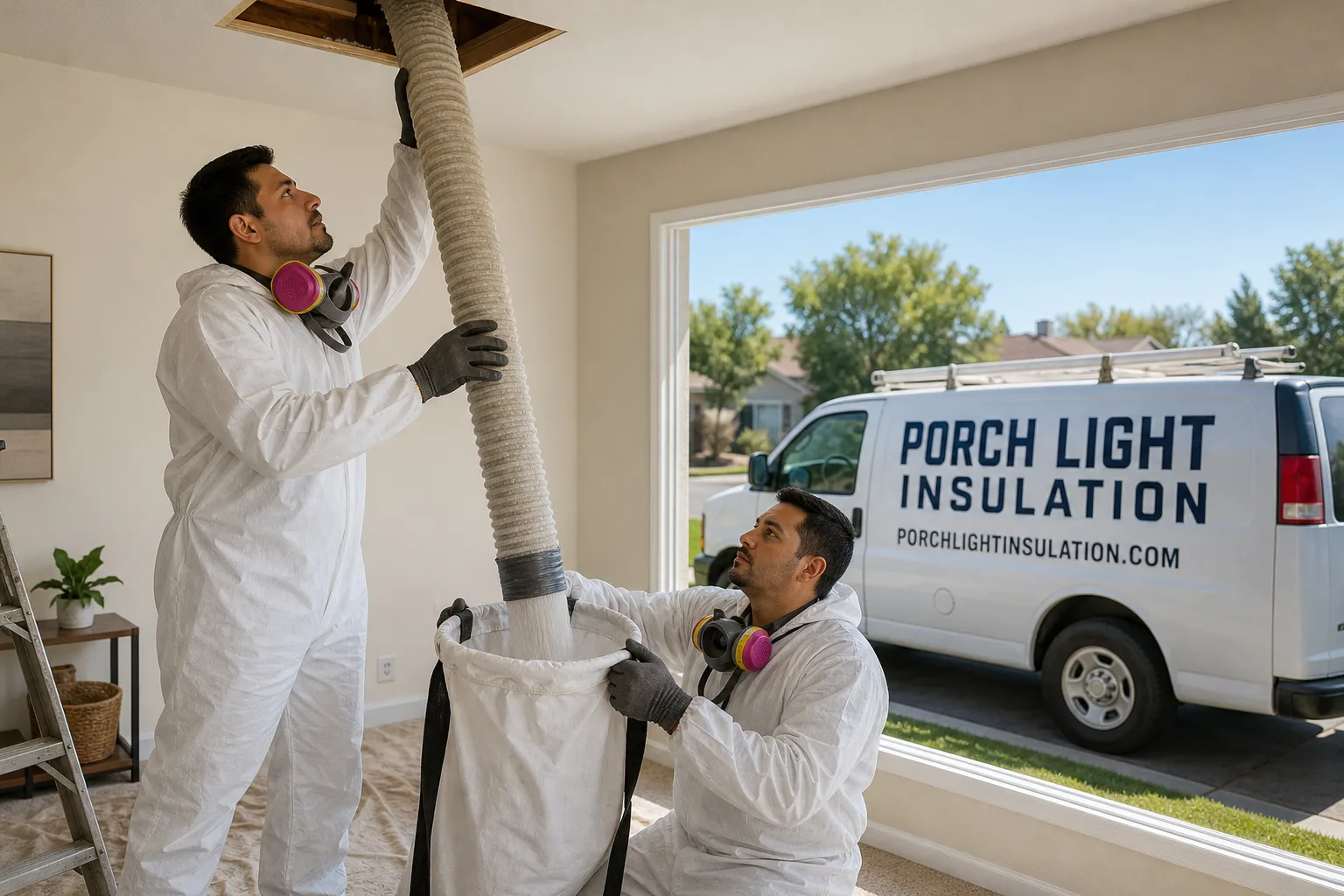
Fast, Reliable Attic Insulation Across Lakewood
Attic insulation in Lakewood typically costs $1,400 to $3,200 for removal and replacement on a standard 1,200-square-foot 1950s tract home, with blown-in fiberglass running $1,600 to $2,400 and spray foam starting around $3,000. Most Lakewood projects take one day once we have the attic access mapped. If you’re at the point where upstairs rooms bake every afternoon and the AC can’t keep up, call (877) 521-4987 for a free estimate from a crew that knows Lakewood’s homes block by block.
We work the 90711, 90712, 90713, and 90714 zip codes every week. Lakewood is different from every city around it because of the Lakewood Plan tract stock. When your house was built in 1952 or 1955 off Del Amo Boulevard or Carson Street, we already know what’s in the attic before we climb the ladder. That’s not a guess. It’s the result of opening hundreds of shallow scuttles in nearly identical homes across this city.
Why Porch Light Insulation Is Lakewood’s Preferred Attic Insulation Company
Porch Light Insulation is an insulation-only contractor. Insulation is all we do, which means it’s all we’ve mastered. Our estimators, installers, and recommendations are built around one trade, not split across roofing calls, HVAC jobs, or remodeling side work. That matters in Lakewood because these homes have specific, repeating problems. A generalist sees a shallow attic and shrugs. We see the same compressed rock-wool batts installed in 1953 that we pulled out of the house three doors down last Tuesday.
Gil Tanner, who leads our crew, has spent enough time in Lakewood attics to know which models off the Dales-built tracts have scuttle access in the hallway ceiling versus the garage, and which low-pitch roof sections choke ventilation first. That familiarity cuts your quote time down because we’re not discovering a strange floor plan for the first time. We carry eight manufacturer lines: Owens Corning, Johns Manville, Knauf, Rockwool, CertainTeed, Icynene, Demilec, and GreenFiber. We match the material to your home, not to our inventory.
Response to Lakewood is typically next-day for estimates and same-week for installation, depending on scope. Call (877) 521-4987 and you’ll get a straight answer about what’s in your attic and what it’ll take to fix it.
Attic Mold Removal in Lakewood
Attic mold removal in Lakewood is a recurring need in homes where flat and low-pitch rooflines limit airflow, leaving the underside of the roof deck damp enough to support mold growth even in our dry climate. The work involves removing contaminated insulation, treating affected framing, correcting the ventilation deficiency, and installing new insulation once the space is dry. Most Lakewood mold removal plus re-insulation jobs run $2,800 to $4,500 depending on attic size and how far the mold has spread across the sheathing.
Why Low-Pitch Roofs Make It Worse
Lakewood tract homes with shallow roof pitches have less attic volume and often undersized eave vents. When warm air rises into that tight space and can’t escape, condensation forms on cool nights. That moisture soaks into old insulation and feeds mold. We see the same pattern in the neighborhoods along Woodruff Avenue and Centralia Street where the original venting was minimal from day one.
What Removal Actually Involves
We don’t spray bleach and call it done. The moldy insulation comes out first. Then we inspect the sheathing and framing, treat affected areas, and map the venting problem that caused it. Only after the attic is dry and the airflow corrected do we install the new insulation, matched to the specific roof configuration.
Attic Insulation Removal in Lakewood
Attic insulation removal in Lakewood is the single most common starting point in this city’s tract homes, because the original 1950s rock-wool batts are too degraded to build on. Typical removal and disposal for a Lakewood Plan attic runs $800 to $1,400, with the replacement insulation priced separately based on method and R-value target.
When Removal Beats Topping Off
You can’t top off what’s already dead. Compressed rock wool and fiberglass from the Eisenhower era carries almost no R-value, and it’s usually packed with decades of dust, rodent droppings, and in too many Lakewood attics, moisture. Adding fresh insulation over that mess doesn’t fix the problem. It buries it.
What We Find Under the Old Batts
The biggest surprise for homeowners is what’s visible once the old material is out. Open top plates, unsealed can light housings, bare sheet metal duct runs, and zero air sealing. That’s why removal matters here. Fresh insulation only performs when the envelope below it is sealed, and in Lakewood’s original homes it rarely is.
Trusted Brands We Service in Lakewood
We install products from CertainTeed, Icynene, Demilec, and GreenFiber, among the eight manufacturers we’re authorized for. That matters in Lakewood because a 1950s shallow attic with a low-pitch roof wants something different than a later addition with a steeper profile. We keep fast access to local supply for GreenFiber blown-in and can move quickly on open-cell Icynene or Demilec spray foam when a homeowner wants air sealing and insulation as one step. Eight manufacturers, one goal: the right fit for your specific situation.
Common Attic Insulation Problems We See in Lakewood Homes
- Compressed 1950s batts at near-zero R-value. The original rock-wool or fiberglass installed when these tracts were built has settled and compressed over 70 years. In home after home along Del Amo and Centralia, we measure an effective depth of an inch or less.
- No wall insulation at all. The Lakewood Plan wood-frame stucco walls were built without cavity insulation. Attic work alone helps, but the afternoon heat still loads through the walls, which is why we talk honestly about what attic insulation can and can’t fix.
- Flat and low-pitch rooflines choking ventilation. Some Dales-era models and early custom homes have roof configurations that trap heat and moisture. Adding insulation without addressing venting makes the problem worse, not better.
- Stale air sealing and recessed can lights acting as chimneys. The ceiling penetrations in 1950s Lakewood homes were never sealed. Conditioned air escapes into the attic all summer, pulling in hot outside air in exchange.
Pricing for Attic Insulation in Lakewood, CA
A typical attic insulation removal and blown-in replacement on a Lakewood Plan home runs $1,600 to $2,800, though attic size and access change the number. Attic mold removal with re-insulation starts around $2,800 and can reach $4,500 on larger or heavier-growth jobs. Spray foam runs higher upfront: $3,000 to $5,500 depending on open-cell versus closed-cell and the roof deck condition. Our estimates are free and specific. We’ll walk you through the numbers for each material option so you can decide on paper, not on a guess. Call (877) 521-4987 to schedule.
We Also Serve Cities Near Lakewood
Our crew runs the same routes through Bellflower, Paramount, Artesia, and Compton. If you’re in one of those cities and want to know more about Porch Light’s take on attic insulation, start with our Attic Insulation page or see what’s specific to Attic Insulation in Lakewood.
Serving Lakewood, CA — Our Local Coverage Area
We’re based in the Lakewood area and know this community well. Use the map below to see our service coverage — if you’re nearby, we can almost certainly help.
FAQs About Attic Insulation in Lakewood
The Lakewood Plan built thousands of nearly identical tract homes in a short window, and the original rock-wool or fiberglass batts were barely adequate in 1954, never mind today. Most owners never touched them because the problem sits behind a scuttle in a hallway ceiling. We find the same compressed inch-thick material in block after block.
Most original Lakewood Plan homes have zero wall insulation, so attic work alone won’t fully solve summer heat gain. Attic insulation is the highest-impact upgrade and usually the right first step, but when you’re replacing the attic material anyway, it’s the right time to ask about what’s in the walls. We’ll tell you straight what’s worth it for your specific house.
Flat and low-pitch roof decks leave less room for both insulation and airflow, which is why ventilation prep is part of the job in many Lakewood models. You cannot stuff more insulation into a tight attic without giving the roof deck a path to breathe. Insulation and venting have to be designed together.
Remove it when it’s compressed, moisture-damaged, or contaminated with rodent activity or mold. If the material from the 1950s is still fluffy and dry, topping off can work. But in Lakewood’s tract stock, that’s the exception, not the rule.
Santa Ana events push smoke and fine ash into attic spaces through the same gaps that leak conditioned air year-round. Tighter air sealing plus proper filtration at the eave and gable vents keeps wildfire smoke from infiltrating the attic and then the living space. It’s a local consideration that changes how much emphasis we put on sealing, not just insulating.
Written by Gil Tanner, Owner at Porch Light Insulation, serving Lakewood and the surrounding cities of Bellflower, Paramount, Artesia, and Compton.
Ready to see what’s actually in your attic? Call (877) 521-4987 for a free, no-pressure estimate.