
Attic Insulation in Whittier, CA: What It Costs and Why Older Homes Need a Different Approach
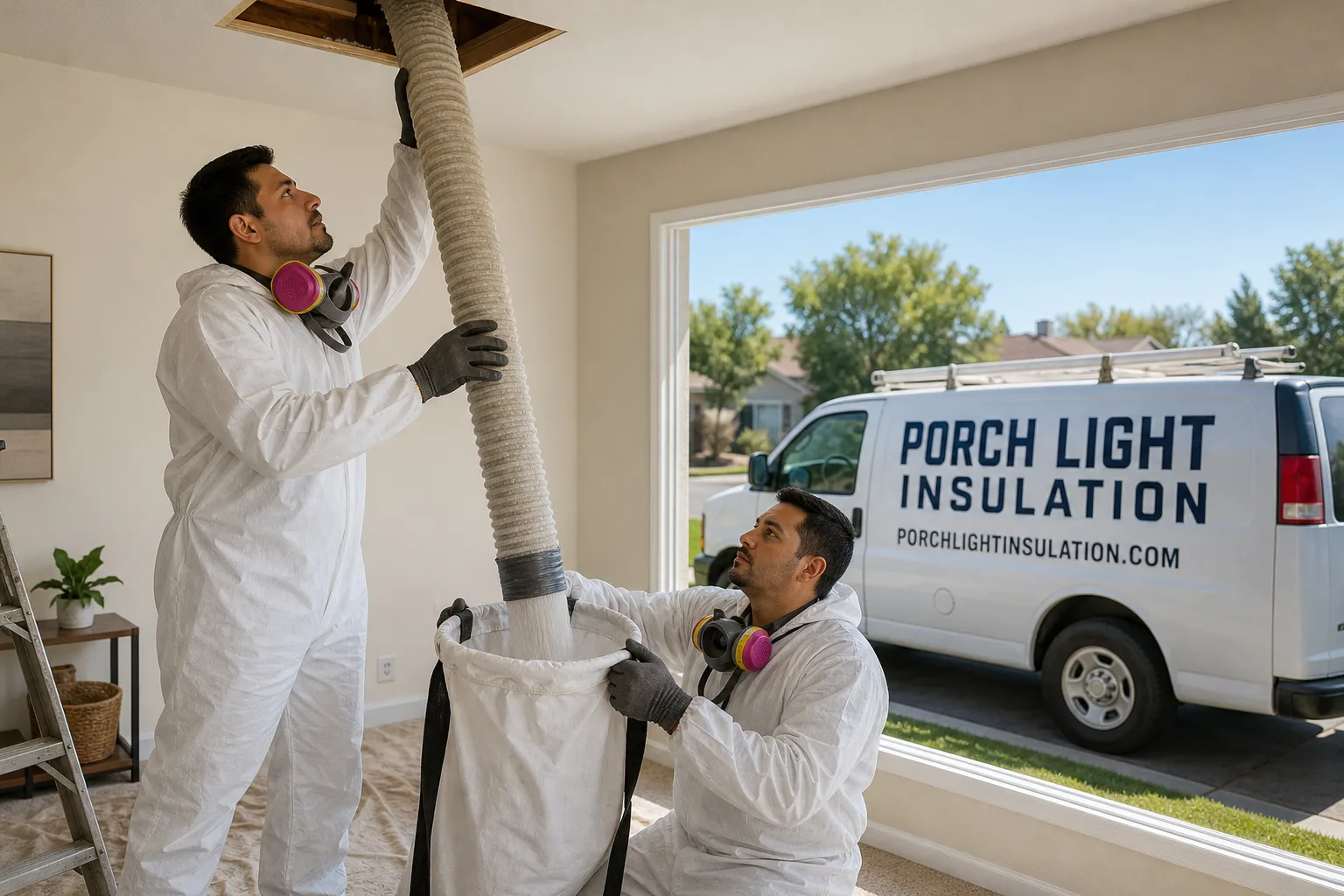
Attic insulation in Whittier typically runs $1,800 to $5,200 for a full project, with air sealing adding $600 to $1,500. Most Whittier homes need a specific approach based on when they were built: 1920s bungalows near Uptown require air sealing before any insulation goes in, while 1960s tract homes in 90603 and 90604 usually need old batts removed and replaced. We respond to Whittier calls within 24 to 48 hours and can often schedule a free attic assessment the same week you call (877) 521-4987.
Fast, Reliable Attic Insulation Across Whittier
Whittier’s housing stock is not like most of LA County. You’ve got a mix of 1920s bungalows with pier-and-beam crawlspaces around the older core of 90601 and 90602, sitting right next to 1950s-70s stucco tract homes in 90603, 90604, and 90606 that were built with a completely different construction method. That means the right attic insulation strategy for your Whittier home depends heavily on which era it came from. Porch Light Insulation has worked attics across every Whittier ZIP code, from the tree-heavy blocks around Uptown to the postwar tracts along Whittier Boulevard and Lambert Road. We show up when we say we will, assess what’s actually happening in your attic, and give you a straight answer about whether you need air sealing, new insulation, or a top-up. Call us at (877) 521-4987 to schedule a look.
Why Porch Light Insulation Is Whittier’s Preferred Attic Insulation Company
Insulation is the only thing we do. That matters in Whittier because older homes here hide problems a general contractor will miss. Our technicians spend every working day in attics, not splitting time between roofing, HVAC, and remodeling side work. When we walk through a 1930s California bungalow in the historic districts east of Painter Avenue, we’re looking for open top plates and balloon-frame cavities that let hot attic air pour into wall space. When we enter a 1965 stucco tract home in 90604, we’re checking whether those original fiberglass batts have settled to R-5 or less from decades of heat, rodents, and compression.
Gil Tanner, who leads our team, has built Porch Light around one principle: match the material to the home, not to our inventory. We carry products from eight manufacturers including Owens Corning, GreenFiber, Icynene, and Demilec. That breadth means a Whittier homeowner with a hot upstairs bedroom gets the same honest comparison as someone planning a full new-construction build. We don’t steer everyone toward the highest-margin product. We figure out what your attic actually needs and quote accordingly.
Our customers in Whittier tell us the things that matter: we showed up on time, the crew cleaned up the attic and hallways, and the rooms finally stopped baking in July. Those reports come from neighborhoods like Friendly Hills, Michigan Park, and the historic blocks around Philadelphia Street. We serve the full Whittier area, and we’re local enough to understand what triple-digit inland heat does to a vented attic.
Radiant Barrier in Whittier
Radiant Barrier in Whittier is often the single most effective upgrade for homes in the 1950s-70s tracts of 90603 and 90604, where vented attics bake under direct sun and ductwork loses cooled air before it reaches bedrooms. In Whittier’s inland LA-basin climate, hot dry summers with regular triple-digit stretches mean attic radiant-heat gain is the dominant comfort problem. A radiant barrier installed on the underside of your roof deck reflects that heat away before it radiates down into the attic floor and living space.
How Radiant Barrier Works in Whittier’s Climate
Whittier sits far enough inland that we don’t get the cooling marine layer the beach cities enjoy. Your attic can hit 130 to 140 degrees on an August afternoon. A radiant barrier drops that surface temperature measurably, which means less heat radiating down into whatever insulation you have on the attic floor, and less heat soaking into your ductwork. In Whittier, radiant barrier installation typically runs $1,200 to $2,800 depending on attic size and roof complexity. We install it alongside whatever insulation strategy your home needs.
When Whittier Homeowners Should Consider Radiant Barrier
If your central AC runs constantly from noon to sunset and your upstairs rooms never quite cool down, radiant barrier is worth evaluating. One caveat specific to Whittier: heavy tree canopy over older blocks keeps roof-surface temps lower than exposed roofs, so a shaded 1920s bungalow may benefit more from air sealing and insulation than from radiant barrier. We always check sun exposure before recommending it.
Attic Cleaning Services in Whittier
Attic Cleaning Services in Whittier are critical before any insulation top-up or replacement, especially for homes in the mature-tree neighborhoods around Michigan Park, Mar Vista, and the older blocks of 90601. Camphor and citrus trees drop debris that clogs soffit vents, traps heat, and provides nesting material for rodents. We’ve pulled decades of rat droppings, old insulation dust, and leaf litter out of Whittier attics that looked intact from the hatch.
What Attic Cleaning Involves in Whittier
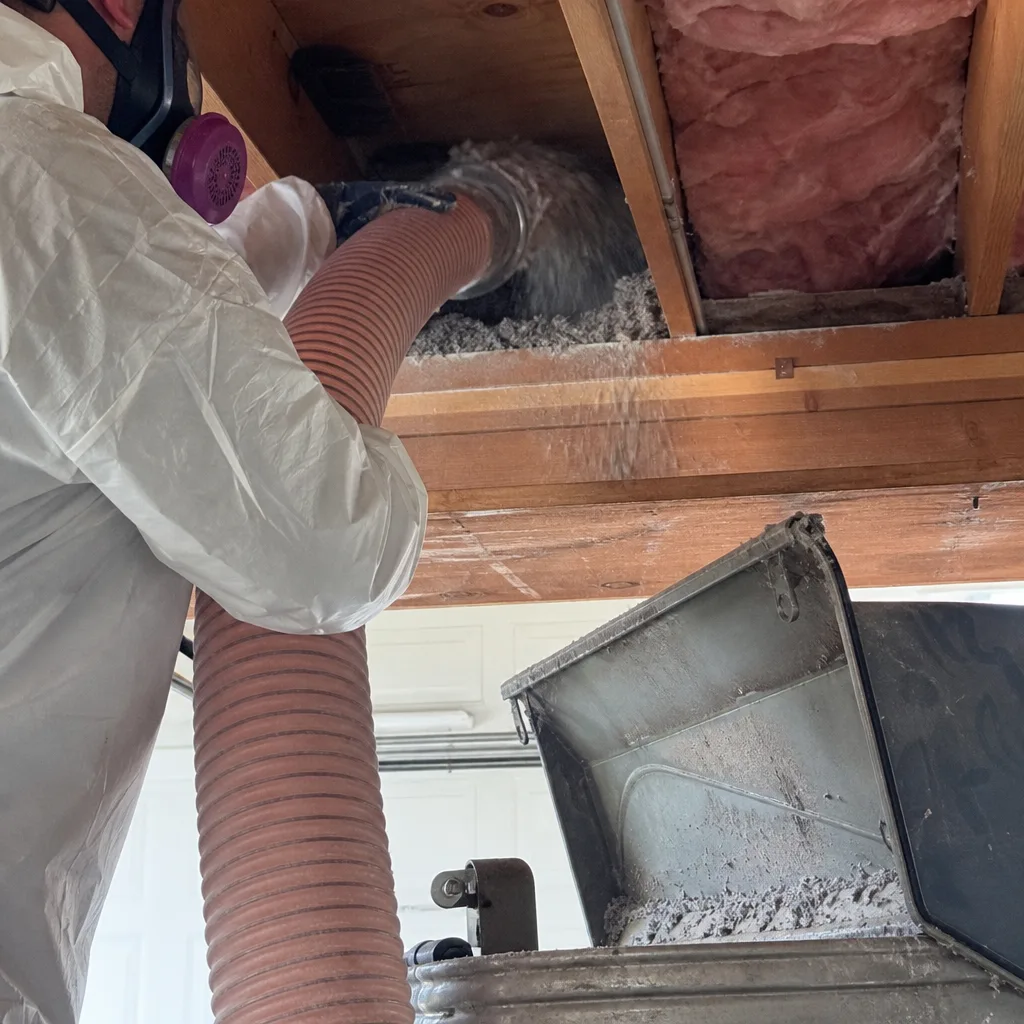
We remove old insulation, vacuum debris, sanitize the attic floor, and clear any vent obstructions. In Whittier’s 1950s-70s tract attics, this usually means removing compressed fiberglass batts that read as “insulated” but have settled to near zero R-value after forty or fifty years of heat cycles and rodent traffic. Attic cleaning in Whittier generally runs $800 to $1,800 before new insulation goes in.
When Cleaning Becomes Necessary
If you smell something musty when you open the attic hatch, if you hear scratching at night, or if your energy bills have crept up while the attic looks fine, you likely have debris and degraded insulation sitting up there. Cleaning first means your new insulation goes onto a clean, sealed surface instead of burying problems under a fresh layer of fiberglass.
What happens when you call
- 1
A real person answersNo phone trees — you reach a local pro.
- 2
You get an upfront price rangeHonest numbers before anyone is dispatched.
- 3
A background-checked tech heads outLicensed & insured, dispatched right away.
- 4
You approve before work beginsNothing starts until you say go.
Trusted Brands We Service in Whittier
Porch Light Insulation is authorized to install products from eight manufacturers, and we choose based on what your Whittier home needs. For older bungalows and retrofits, we often recommend GreenFiber cellulose for its air-sealing characteristics and fire resistance. For performance-first homeowners in newer tracts, closed-cell spray foam from Icynene or Demilec offers the highest R-value per inch plus vapor control in one step. For mid-century tract homes needing a straightforward replacement, Owens Corning fiberglass batts remain a solid, proven option. Because we carry all of these, not just one or two, we match the product to your home. That’s the whole point. We keep common materials ready for Whittier jobs, which means faster turnaround when you call.
Common Attic Insulation Problems We See in Whittier Homes
- Open top plates in 1920s-40s bungalows. The original builders left gaps where interior walls meet the attic floor. Hot attic air pours down into wall cavities and into your living space no matter how much insulation you add. Air sealing has to happen first.
- Settled, compressed fiberglass batts in 1950s-70s tracts. What looked like R-19 in 1968 is performing closer to R-5 today. Heat cycles compress the material, rodents nest in it, and it stops doing its job. Replacement is usually the right call.
- Clogged soffit vents from mature camphor and citrus trees. Whittier’s older blocks are heavily shaded, which sounds nice, but that canopy drops constant debris that blocks airflow and traps heat in the attic. Your attic can’t vent properly if the soffits are plugged.
- False confidence from “insulated” attics. Many Whittier homeowners assume their attic is fine because they see fiberglass when they peek up there. The reality is that original 1960s batts often read as insulated but perform near zero after decades of degradation.
Pricing for Attic Insulation in Whittier, CA
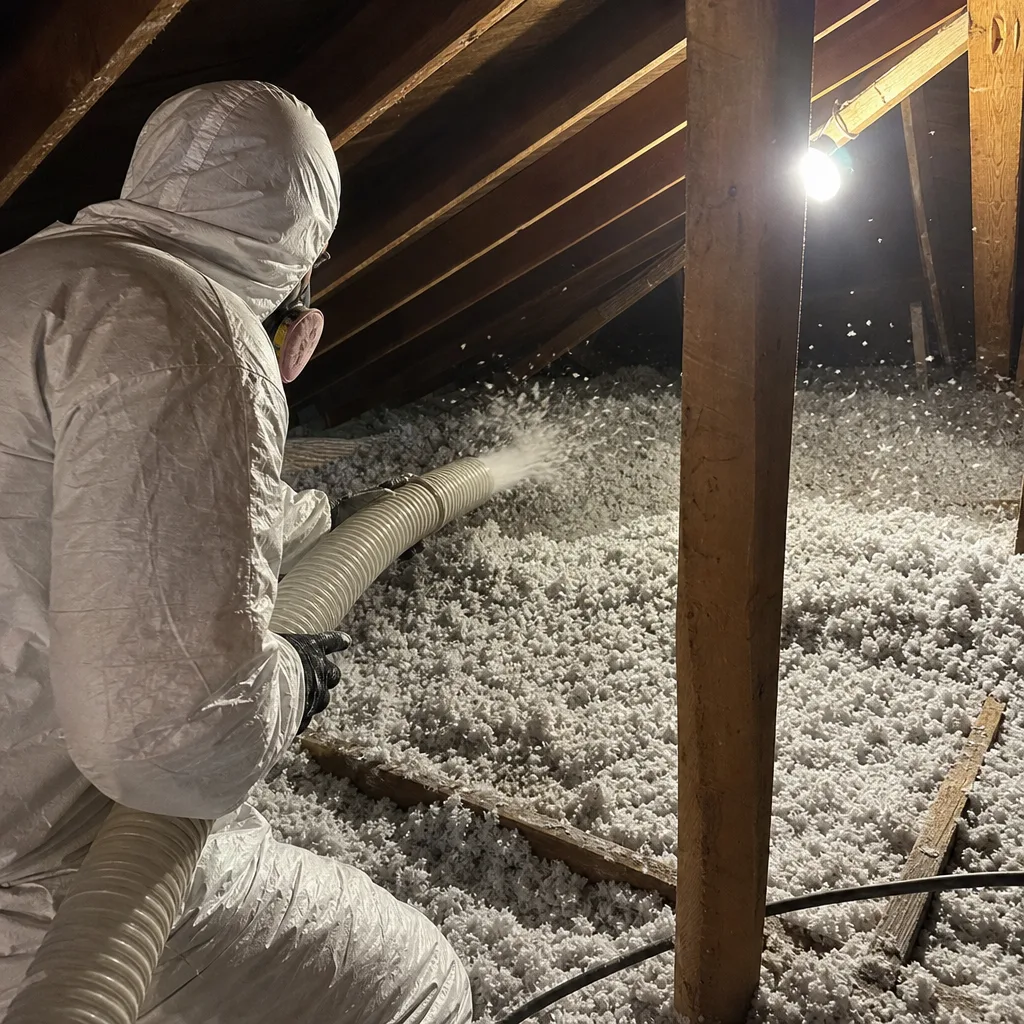
Here’s what you’re looking at in Whittier today. Air sealing a typical 1,200 to 1,800 square foot attic runs $600 to $1,500. Blown-in insulation to R-38 runs $1,800 to $3,200 depending on square footage and whether old material needs removal first. Attic batt insulation replacement runs $2,000 to $4,000. Radiant barrier runs $1,200 to $2,800. A full project combining air sealing, attic cleaning, and new insulation on a 1,500 square foot Whittier home typically lands between $3,500 and $5,200. Pier-and-beam homes in the older core sometimes need additional knee wall work, which adds $400 to $900. We quote upfront and the estimate is free. Call (877) 521-4987 to get exact numbers for your place.
We Also Serve Cities Near Whittier
Our crew works throughout Whittier and the surrounding communities: South Whittier, West Whittier-Los Nietos, Santa Fe Springs, and Pico Rivera. If you’re a homeowner in any of these areas, you get the same insulation-only specialization and the same straight answers. Our Attic Insulation expertise covers the full range of materials and methods, so no matter your home’s era, we’ll match the right product to it.
Serving Whittier, CA — Our Local Coverage Area
We’re based in the Whittier area and know this community well. Use the map below to see our service coverage — if you’re nearby, we can almost certainly help.
FAQs About Attic Insulation in Whittier
No, not if you want the problem actually solved. Blowing attic insulation without first sealing the open top plates and knee walls in a 1940s Whittier bungalow leaves the wall cavities connected to the attic. Hot air pours down into your living space and the new insulation underperforms. Air sealing comes first, then insulation. Call (877) 521-4987 and we’ll explain what your specific attic needs.
Look for settling, compression, rodent droppings, and dark staining along the edges where air has been moving through. If the batts are flattened to a fraction of their original loft, they’re dead. In Whittier’s 1960s tracts, original batts are almost always past their service life. We can inspect and give you an honest read.
Yes, and it’s one of the things we check. Heavy camphor and citrus canopy over older Whittier blocks keeps your roof surface cooler, which means radiant barrier may not be your best investment. An exposed roof in a 1960s tract in 90603 or 90604 is a different story. Shade changes the math. We factor that in before recommending anything.
Cleaning removes the old degraded material, debris, and rodent contamination so new insulation goes onto a clean sealed surface. Adding on top buries the problems, leaves clogged vents blocked, and gives you false confidence that your attic is properly insulated. In Whittier’s older homes, cleaning first is usually the right call.
Yes, and in many Whittier bungalows it’s the single most effective step. The open top plates and balloon-frame cavities in those homes act as chimneys, pulling hot attic air down into the upstairs rooms. Sealing those pathways with closed-cell foam often does more for comfort than any amount of new insulation. Call us at (877) 521-4987 for a free assessment.
Get a Free Attic Insulation Quote in Whittier
We know Whittier attics because we’ve worked in every era of home this city has: the 1920s bungalows near Uptown, the shaded blocks of 90601 and 90602, and the settled-batt tracts of 90603, 90604, and 90606. Insulation is all we do, and Gil Tanner leads the team with that focus. Call (877) 521-4987 today to schedule a free attic assessment. We’ll tell you what’s actually going on up there and what it’ll cost to fix it. No guessing, no upsell, no pressure.
Written by Gil Tanner, Owner at Porch Light Insulation, serving Whittier and surrounding communities.