
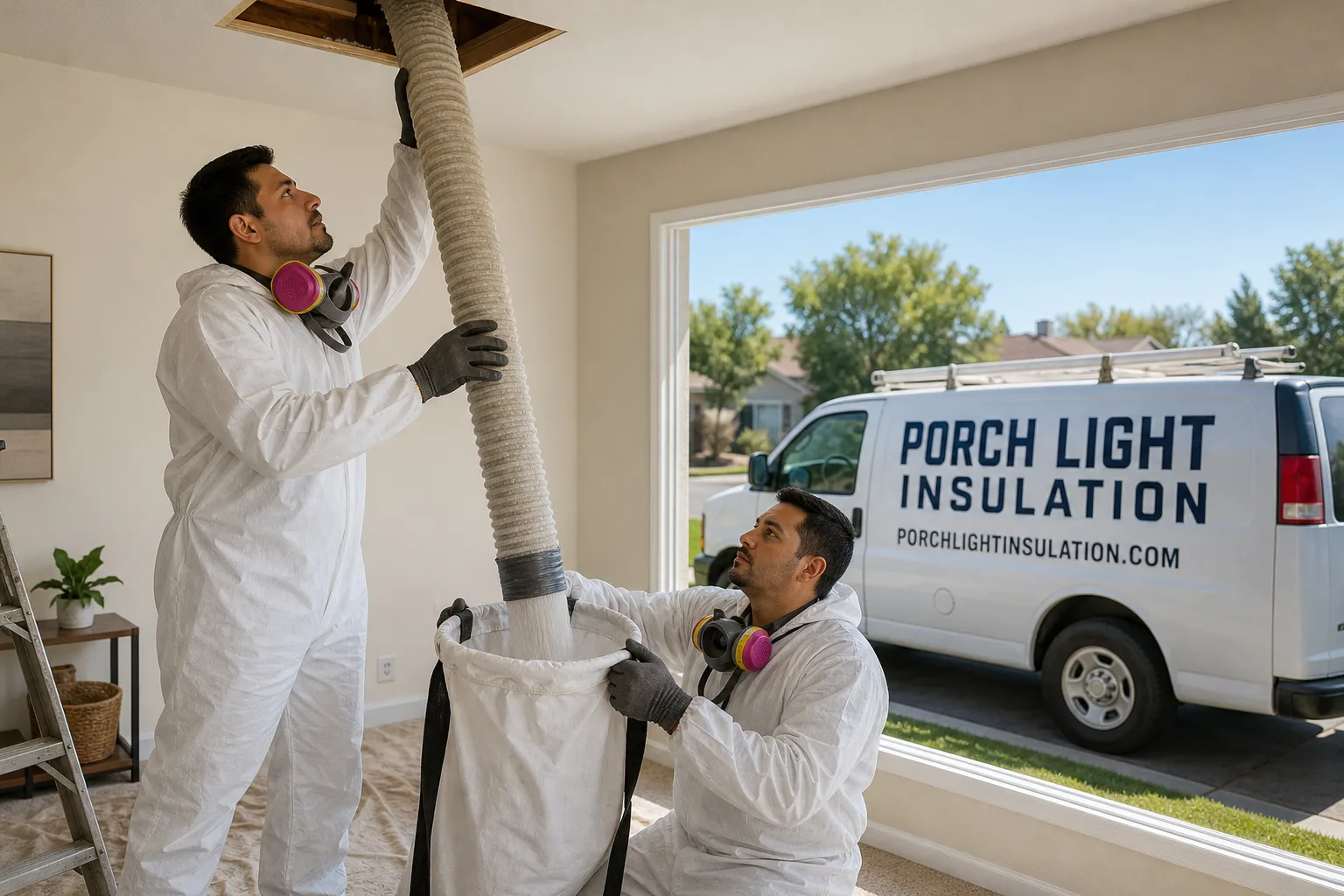
Fast, Reliable Spray Foam Insulation Across Montebello
A closed-cell spray foam retrofit in a 1950s Montebello attic typically runs $3.50 – $6.00 per board foot installed, while open-cell foam lands between $1.80 – $3.00 per board foot. Most Montebello jobs are retrofit work, not new construction, which means the prep matters as much as the spray. We’re in and out of 90640 weekly, so we know exactly what’s waiting behind those stucco walls and low-pitch shingle roofs. If you’re waking up to a hot upstairs bedroom or an attic that bakes all afternoon, call us at (877) 521-4987 and we’ll walk you through what’s actually happening up there.
Montebello’s housing stock is almost entirely post-war: small tract houses and low-rise apartments built fast in the 1940s through the 1960s. The insulation in those homes was never designed for today’s utility rates or this inland heat. Our Spray Foam Insulation team works on these older Montebello homes constantly, and we’re familiar with the wiring, the framing, the roof pitch, and the heat patterns that define 90640. That local repetition means we show up knowing what to look for, not figuring it out on your clock.
Why Porch Light Insulation Is Montebello’s Preferred Spray Foam Insulation Company
Insulation is the only trade we work in. Gil Tanner built Porch Light around this single focus, and our Montebello customers notice the difference when the estimator starts talking about recessed-can clearances, knob-and-tube wire separation, and closed-cell cure rates on hot attic decks. General contractors install insulation as one line item among many; we live in the details. That’s why calls from Montebello homeowners consistently start with questions like “Can you actually fix what the last guy sprayed?” The answer is usually yes, and we walk through the problem before anyone pulls a trigger on a spray rig.
We hold authorization to install products from eight manufacturers: Owens Corning, Johns Manville, Knauf, Rockwool, CertainTeed, Icynene, Demilec, and GreenFiber. That’s not a brochure claim. It means when a Montebello homeowner calls with a hot, flat-roof 1952 tract house, we’re not steering them toward the one foam we happen to stock. We match the material to the structure. For closed-cell work on low-pitch shingle decks, we often recommend Demilec or Icynene lines because of how they handle high attic heat. For budget-conscious open-cell fills on interior walls, we have options. One home gets open-cell. The next gets closed-cell. The right material for the actual problem is the whole point of being a specialist.
Closed Cell Spray Foam Insulation in Montebello
Closed Cell Spray Foam Insulation is the workhorse for Montebello’s hottest, tightest attic spaces. In a 90640 home with a low-pitch asphalt shingle roof and minimal tree cover, attic temperatures routinely spike past 140°F in July and August. Closed-cell foam at 2 inches delivers roughly R-13 and, more importantly, acts as a true air and vapor barrier, which stops that hot shingle-deck heat from radiating down into your living space. It also adds structural rigidity to older roof framing. For Montebello homes with settled or crushed original insulation, closed-cell is often the upgrade that finally ends the afternoon heat soak.
Shingle-Deck Heat and Vapor Control
Montebello’s flat street grid and dense low canopy mean most roofs get sun all day with zero relief. When closed-cell is sprayed directly to the underside of the sheathing, it seals the attic so the thermal boundary moves from the ceiling plane to the roofline. That’s a completely different thermal behavior than a vented attic with fiberglass batts, and it’s exactly what many of these older homes need. We see the difference in interior temps within 24 hours of a proper spray.
Retrofit Into Unvented Original Attics
The catch is prep. Many Montebello attics from the 1950s were never vented properly to begin with, so sealing them with foam changes how moisture moves through the space. We assess the existing vents, the deck condition, and the wiring before we ever spray. On a recent Wilcox Avenue job near Montebello City Park, our crew found knob-and-tube runs and bare recessed can fixtures embedded in the deck, exactly where foam was going to go. Had we sprayed over them, we’d have created a heat trap and a code violation that someone would have to tear out later. Instead, we cleared and boxed every fixture, pulled the old wiring out of the foam path, and sprayed a sealed deck that stopped the bedrooms from baking every afternoon.
Open Cell Spray Foam in Montebello
Open Cell Spray Foam does a different job in a Montebello home. It’s half the cost of closed-cell per board foot and it’s excellent for interior walls, band joists, and attic floors where you need air sealing but not a vapor barrier. For a 1950s tract house in Montebello with an attic that’s vented and a ceiling that’s leaking cool air all summer, open-cell on the attic floor can cut the air exchange dramatically without trapping moisture. It expands aggressively to fill odd framing cavities in older walls, which makes it a smart choice for retrofit wall insulation where batts would leave gaps.
Attic Floor and Wall Cavity Fills
We run open-cell jobs throughout 90640 for homeowners who want the air-sealing benefit of foam without the full closed-cell price. It works well in attic floors over vented attics and in rim joists where older homes leak conditioned air at the sill plate. One thing to understand: open-cell is not a vapor barrier. In Montebello’s dry summer climate that’s usually fine for attic floors, but it’s not the right product if you’re trying to seal a sweaty roof deck. We’ll tell you which one makes sense after we look at your roof pitch, your existing venting, and the condition of what’s already up there.
When Not to Use Open-Cell
If your Montebello attic is unvented and the roof deck gets direct sun all day, open-cell alone won’t stop the moisture that forms when warm, humid air meets a hot surface. We’ve seen homeowners try it and end up with deck staining within a season. The material isn’t bad; the application was wrong. That’s exactly the kind of mistake we catch during our estimate, before any foam goes down.
Trusted Brands We Service in Montebello
We’re authorized to install Icynene, Demilec, and GreenFiber products, among the broader eight-brand bench we carry. For Montebello’s hot low-pitch roofs, Demilec and Icynene closed-cell lines are frequent picks because of how they perform on baking shingle decks. GreenFiber gets used on the blown-in side when a homeowner wants a mixed approach: foam for air sealing, loose-fill for added attic R-value. Because we install all of these brands regularly, we can compare them honestly on your specific Montebello house rather than steering everyone toward the highest-margin product. Eight manufacturers, one goal: the right fit for your particular structure.
Common Spray Foam Insulation Problems We See in Montebello Homes
- Foam sprayed over unboxed recessed can fixtures. In original 1950s and 1960s Montebello ceilings, old can lights sit bare in the deck. Foam over them traps heat, creates a fire hazard, and has to be cut out and redone. We box every fixture before spraying.
- Knob-and-tube or early Romex buried in closed-cell foam. Aged conductors inside foam can overheat because the insulation traps heat instead of dissipating it. We clearance all wiring runs before any closed-cell goes near them, and we’ll tell you if your wiring should be evaluated first.
- Unvented original attics sealed without a moisture plan. When a 1950s attic with no proper venting gets sealed tight, humidity has nowhere to go. We look at your specific roof geometry and deck condition in Montebello’s dry-summer climate before recommending sealing.
- Foam applied over crushed, settled legacy insulation. We’ve opened up Montebello attics where original fiberglass had settled to two inches and someone sprayed foam right on top. It doesn’t adhere, leaves voids, and you get hot and cold spots. The old material has to come out or be addressed first.
Pricing for Spray Foam Insulation in Montebello, CA
For a typical Montebello retrofit, closed-cell spray foam runs $3.50 – $6.00 per board foot installed depending on depth, deck access, and prep work like can boxing and wire clearancing. Open-cell lands between $1.80 – $3.00 per board foot. A full 1,000-square-foot attic floor with 3 inches of open-cell usually falls in the $1,800 – $3,000 range, while closed-cell on a roof deck at 2 inches for that same footprint more commonly runs $7,000 – $12,000. What changes your number: roof pitch (low-pitch is harder to spray evenly), attic access, the amount of old insulation to be removed, and how much fixture clearancing is required. We give free Montebello estimates, and the number we quote is the number on the invoice. Call (877) 521-4987 for an exact quote on your home.
We Also Serve Cities Near Montebello
If you’re just outside the 90640 line, we regularly run spray foam jobs in Pico Rivera, South San Gabriel, East Los Angeles, and Monterey Park. Many of those homes were built in the same era and face the same attic heat problems we fix in Montebello every week. Our service area covers the full stretch, and our Spray Foam Insulation in Montebello team routes across all of it.
Serving Montebello, CA — Our Local Coverage Area
We’re based in the Montebello area and know this community well. Use the map below to see our service coverage — if you’re nearby, we can almost certainly help.
FAQs About Spray Foam Insulation in Montebello
Yes, with the right prep first. We will not spray closed-cell foam over active knob-and-tube or unboxed conductors. The wiring has to be clearanced, boxed, or rerouted out of the foam path before any spray happens. On original 1950s Montebello homes, this is standard practice for us, and we’ll flag it during the estimate so you know exactly what’s involved before you sign anything. Call (877) 521-4987 and we’ll walk through what’s in your attic.
For a low-pitch shingle roof with direct sun all day, closed-cell foam is almost always the right call. It seals the deck, stops the heat from radiating into the living space, and acts as a vapor barrier where the hot, dry attic meets the warm interior air. Open-cell on that same roof can leave moisture to condense on the underside of the sheathing. We’ll tell you straight if your specific Montebello roof geometry calls for closed-cell or if open-cell can do the job.
Yes, in most Montebello homes the original fiberglass or loose-fill has settled, compressed, and collected dust for 60 years. Foam won’t bond to it, and spraying over it leaves voids that show up as hot and cold spots. We remove or address the old material before any foam goes down. That step is part of our estimate, not an extra surprise later.
Yes, we box and clear every recessed can fixture before spraying. It’s non-negotiable on Montebello homes from that era, where the cans were never designed to be covered. If you skip this step, the foam creates a heat pocket around the fixture and you’re looking at a code problem and a potential fire hazard. We handle it as standard practice.
It can, if the wrong product is used or the attic is sealed without thinking through moisture movement. Montebello’s climate is dry most of the year, which helps, but an unvented 1950s attic sealed with closed-cell foam still needs a plan for the moisture that builds up from cooking, showers, and breathing. We assess each roof deck individually. Some Montebello homes are good candidates for a sealed, conditioned attic; others need venting preserved. We’ll tell you which camp your house falls in before spraying anything.
Ready to Fix That Hot Montebello Attic?
If the upstairs bedrooms in your Montebello home heat up every afternoon, or you can feel the air conditioner running and running without winning, spray foam might be the answer. It’s not the answer for every house, and we’ll tell you that too. Call Porch Light Insulation at (877) 521-4987 for a free Montebello estimate. Gil Tanner and our crew know 90640 attics better than most, because insulation is all we do. That means the quote you get is based on what’s actually in your attic, not a one-size guess.
Written by Gil Tanner, Owner at Porch Light Insulation, serving Montebello since our founding.