
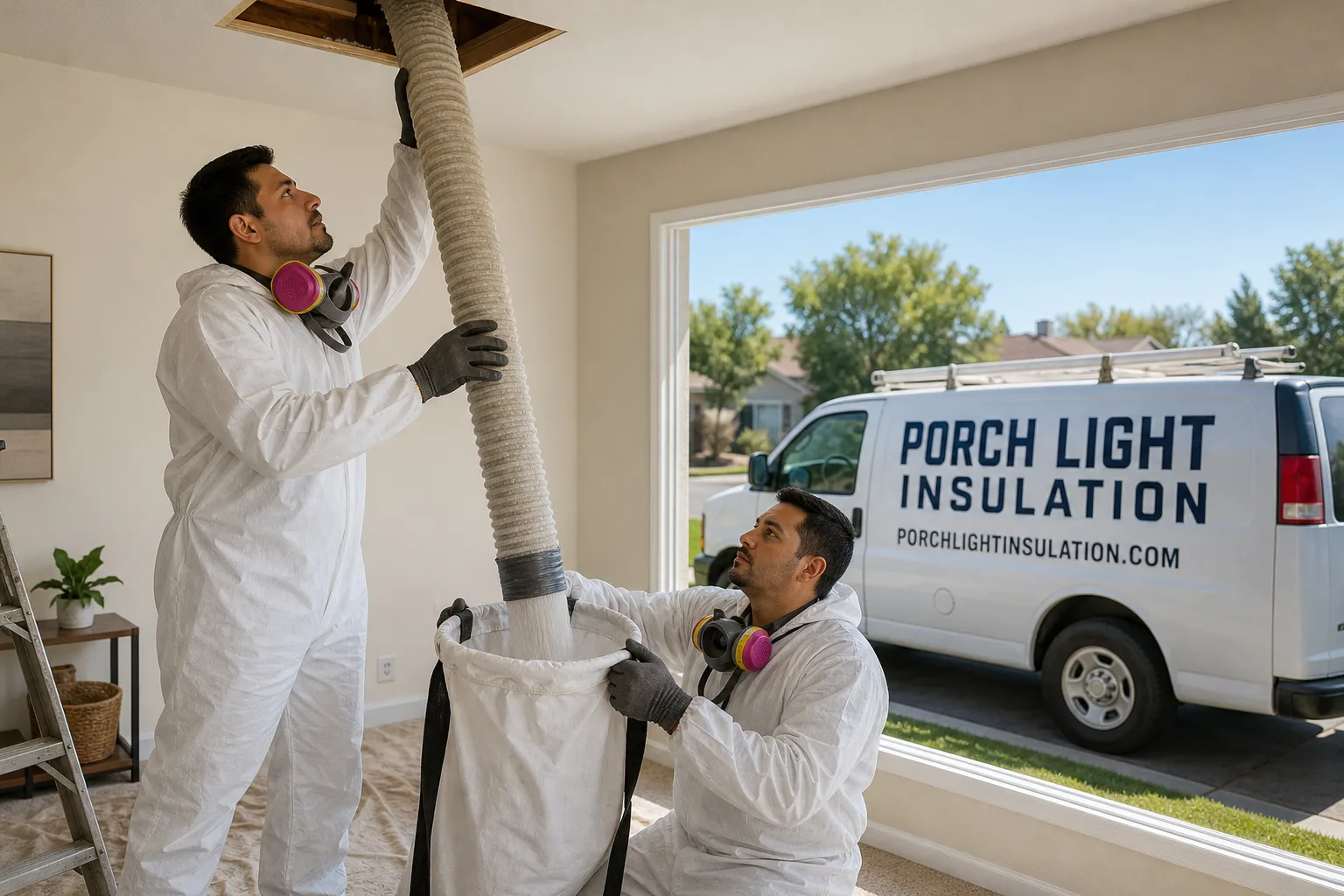
Fast, Reliable Spray Foam Insulation Across Sierra Madre
Spray foam insulation in Sierra Madre typically costs between $2,800 and $6,500 for a full crawl space or garage ceiling application, with attic and rim joist work falling within that range depending on square footage and foam type. We serve every neighborhood in Sierra Madre, from the canyon-mouth streets near Bailey Canyon and Santa Anita Canyon to the historic bungalows downtown and the foothill homes along Baldwin and Orange Avenues. Porch Light Insulation is a dedicated insulation contractor based nearby in Universal City, which means our crews reach Sierra Madre fast, usually same week for estimates and within days for installation. Call (877) 521-4987 and we’ll give you a straight answer about what your home needs.
Why Porch Light Insulation Is Sierra Madre’s Preferred Spray Foam Insulation Company
Sierra Madre homeowners deal with a specific set of conditions that most insulation contractors in the San Gabriel Valley don’t fully account for: foothill heat, canyon winds, ember exposure, and old uninsulated framing that needs careful handling. Our reputation in Sierra Madre is built on that specificity. We’ve worked on 1920s bungalows off Mountain Trail Avenue, mid-century ranch homes near the downtown core, and custom homes on sloped lots in the foothills. Each job starts with the same question: what is this house actually asking for?
We’re insulation-only. That’s not a slogan here; it’s how our estimates and installs are structured. A homeowner near Baldwin Avenue whose garage ceiling hits 130 degrees in July needs someone who thinks about spray foam all day, not a general contractor squeezing an insulation job between a roof and an HVAC replacement. Gil Tanner, who leads our team, has built the company around that focus. We carry eight manufacturer lines including Icynene, Demilec, and GreenFiber, so a foam recommendation comes from what your walls and framing actually need, not from whatever single product is sitting in a warehouse.
Response time to Sierra Madre: most estimates are scheduled within three to five business days, and we can often move installs up quickly for canyon-mouth homes facing inspection deadlines. You won’t wait two weeks for a call back.
Crawl Space Spray Foam Insulation in Sierra Madre
Crawl Space Spray Foam Insulation in Sierra Madre is one of the most important retrofits for homes built on the sloping lots that climb toward the San Gabriels. Those sloped-lot crawl spaces get moisture moving through them in ways flat-lot valley homes don’t. Rain runoff follows the grade, runs under the house, and condenses against the underside of the floor system. Open-cell foam applied to the subfloor and rim joists stops warm, damp air from meeting the cooler floor framing, which is exactly where the musty smell and sagging insulation in many Sierra Madre crawl spaces starts. A typical crawl space encapsulation with open-cell spray foam in Sierra Madre runs $3,200 to $5,800 depending on access and square footage.
Closed-cell foam in a crawl space is a different animal. It adds structural rigidity, which matters on older foothill framing, and it acts as its own vapor barrier. That’s worth the higher material cost on homes with persistent drainage issues. Expect $4,500 to $7,200 for a closed-cell crawl space retrofit.
Sloped-Lot Drainage and Vapor Barrier Work
On a foothill property above Grandview Avenue, we often find gutter downspouts dumping water right at the foundation line. That moisture migrates under the house before any foam is even installed. We recommend addressing drainage at the same time as the spray foam job, because foam on a saturated crawl space won’t cure or adhere properly. A failed adhesion is a call-back waiting to happen. Porch Light crews check vapor barrier condition before spraying and flag drainage problems instead of covering them up.
Working Around Old Framing and Wiring
Many Sierra Madre crawl spaces still show the original redwood or Douglas fir framing from the 1920s through 1950s. That older wood is often wet in places, which affects how open-cell foam behaves. We test for moisture content first and route around knob-and-tube or old cloth-wrapped wiring that’s still active. The foam doesn’t go near that wire. It gets a keep-out zone, which is the only correct way to do it without forcing a full electrical rewire.
Garage Spray Foam Insulation in Sierra Madre
Garage Spray Foam Insulation in Sierra Madre is one of the highest-return upgrades for homes where the garage shares a wall or ceiling with living space. In summer, a Sierra Madre garage ceiling radiates heat into the rooms above or beside it. Many of the older bungalows here have a bedroom directly over the garage. That room gets unusable in July and August. Spray foam on the garage ceiling breaks that heat bridge. Expect to pay $2,200 to $4,100 for a typical single-car garage ceiling, more for a two-car with a bonus room above.
We use open-cell foam for most garage ceilings because it expands fully into the joist bays and seals the cracks where air leaks through. But closed-cell makes sense on walls shared with living space, where the higher R-value per inch matters and you don’t have room for thick foam.
Garage Ceilings Under Bedrooms
The homes along Lima Street and around the canyon-edge streets, where the garage sits under a bedroom wing, are exactly the jobs where this matters most. The foam needs to go tight to the subfloor and around every penetration. A small gap around a wire or a vent pipe is a heat channel. Our crews use a thermal camera after spraying to check for gaps and re-apply before we call the job done.
Chapter 7A Ember Considerations for Attached Garages
Sierra Madre’s canyon-mouth garages fall under wildfire ember-zone requirements. Garage vent screens on these properties must meet Chapter 7A standards. Spray foam alone doesn’t solve that. But we combine foam with ember-resistant vent screening on the same visit, because the two jobs belong together. A garage ceiling full of foam with unscreened vents is still an ember entry point. That’s a failure we see on some valley-contractor installs, and it doesn’t pass inspection.
Trusted Brands We Service in Sierra Madre
Porch Light Insulation is authorized to install Icynene and Demilec spray foam lines, alongside fiberglass and mineral wool products from Owens Corning, Johns Manville, Knauf, Rockwool, CertainTeed, and GreenFiber. For Sierra Madre, that means something specific: when a house needs an ignition-resistant assembly, we’re not limited to one foam brand’s data sheets. We match open-cell Icynene or closed-cell Demilec to the cavity depth, the moisture profile, and the Chapter 7A requirements. Parts and materials for Sierra Madre jobs are staged before our crew arrives, so we’re not running back to a supply house mid-install. That keeps the job moving on the tight lots and narrow driveways common on foothill streets.
Insulation is the only thing we install. When our estimator walks through a Sierra Madre attic, they’re not thinking about a roof replacement or an HVAC upsell. They’re thinking about air movement, R-value per inch, and fire performance. Eight manufacturers mean the right material gets chosen for the application, not the other way around.
Common Spray Foam Insulation Problems We See in Sierra Madre Homes
- Foam without ember-rated vent screens. Spray foam applied in canyon-mouth foothill zones without the companion Chapter 7A vent screening often fails inspection. The foam itself performs fine, but the assembly is incomplete and the homeowner is left redoing a job that should have been one visit.
- Foam expanding into old lath-and-plaster walls. When cavity depth isn’t checked before injection on a 1920s bungalow, the foam can expand behind the plaster keys and crack the wall finish. We measure and meter the application differently on these homes, preserving the historic plaster so a design-review project doesn’t turn into a plaster restoration.
- Adhesion failure in damp foothill crawl spaces. Spray foam won’t bond to a wet floor joist. Crawl spaces below canyon-side homes with drainage running under the house need moisture assessment and often vapor barrier repair first. Skip that step and the foam can peel in sheets.
- Wrong foam type for the cavity. A closed-cell foam in a shallow ceiling cavity meters the space differently than open-cell because it cures denser and expands differently. Getting this wrong can bulge a garage ceiling or leave the homeowner paying for R-value they didn’t get. That’s why our estimates always specify foam type by the cavity, not by habit.
Pricing for Spray Foam Insulation in Sierra Madre, CA
Here are honest numbers for Sierra Madre’s market, based on the homes we actually see here. A crawl space job runs $3,200 to $5,800 for open-cell and $4,500 to $7,200 for closed-cell. Garage ceiling spray foam on a single-car garage under a bedroom runs $2,200 to $4,100. Rim joist work for a standard perimeter runs $800 to $1,600. Roof deck spray foam, usually on a remodel or hot attic conversion, is $4,000 to $8,500 depending on roof geometry and access. Chapter 7A vent screening adds $300 to $900 depending on vent count. Foam type, cavity depth, access difficulty, and moisture conditions all move these numbers. We quote from our truck after looking at the actual space, and estimates are free. Call (877) 521-4987.
We Also Serve Cities Near Sierra Madre
Our crews work throughout the San Gabriel foothills. Beyond our Spray Foam Insulation in Sierra Madre service area, we regularly handle jobs in Sierra Madre neighboring communities including Arcadia, East Pasadena, Mayflower Village, and Monrovia. The same insulation-specific crews, the same manufacturer access, and the same attention to foothill conditions apply across the whole corridor.
Serving Sierra Madre, CA — Our Local Coverage Area
We’re based in the Sierra Madre area and know this community well. Use the map below to see our service coverage — if you’re nearby, we can almost certainly help.
FAQs About Spray Foam Insulation in Sierra Madre
Yes, if your home is in a designated ember-zone area near the canyon mouths, the vent screens and certain material assemblies must meet Chapter 7A standards, and spray foam work must be paired with ignition-resistant components to pass inspection. We handle the screening and foam together so the assembly is compliant on the first inspection.
Yes, but it requires measuring the wall cavity depth and using a metered application that doesn’t over-expand behind the plaster keys. We work around knob-and-tube wiring without touching it and route foam into open cavities rather than injecting blindly into the walls. Your original plaster stays intact.
Sierra Madre garages get extremely hot in summer because the sun pounds the roof and the space has zero ventilation. That heat transfers through the ceiling into bedrooms above. Spray foam stops both radiant and convective heat transfer, turning a 120-degree garage into a stable, insulated buffer.
Sloped lots run drainage under the home, saturating the crawl space and causing mold, rot, and failed insulation. We see it constantly on streets climbing toward the mountains. The fix is a combination of drainage redirection, vapor barrier repair, and closed-cell foam applied to the subfloor and rim joists.
Yes, when it’s done as a system. Closed-cell foam adds ignition resistance and air sealing, while the companion ember-rated vent screens keep burning material from entering the attic. The same assembly cuts summer heat gain significantly. Call (877) 521-4987 to talk through what your specific home needs, and we’ll give you an honest assessment without a hard sales pitch.
Written by Gil Tanner, Owner at Porch Light Insulation, serving Sierra Madre and the San Gabriel foothills with insulation-specific expertise.