
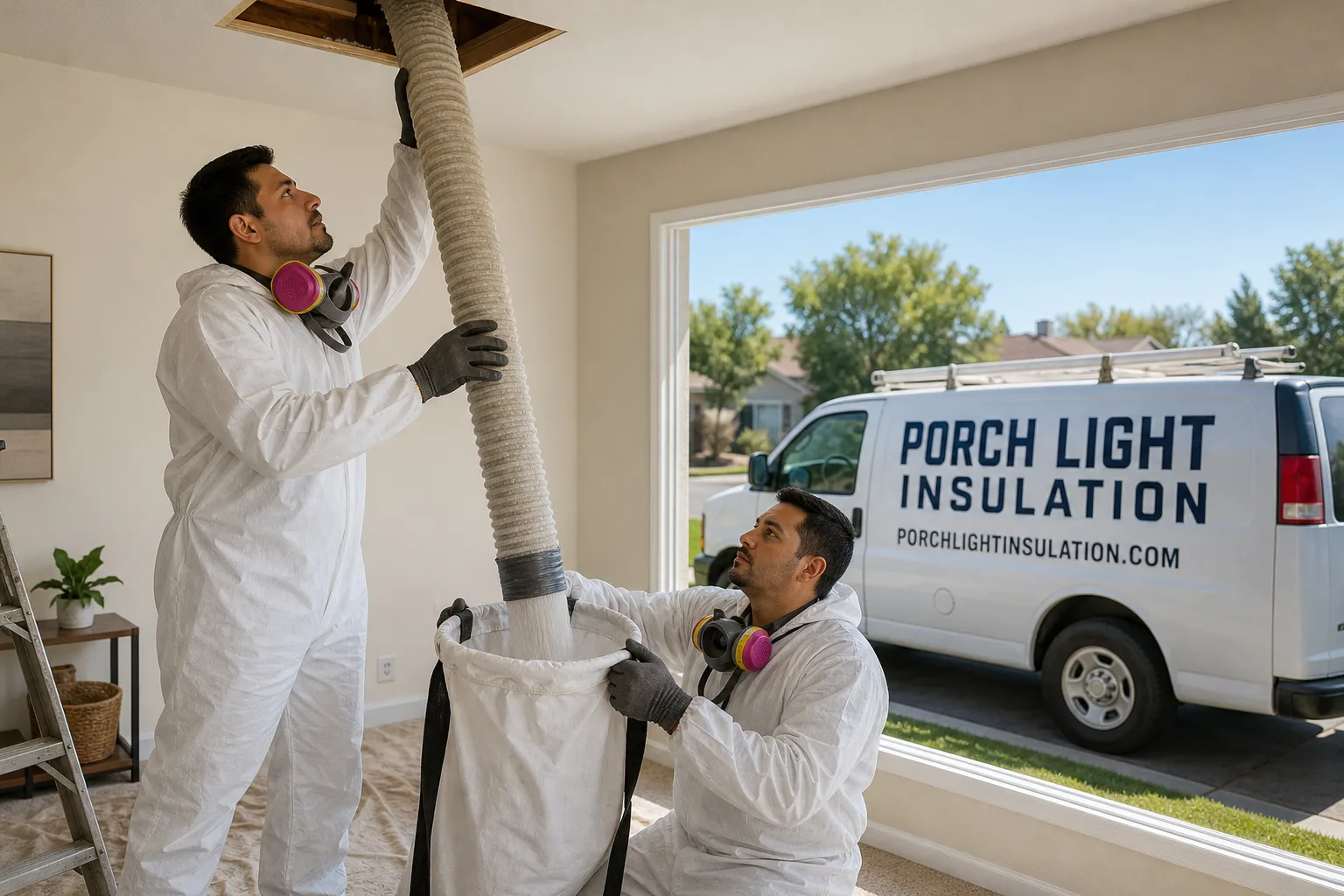
Fast, Reliable Spray Foam Insulation Across South Gate
Spray foam insulation in South Gate usually means one thing: retrofit work on homes built between the 1940s and 1960s, with shallow wall cavities, cramped attics, and converted garages that bake in the afternoon. That’s the housing stock we know best. Porch Light Insulation works in South Gate regularly, and our crews understand exactly what happens when a post-war stucco bungalow gets sealed tight without addressing venting, airflow, and the roofline. If you’re tired of a bedroom that feels like an oven by 3 p.m. or energy bills that climb every July, give us a call at (877) 521-4987. We’ll send an insulation-specific estimator, not a generalist.
Insulation is all we do. That matters more in South Gate than almost anywhere else in LA County, because the houses here demand a retrofit mindset. You can’t just stuff fiberglass into a 2×4 wall from 1952 and call it done. The cavity’s too thin, the stucco’s too brittle, and the attic’s too low to crawl through safely. We match the material to your home, not to our inventory.
Why Porch Light Insulation Is South Gate’s Preferred Spray Foam Insulation Company
Most insulation companies in this part of LA County split their attention across HVAC, roofing, or remodeling side work. We don’t. Every estimator, installer, and recommendation at Porch Light Insulation is insulation-specific. That single-trade focus means when we walk into a South Gate home off Firestone Boulevard or Tweedy Boulevard, we’re not thinking about what else we can sell you. We’re thinking about whether open-cell Icynene belongs in that low attic deck or whether closed-cell Demilec is the right call for a shallow wall cavity behind aging stucco.
Gil Tanner leads our team, and he’s built Porch Light around an eight-manufacturer product bench: Owens Corning, Johns Manville, Knauf, Rockwool, CertainTeed, Icynene, Demilec, and GreenFiber. That’s unusual for a trade where most contractors carry one or two brands and push whatever’s in the truck. We carry the full spread because a 1950s bungalow in South Gate with a converted garage has different needs than a 2005 tract home in a newer subdivision. The material gets matched to the application, not the other way around.
South Gate homeowners call us because our recommendations account for the stuff generic insulation pages never mention: shallow cavities that can’t take thick foam, attics that hit 120°F by mid-afternoon in August, and garage conversions that were never vented in the first place. We respond to South Gate calls quickly, and we’ve worked enough homes between Long Beach Boulevard and the 710 to know what we’ll find before we even open the attic hatch.
Spray Foam Attic Insulation in South Gate
Spray Foam Attic Insulation in South Gate is usually the highest-value upgrade you can make, because your attic is where the house loses the most conditioned air during those long, hot, smoggy LA Basin summers. A typical spray foam attic job in South Gate runs $2,800 to $6,500 depending on square footage, whether we’re foaming the roofline deck or the attic floor, and whether we’re addressing venting at the same time. In a 1950s bungalow with a low, cramped attic, the roofline approach usually makes more sense than trying to air-seal a floor that was never designed to be sealed.
Open-Cell on the Roofline
Open-cell foam from Icynene works well on the underside of roof decking in South Gate attics. It expands into gaps, seals against air movement, and leaves the roofline accessible enough to spot roof leaks early. For most older homes here, this is the retrofit-friendly option.
Closed-Cell for Cramped Spaces
When the attic is too tight for thick open-cell expansion, or when we’re dealing with a converted space that needs vapor control, closed-cell Demilec makes more sense. It packs a higher R-value per inch, which matters when you’ve only got 3.5 inches of rafter depth to work with. That’s a common situation in South Gate’s 1940s and 50s construction.
Spray Foam Wall Insulation in South Gate
Spray Foam Wall Insulation in South Gate almost always means working inside shallow 2×4 cavities behind stucco-over-wood-frame exteriors. A typical wall spray foam retrofit in South Gate runs $1,900 to $4,400 for an average single-story bungalow, depending on access, the number of exterior walls, and whether we’re drilling from the outside or working from the interior before drywall goes up. The key constraint is thickness. Closed-cell foam at 2 to 3 inches gives you real R-value and air sealing without bulging the wall or cracking old stucco. Overspray is a real risk on post-war stucco homes off Firestone, and we’ve seen the results when a less experienced crew lays it on too thick.
Garage Conversion Retrofits
South Gate has a lot of converted garages, and most of them were built bare-stud with no insulation and no venting. We foam those shallow wall cavities and then address the roofline, because sealing the walls alone just traps heat in the room. The hot-room-over-the-garage complaint is one we hear constantly from homeowners near Tweedy Boulevard, and it’s almost always a venting problem as much as an insulation problem.
Exterior Drill-and-Fill
When interior access isn’t practical, we drill small access holes through the exterior stucco and inject foam into the wall cavities. It’s slower and messier than new-construction spray, but it’s the standard approach for occupied South Gate bungalows where tearing out drywall isn’t on the table. Cost runs on the higher end of the range because of the labor involved.
Trusted Brands We Service in South Gate
We install Spray Foam Insulation using Icynene and Demilec as our primary spray foam lines, and we stock the materials needed to turn South Gate retrofit jobs around fast. That means open-cell Icynene for roofline and attic work where breathability and expansion matter, and closed-cell Demilec for shallow wall cavities and vapor-sensitive spots. We also carry CertainTeed and GreenFiber for homeowners who want to compare a blown-in fiberglass or cellulose approach against foam on the same quote. Eight manufacturers, one goal: the right fit for your specific situation.
Common Spray Foam Insulation Problems We See in South Gate Homes
- Converted-garage bedrooms with bare studs and no attic venting. The walls get foamed, but the roofline was never addressed, so the room still bakes every afternoon. Sealing the walls alone in an unvented space just makes the problem worse.
- Oversprayed shallow wall cavities off Firestone Boulevard. Thick foam in a 2×4 cavity can bulge or crack old stucco-over-wood-frame exteriors. The right call is usually a thinner closed-cell application, not maximum expansion.
- Low, cramped 1940s-60s attics sealed without combustion-air checks. Foaming an old attic that was never designed to be sealed can trap moisture if venting and airflow aren’t verified. We check this every time.
- Uninsulated add-on rooms and back-room additions. South Gate has a lot of unpermitted additions built decades ago with zero insulation. These often need a full cavity-and-roofline treatment, not a patch job.
Pricing for Spray Foam Insulation in South Gate, CA
Here’s what you can expect to pay for spray foam work in South Gate in 2026. Attic spray foam (roofline or floor) typically runs $2,800 to $6,500. Wall cavity retrofits run $1,900 to $4,400. Rim joist spray foam in South Gate’s raised-foundation bungalows usually lands between $1,200 and $2,800. Garage ceiling spray foam runs $1,400 to $3,200. A full spray foam roof deck on a small single-story starts around $3,500 and goes up from there based on square footage and access. What moves the number: cavity depth, stucco condition, attic height, and whether we’re working around existing drywall or doing it before new drywall goes up. Call (877) 521-4987 for an exact quote. Estimates are free, and we’ll tell you straight if spray foam isn’t the right call for your house.
We Also Serve Cities Near South Gate
Porch Light Insulation handles spray foam retrofits across the Gateway Cities. We work regularly in Lynwood, Huntington Park, Walnut Park, and Bell, and we know the housing stock in these areas shares the same post-war DNA as South Gate. If you’re nearby, ask about scheduling when we’re already in the area.
Serving South Gate, CA — Our Local Coverage Area
We’re based in the South Gate area and know this community well. Use the map below to see our service coverage — if you’re nearby, we can almost certainly help.
FAQs About Spray Foam Insulation in South Gate
Yes, and we do it regularly in South Gate. The right approach for a 2×4 wall cavity behind 1950s stucco is a thinner closed-cell application, usually 2 to 3 inches, which gives you air sealing and solid R-value without the expansion pressure that can crack aging stucco. Overspray is a real problem with shallow cavities, and a less experienced crew can easily bulge the exterior. Call (877) 521-4987 and we’ll inspect your wall depth before recommending a specific product.
Usually yes, but only if the roofline and venting are addressed at the same time. We’ve worked on a post-war bungalow off Tweedy where the converted-garage bedroom was bare-stud with no attic venting, and the room cooked every summer afternoon. Our crew closed-cell sprayed the shallow garage wall cavities, foamed the low attic deck and roofline with Icynene, and verified airflow. The hot-room-over-the-garage complaint stopped within a day. Insulating walls without touching the roofline just traps heat in the room. We’ll check both before quoting.
Because South Gate’s 1940s-60s homes have low, cramped attics that routinely hit 120°F or higher in summer, and that heat radiates straight down into the living space. Walls matter, but the attic is the single biggest source of cooling load in a single-story stucco bungalow. Foaming the roofline brings the whole attic into the conditioned envelope and cuts the heat gain dramatically. Wall cavities help, but they’re secondary in this climate and this housing stock.
Both, and the choice depends on the application. We use open-cell Icynene for roofline and attic deck work where breathability and expansion are useful, and closed-cell Demilec for shallow wall cavities, garage conversions, and any spot that needs vapor control or maximum R-value per inch. We match the material to the specific job, not to whatever happens to be on the truck. That’s the benefit of carrying multiple manufacturers.
We install Icynene and Demilec spray foam for South Gate retrofit work, and we also carry CertainTeed and GreenFiber if a homeowner wants to compare blown-in options against foam on the same quote. Porch Light Insulation is authorized to install products from eight manufacturers, so you get a real comparison rather than a one-size answer. Call (877) 521-4987 and we’ll walk through the tradeoffs in plain language.
Written by Gil Tanner, Owner at Porch Light Insulation, serving South Gate since 2018.