Attic Insulation What It Really Costs: What Universal City Homeowners Pay in 2026
In 2026, attic insulation in Universal City runs roughly $2,200 to $5,800 for a typical 1,200-square-foot attic, depending on material and scope. That range covers blown fiberglass on the low end through open-cell spray foam on the high end. If you’d rather skip the research and get a straight answer for your specific roof, call (877) 521-4987 for a free estimate.
Here’s the thing most cost guides won’t tell you: the $1,500 quote and the $4,200 quote for the same Universal City home are not competitors undercutting each other. They’re describing two different jobs entirely. One includes air sealing, removal, and prep work. The other quietly leaves those out and hopes you won’t notice until your energy bill barely moves.
We’ve been insulating attics in Universal City long enough to know exactly where those corners get cut. This post breaks down what the work actually costs, why hillside homes here run higher, what SCE and SoCalGas will pay you back in 2026, and how to read a quote so you don’t pay for the same attic twice.
What Attic Insulation Actually Costs in Universal City in 2026
Let’s get concrete. Here’s what homeowners in Universal City should expect to pay per square foot for the three most common attic insulation approaches in 2026, including labor and materials:
| Insulation Type | Material Cost (per sq ft) | Installed Cost (per sq ft) | Total for 1,200 sq ft Attic |
|---|---|---|---|
| Blown fiberglass (blown-in) | $0.35 – $0.55 | $0.90 – $1.35 | $1,100 – $1,600 |
| Cellulose (loose-fill) | $0.40 – $0.70 | $1.10 – $1.60 | $1,300 – $1,900 |
| Open-cell spray foam | $0.80 – $1.30 | $1.75 – $3.10 | $2,100 – $3,700 |
| Closed-cell spray foam | $1.50 – $2.40 | $2.75 – $4.50 | $3,300 – $5,400 |
Those numbers reflect current 2026 material pricing in the Los Angeles market, which runs roughly 8 to 12 percent higher than national averages. Shipping costs to Southern California, local labor rates, and the fact that Universal City sits in a climate zone (3C) that’s borderline for certain insulation strategies all factor in.
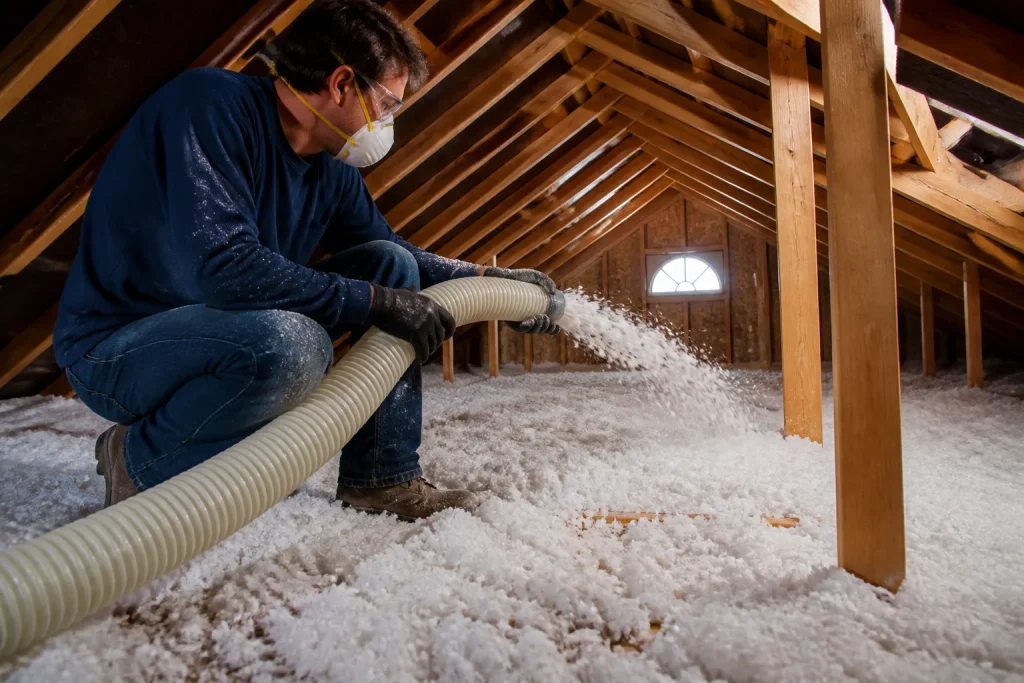
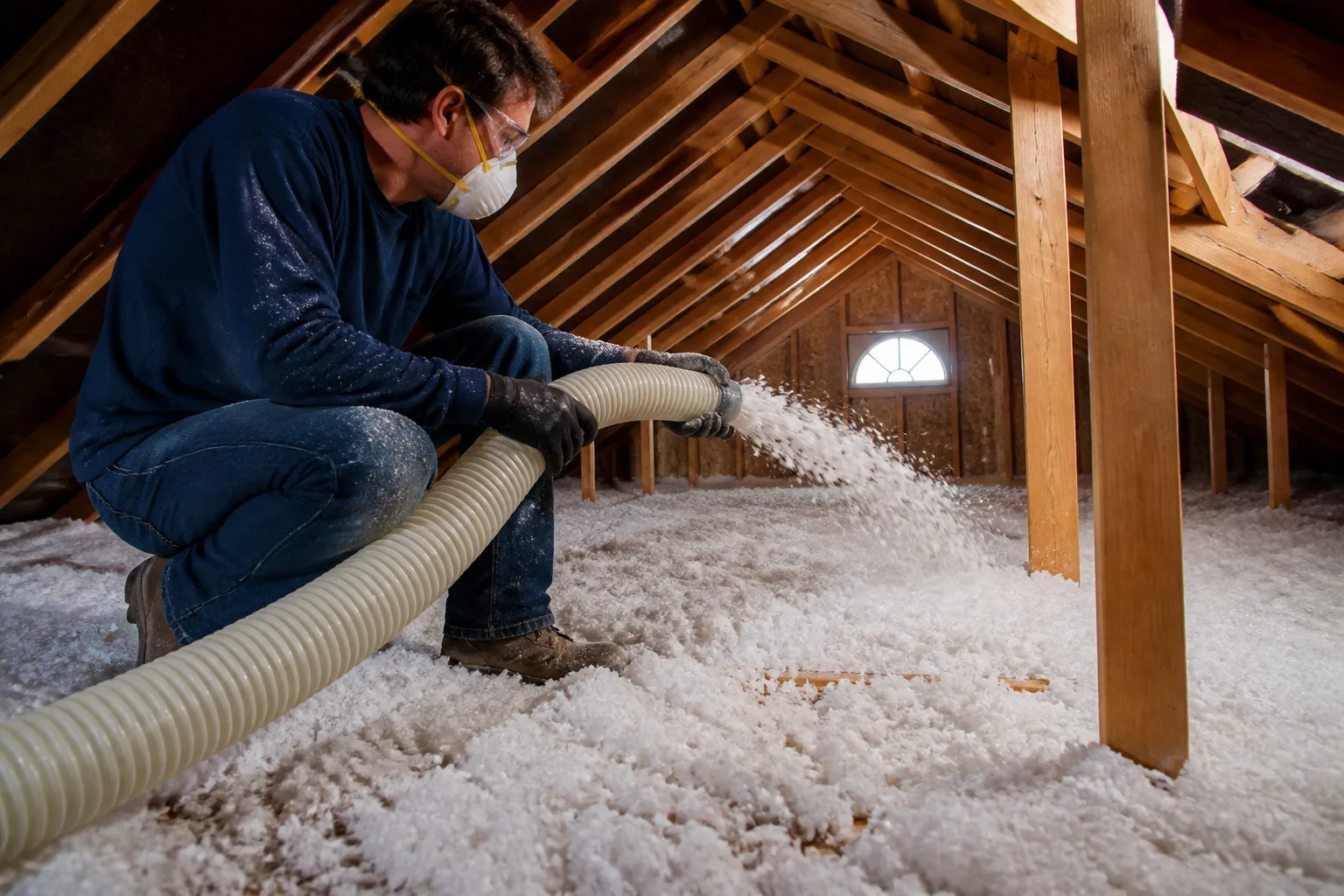
Blown fiberglass is the workhorse here. It’s the cheapest option and performs well when installed to the correct depth. Cellulose costs a bit more but settles less and does a better job slowing airflow through the insulation itself. Open-cell spray foam is a different animal: it air seals while it insulates, which matters a lot in older Universal City homes where the attic floor has gaps around ceiling fixtures, plumbing penetrations, and wall top plates.
Closed-cell spray foam is the premium play. It costs the most, but it adds structural rigidity, acts as a vapor barrier, and hits a higher R-value per inch than any loose-fill material. We typically recommend it for Universal City attics that house HVAC equipment or ductwork, since the sealed environment keeps conditioned air where it belongs.
What the Cheap Quote Quietly Leaves Out
We see this at least once a month in Universal City: a homeowner gets three quotes, picks the lowest one, and six months later calls us wondering why their upstairs still feels like a sauna in July. The answer is almost always the same. The low quote omitted one or more scope items that every legitimate attic insulation job needs.
Here are the three line items that separate an honest quote from a cut-corner one:
- Air sealing labor. Before any insulation goes down, someone has to seal the gaps where conditioned air escapes: around recessed lights, plumbing vents, bath fans, wiring penetrations, and where interior walls meet the attic floor. This is tedious handwork, often 2 to 4 hours, and it’s the single highest-impact step for comfort and energy savings. Cheap quotes skip it because it’s invisible after the insulation covers it.
- Removal and haul-away of degraded existing insulation. If your Universal City attic still has 40-year-old fiberglass batts compressed to R-8, or loose-fill that’s been contaminated by rodent activity or roof leaks, it has to come out before new material goes in. Removal and disposal typically adds $400 to $900 for a 1,200-square-foot attic. Quotes that don’t list it are either planning to blow over the mess or planning to surprise you with a change order later.
- Blocking and baffles at eave edges. Blown insulation will drift into the eaves and block soffit vents if you don’t install baffles or blocking first. In Universal City’s older hillside homes, where soffit ventilation design varies widely, this step is essential. It also keeps insulation from touching the roof deck, which causes condensation and rot. Missing baffles is a classic sign of a quote written by someone who’s never actually crawled a local attic.
When you read a proposal, look for these explicitly. If air sealing isn’t on the page as a line item, assume it won’t happen. If removal isn’t mentioned, ask whether the existing insulation is being left in place and why.
Why Hillside Homes in Universal City Cost More to Insulate
Universal City is not a flat grid. A good portion of the housing stock climbs the slopes off Cahuenga Boulevard and up toward Mulholland, and those hillside homes carry a real labor premium for attic work. We’ve measured it across dozens of local jobs: expect 15 to 25 percent higher labor costs for a hillside home than a flat-lot home of identical square footage.
Three specific factors drive this in Universal City:
- Access to the attic hatch. On flat-lot homes, the attic access is usually in a hallway ceiling or garage, and a standard ladder reaches it. On hillside builds, the access frequently lives in a closet with a low ceiling, or up a narrow stairwell, or in a garage built at odd grade. Getting a 75-pound insulation blower hose and a 120-pound bale of fiberglass through that access takes longer. Simple as that.
- Low-pitch roof sections. Many hillside homes have complex rooflines with shallow-pitch sections where the attic space compresses to 18 inches or less at the edges. Crawling those sections to air seal and install baffles is slow, hot work. A flat-lot home with a uniform 6/12 gable roof is a fast, clean install. A Universal City hillside roof with three intersecting planes is not.
- HVAC equipment in the attic. This is common across Southern California, but hillside homes often lack basement or closet space for mechanicals, so the furnace and air handler end up in the attic. Insulating around and over HVAC equipment, sealing duct connections, and maintaining service clearance adds both time and skill level to the job.
None of this means hillside homeowners should pay inflated prices. It means you should expect an installer who walks the property and looks in the attic before quoting, not one who emails you a spreadsheet based on square footage alone.
California Utility Rebates for Attic Insulation in 2026
Here’s something most Universal City homeowners miss: attic insulation qualifies for cash back through two Southern California utility programs in 2026, and claiming it is not automatic. You need the right documentation from your installer.
SCE (Southern California Edison) runs the Attic Insulation Rebate Program under its Home Energy Savings umbrella. For 2026, qualifying attic insulation upgrades (typically R-38 or higher) earn a rebate of $0.15 to $0.25 per square foot, depending on the existing insulation level and whether the home is all-electric. That’s $180 to $300 back on a 1,200-square-foot attic.
SoCalGas operates a complementary program through the Energy Savings Assistance Program and its Home Upgrade incentive. For homes with gas heating, attic insulation improvements funded through the Home Upgrade program can return $250 to $450 per measure, with higher total caps when insulation is bundled with other eligible upgrades like duct sealing.
Both programs require documentation the homeowner, not just the contractor, should verify before the project starts:
- Pre-installation photos showing existing attic conditions and insulation depth.
- Post-installation photos showing final depth and coverage.
- A dated invoice with the installed material type, R-value, and square footage.
- For SCE: proof the installing contractor is a participating Trade Professional in SCE’s program database.
- For SoCalGas: a pre-project energy assessment or program enrollment confirmation.
We handle this paperwork for every attic insulation job in Universal City we complete, and we tell homeowners up front which program applies to their house. If a contractor can’t speak to these programs fluently, you’re leaving money on the table.
How to Read an Insulation Quote for Scope Completeness
Before you compare dollar amounts, compare what the quote actually includes. A legitimate attic insulation proposal for a Universal City home should contain these five line items. If any are missing, the price comparison is meaningless:
- Existing insulation assessment. The quote should state what’s currently up there (material type, estimated R-value, condition) and what happens to it: leave in place, remove, or supplement. If the quote doesn’t acknowledge existing conditions, the installer hasn’t looked at your attic.
- Air sealing scope. This should list the specific areas to be sealed: top plates, can lights, plumbing penetrations, bath fan boxes, chase walls. “Air sealing included” without specifics is a red flag.
- Ventilation confirmation or correction. The quote should note whether existing soffit and ridge ventilation is adequate, and whether baffles or blocking are included at the eaves. Insulating without confirming ventilation is how you get a mold problem.
- Material and R-value target. The exact product, brand, and installed depth or thickness, plus the resulting R-value. “Blown-in fiberglass” isn’t enough. “CertainTeed InsulSafe blown fiberglass at R-38, approximately 14 inches” is what a real quote looks like.
- Access and protection plan. How will the crew get materials into your home? What’s covered to protect floors and walls? What cleanup is included after? On Universal City hillside homes, this detail matters more than on typical builds.
When we write a proposal at Porch Light Insulation, all five of those appear before the dollar figure. We’d rather a homeowner know exactly what they’re comparing, even if they choose someone else, than blindly reward the lowest number.
Material Choice: Matching Product to Your Universal City Attic
The right insulation for one Universal City attic is the wrong choice for another. We work with eight manufacturers, including Rockwool, CertainTeed, Icynene, and Demilec, because no single material solves every house. Here’s how we think about the fit:
Blown fiberglass (CertainTeed InsulSafe, Owens Corning Atticat): The default for most Universal City attics. Affordable, fast to install, and the right call when the attic is accessible and air sealing is done properly. Performs well in our mild winters and hot summers when installed to the proper depth.
Cellulose (GreenFiber): Slightly higher cost, but it settles less, reduces airflow through the material itself, and uses recycled content. We recommend it for older Universal City homes with drafty framing and irregular joist spacing.
Open-cell spray foam (Icynene, Demilec): The best answer for attics that house HVAC equipment or have complex, hard-to-reach geometry. It air seals and insulates in one step. Costs more, but eliminates the need for separate air sealing labor when applied to the attic floor or roofline.
Mineral wool (Rockwool): Less common for attic floors, but the right call for certain situations: fire-rated assemblies, sound transmission between the attic and a bedroom below, or homeowners who specifically want a material that’s moisture-resistant and won’t support mold. Most insulation companies in Universal City never mention it because they don’t stock it. We install it because sometimes it’s genuinely the best answer.
We pulled a job in the hills above Cahuenga last summer where the homeowner had been told by two other companies that spray foam was her only option, because the attic was shallow and odd. The real answer was Rockwool batts in the low-pitch sections plus blown fiberglass in the central vault. Same comfort outcome, about $1,400 less. The point isn’t that one product is always better. The point is that the product should match the house, not the contractor’s margin.
If you’re weighing spray foam for your Universal City home or considering blown-in insulation as a lower-cost alternative, get a quote that compares both against the same attic rather than assuming one is universally superior.
What It Costs When You Skip the Attic
We sometimes meet Universal City homeowners who’ve been living with R-8 or R-11 attics for decades. The attic isn’t a room they spend time in, so it never becomes a priority. But that attic is the single largest thermal boundary between your house and the sun beating down on your roof for 300 days a year.
Here’s what under-insulated attics cost in this climate, based on what we’ve measured on local homes before and after:
- Higher cooling bills. In Universal City’s summer months, an uninsulated or under-insulated attic can reach 140 degrees Fahrenheit. That heat radiates down into living spaces all afternoon, forcing the AC to run longer. A proper R-38 attic typically cuts cooling load by 15 to 25 percent for single-story homes.
- Uneven room temperatures. The bedroom at the end of the hall that’s always 8 degrees hotter than the rest of the house? That’s often the room under the attic section with the thinnest insulation. Adding insulation there specifically cures it faster than balancing ductwork.
- Moisture and condensation risk. In winter, warm interior air rising into a cold attic can condense on the underside of the roof deck. Over time, that’s how you get sheathing rot, rusted nails, and eventually leaks. A sealed and insulated attic keeps the dew point out of the roof assembly.
- Equipment strain. If your furnace or air handler lives in the attic, it’s working inside a 140-degree box in summer. Insulating and air sealing that space extends equipment life and improves delivered-air temperature by 3 to 8 degrees, depending on duct condition.
We’re not going to tell you attic insulation solves every comfort problem in a Universal City home. But it solves more of them than any other single upgrade you can do under $6,000.
The Bottom Line
Attic insulation in Universal City costs between $1,100 and $5,400 in 2026, depending on material, existing conditions, and whether your home sits on a flat lot or a hillside. The spread isn’t a mystery or a scam. It’s scope. A complete job includes air sealing, ventilation correction, and proper material depth. A cheap job skips those and leaves you with a warmer upstairs and the same energy bill.
Read the quote before you read the price. Five line items should be on the page. Utility rebates through SCE and SoCalGas can put $180 to $450 back in your pocket this year. And if the material recommendation doesn’t change when you describe your attic to a contractor, you’re talking to someone who sells whatever’s on the truck.
If you’re in Universal City and want an honest look at what your attic actually needs, Porch Light Insulation offers free estimates. We’ll walk the attic, explain what’s up there now, and give you a quote with every line item listed. Call (877) 521-4987 and we’ll schedule a time to look.
Frequently Asked Questions
For blown fiberglass or cellulose, big-box rental blowers and bagged material run $500 to $900 for a 1,200-square-foot attic. You’ll save labor cost, but you’ll skip air sealing, ventilation verification, and the skill that comes from doing this in hundreds of Universal City attics. And if you fall through a ceiling or damage wiring, the savings evaporate. For spray foam, DIY is not realistic at all. Most homeowners are better served hiring a specialist.
A complete job on a typical 1,200-square-foot attic takes one full day: 2 to 4 hours for air sealing and prep, followed by 3 to 5 hours for blowing or spraying. Hillside homes with difficult access or HVAC equipment may run a second partial day. If a quote promises a one-hour job, they’re not air sealing, not checking ventilation, and not doing the prep work that separates a good result from a waste of money.
For Climate Zone 3C, which covers Universal City and most of the Los Angeles basin, the modern recommendation is R-38 to R-60 of blown fiberglass or cellulose, or R-38 to R-49 equivalent with spray foam. Many older Universal City homes still have R-11 or R-19 batts from the original build. If you can see the ceiling joists poking through the top of your insulation, you’re under-insulated.
Yes. SCE offers $0.15 to $0.25 per square foot for qualifying attic insulation upgrades through its Home Energy Savings program. SoCalGas offers $250 to $450 per measure through the Home Upgrade program for homes with gas heating. Your installer must provide pre- and post-installation photos, a dated invoice with installed R-value, and proof of Trade Professional participation for SCE. Call (877) 521-4987 and we’ll confirm which program applies to your home.
Written by the team at Porch Light Insulation, serving Universal City since 2014.
Need Insulation Help?
Call Porch Light Insulation — licensed & insured, here with fast after-hours help in Universal City.
(877) 521-4987