Fast, Reliable Attic Insulation Across Northridge
If your Northridge home runs hot upstairs while the AC fights to keep up, the attic is almost always the first place we look, and usually the last place anyone has touched since the 1990s. Porch Light Insulation installs attic insulation throughout Northridge, including 91324, 91325, and 91330, with most jobs completed same-day or next-day. We work where you live: ranch homes off Tampa Avenue, two-story tracts south of the CSUN campus, and the larger acreage properties up toward Porter Ranch. Call (877) 521-4987 any weekday and we’ll schedule a free in-attic assessment.
Insulation is all we do, and in Northridge that focus matters more than most people realize until summer hits. An attic that hasn’t been touched since 1978 is not a small problem here. It’s the difference between a 78-degree living room and a 95-degree one, between a July power bill you accept and one you dread.
Why Porch Light Insulation Is Northridge’s Preferred Attic Insulation Company
We’re not a general contractor who throws insulation into the truck as an afterthought. Porch Light Insulation is an insulation-only company, and our crews are in Northridge attics every week, not once a quarter. That repetition means we know what Northridge attics actually contain before we climb the ladder: blown-in fiberglass from the early 2000s, vermiculite that doesn’t need to be touched, 1950s batts with Kraft paper stapled to joists that long ago lost their tension. Our estimates come from Gil Tanner and the same installation crew who will do the work, so the person who sees your attic is the person quoting it.
We carry eight manufacturers, including Owens Corning, Johns Manville, Knauf, Rockwool, CertainTeed, Icynene, Demilec, and GreenFiber. That’s not a sales pitch. It’s a practical fact about how we match material to the specific attic in front of us rather than working from whatever product sits on a warehouse shelf. Some attics need GreenFiber blown-in over a low-slope section near the gable vents. Some need Rockwool batts for fire resistance near the wall of a converted garage. The point is we have the range to choose correctly for your Northridge home, not just to fill the bay and move on.
Radiant Barrier in Northridge
Radiant Barrier is one of the single most effective upgrades for a Northridge attic because it directly attacks the problem this valley creates: 150-degree plus attic air in August, solar heat radiating down through the roof deck into whatever insulation lies below it. Standard insulation slows conductive heat. Radiant barrier reflects radiant heat before it ever reaches your insulation. In Northridge, where the summer sun sits directly overhead for months, that distinction translates to a measurable drop in attic temperature, typically 20 to 30 degrees, and a cooler surface on top of your existing insulation.
A typical radiant barrier installation in a Northridge ranch home runs $1,800 to $3,200, depending on roofline complexity and whether we’re stapling foil to the rafters or laying it over existing insulation in a low-clearance attic. Homes with vaulted ceilings or multiple hip-roof sections run higher because the geometry adds labor.
Foil Stapled to Rafters
For most Northridge homes with a tall enough attic to stand or kneel in, we staple a double-sided foil radiant barrier to the underside of the rafters, leaving an air gap below the roof deck that’s essential for it to work. This keeps heat from ever entering the attic cavity. It works year-round in our climate, with no downside during the mild winters since attic freezing isn’t a concern here the way it is in colder markets.
Laying Radiant Barrier Over Insulation
Low-slope roofs and cramped attics common to some 1950s Northridge ranch construction don’t allow rafter stapling. In those cases we lay perforated radiant barrier foil directly over the existing insulation, which reflects heat away from the insulation surface while allowing moisture to pass through. It’s less effective than rafter stapling but still cuts heat gain meaningfully, and for many Northridge homes with 3- or 4-foot peak heights, it’s the only physically possible option.
Attic Cleaning Services in Northridge
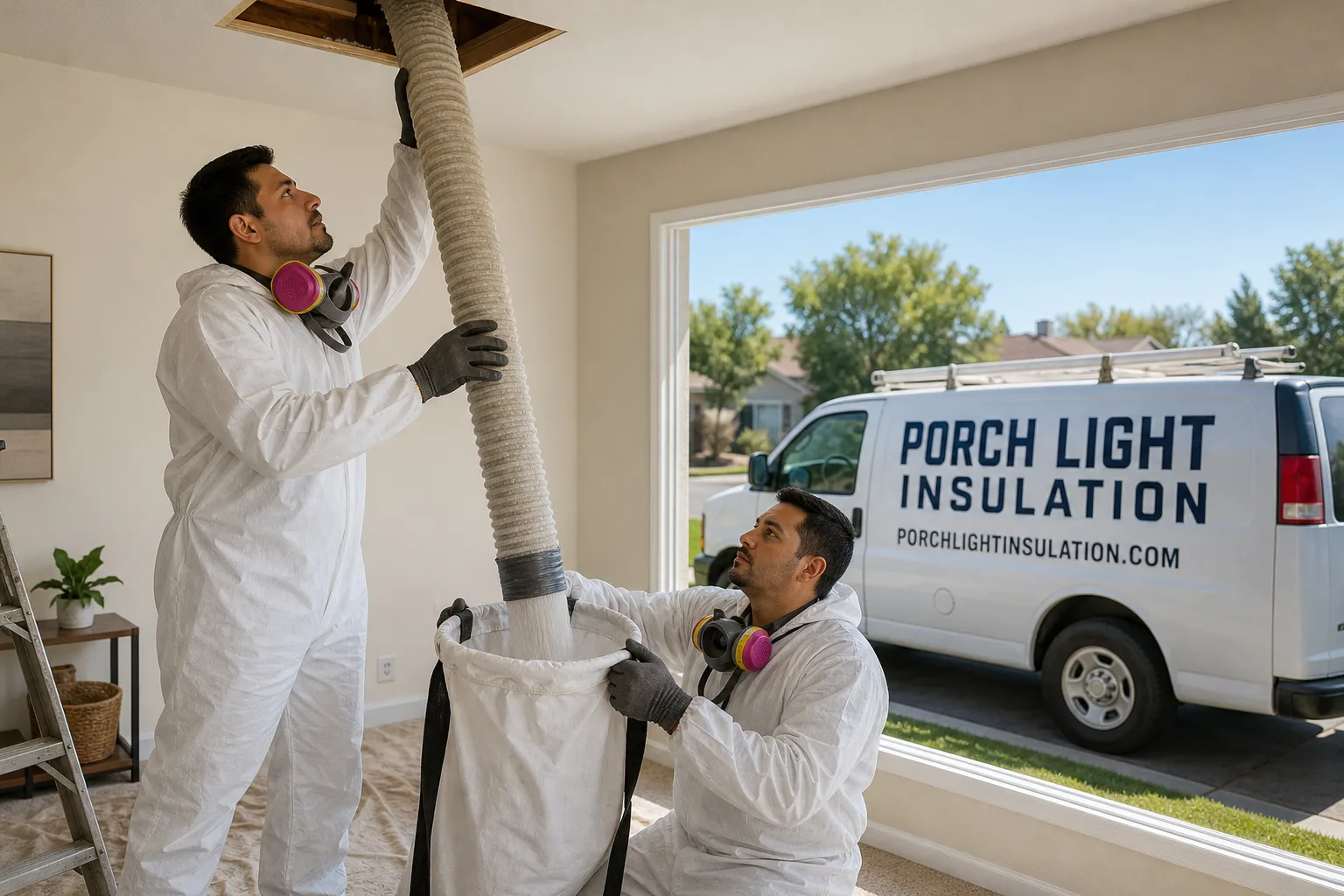
Attic Cleaning Services in Northridge are, more often than not, a necessary first step rather than an optional extra, because our attics carry decades of dust, rodent activity, and in many homes, the literal remnants of 1994 earthquake repairs. Before we can air-seal or blow insulation, the contamination and compaction have to be addressed. A dirty attic with deep debris holds heat, hides wiring hazards, and prevents new insulation from settling correctly. In some Northridge attics we’ve removed five or six full contractor bags of dust, old nesting material, and crumbled batts before any new material went in.
A full attic cleaning for a typical Northridge home ranges from $800 to $1,600. That includes removal of old or damaged insulation if needed, but most homes only require debris removal and spot-remediation before the next step. Larger acreage homes with sprawling ranch footprints run $1,500 to $2,400.
Vacuum and Debris Removal
We use commercial HEPA-filtered vacuums to remove loose dust, rodent droppings, and degraded insulation fragments from the attic floor, then hand-clean around wiring and junction boxes where a vacuum can’t reach. This step matters in Northridge specifically because our attics collect fine valley dust and grit year-round, and post-earthquake patching often left plaster dust and framing debris that has sat up there for thirty years.
Sanitizing and Prep for New Insulation
After removal, we treat affected areas with a commercial-grade enzyme sanitizer and allow it to dry before installing new insulation. In homes near Lindley Avenue or Reseda Boulevard where attic rodents are common, this step is what keeps the next generation of insulation from being contaminated within a year.
What happens when you call
- 1
A real person answersNo phone trees — you reach a local pro.
- 2
You get an upfront price rangeHonest numbers before anyone is dispatched.
- 3
A background-checked tech heads outLicensed & insured, dispatched right away.
- 4
You approve before work beginsNothing starts until you say go.
Trusted Brands We Service in Northridge
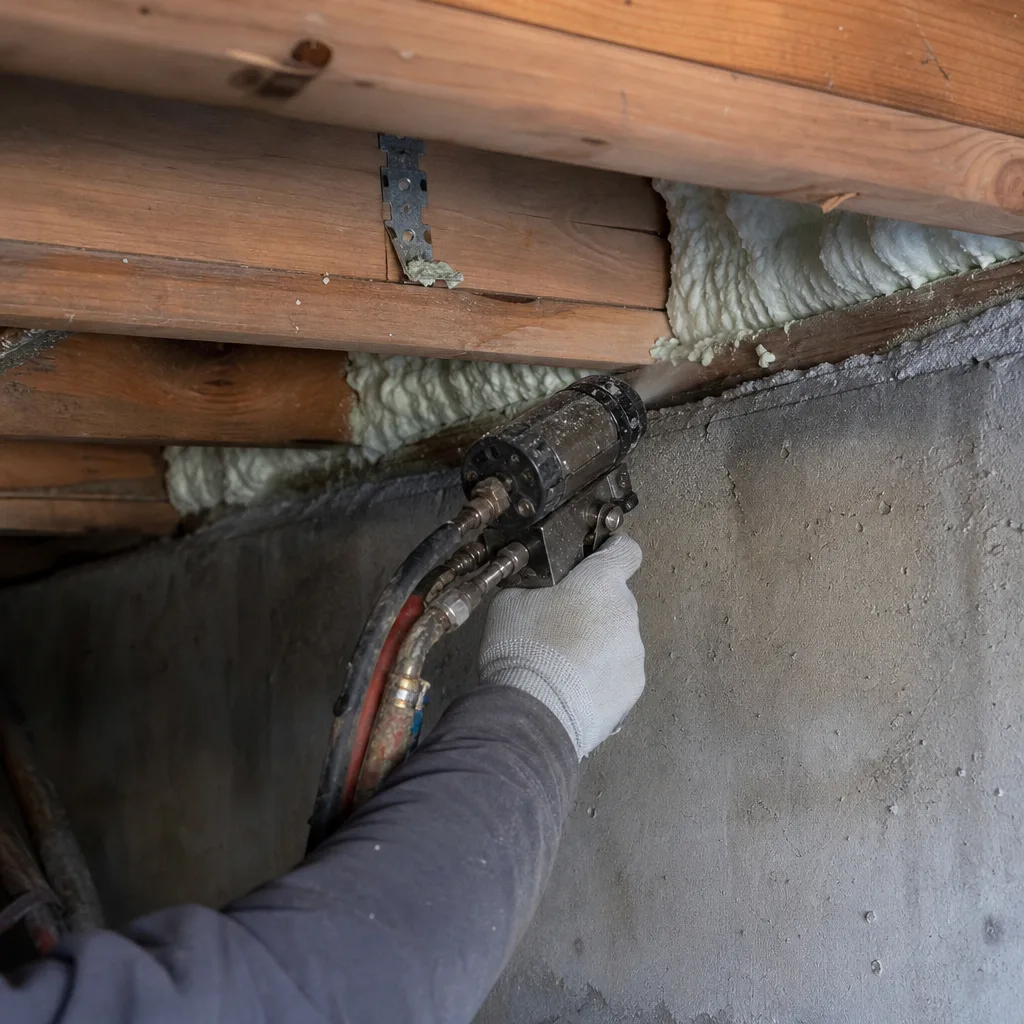
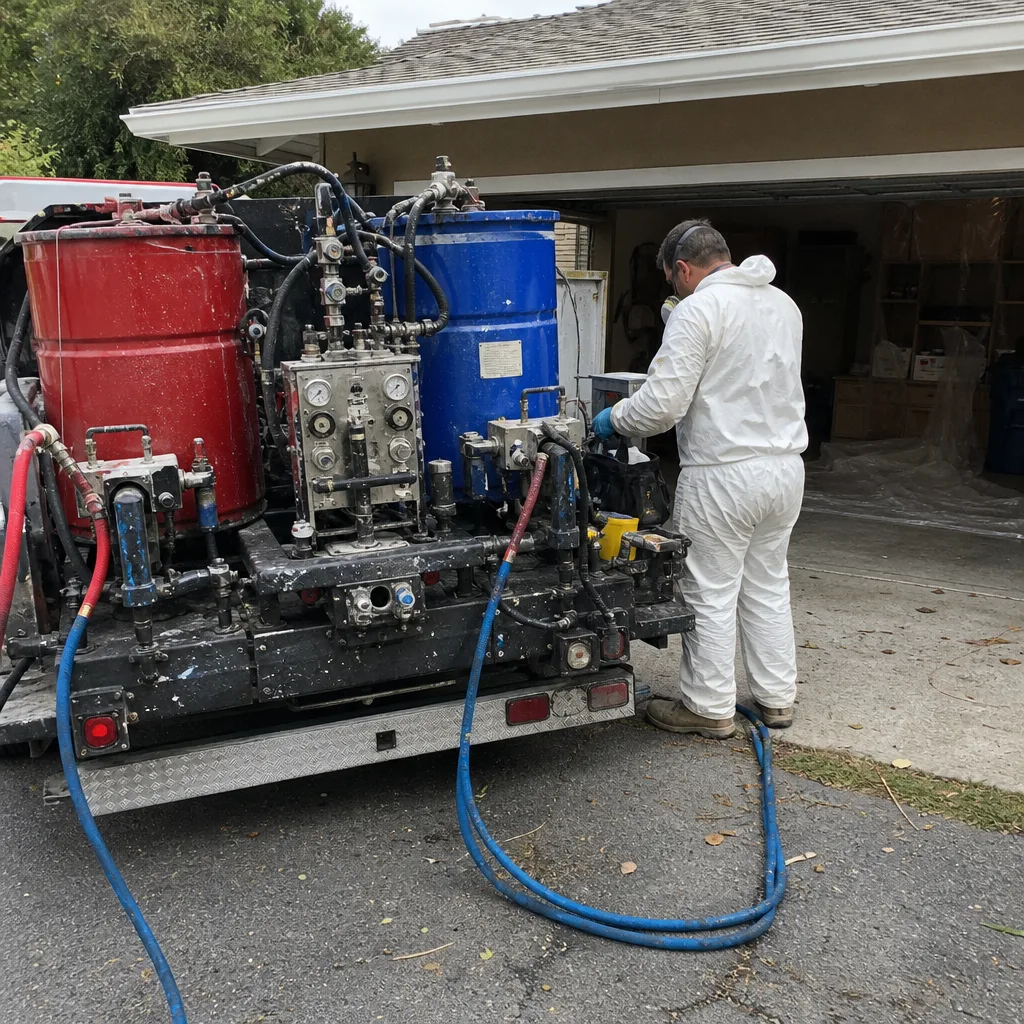
Northridge homeowners get the benefit of our full manufacturer line, because we’re authorized to install right across it rather than locked into one label. We install CertainTeed batt insulation for standard joist bays, Icynene open-cell spray foam for air-sealing value and sound control, Demilec closed-cell foam when high R-value per inch and vapor management matter, and GreenFiber blown-in for fast coverage over large attic floors. We keep common materials and accessory stock in our local shop, which means fewer delays when a Northridge ranch home calls for something uncommon like vent baffles against an old shake roof edge. Eight manufacturers, one goal: the right fit for your specific attic.
Common Attic Insulation Problems We See in Northridge Homes
- Earthquake-era insulation gaps. After the 1994 Northridge earthquake, thousands of attics were re-entered for structural work, and insulation was shoved aside to access framing, then never put back. We regularly find bare sheathing above bedrooms where batts were pushed to the side and left there for thirty years.
- Post-1994 room additions with no insulation. When new framing meets original walls, the transition is often uninsulated because the addition was permitted and insulated separately, if at all. Homeowners see the new space stay hot while the rest of the house cools, and the answer is almost always the attic transition above it.
- Compressed original R-11 or R-13 batts. The mid-century ranch and tract build-out that defines Northridge came with R-11 or R-13 ceiling insulation in most cases, which was code at the time but is far below what our summer attic heat demands. Even where it’s still present, it’s usually flattened by decades of storage, HVAC work, and foot traffic down to a fraction of its rated value.
- Uninsulated attic access hatches and can lights. The small holes get ignored, but a single uninsulated pull-down stair or a half-dozen recessed lights leak hot attic air into the living space all day. In Northridge’s 100-degree plus afternoons, those leaks make a specific room 5 to 8 degrees warmer than the rest of the house.
Pricing for Attic Insulation in Northridge, CA
Attic insulation in Northridge typically runs $1,400 to $3,800 for a standard ranch or tract home, with larger two-story homes and acreage properties ranging from $2,800 to $6,500 depending on square footage and access. Blown-in attic insulation over a 1,200-square-foot attic runs $1,400 to $2,000. Attic batt insulation for the same area runs $1,800 to $2,800 installed. An attic insulation top-up, which is what many Northridge homeowners need when adding R-19 or R-30 over existing R-11, runs $900 to $1,600. Full attic insulation replacement, including removal of old material, runs $2,200 to $4,200 for a standard home. Attic baffles and ventilation prep add $300 to $800 depending on the roofline.
We price by the actual square footage and R-value target we measure in your attic, not by a phone estimate. Call (877) 521-4987 and we’ll schedule a free in-attic assessment, measure the true depth and condition of what’s there, and give you a fixed price the same day.
We Also Serve Cities Near Northridge
While this page focuses on Attic Insulation in Northridge, our crews cover the surrounding San Fernando Valley daily. We also serve North Hills, Encino, Van Nuys, and Valley Glen, often handling multiple stops in a single day. If you’re in one of those neighborhoods, the same team and same material bench apply. And our Attic Insulation hub page covers the full range of what we do across Southern California.
Serving Northridge, CA — Our Local Coverage Area
We’re based in the Northridge area and know this community well. Use the map below to see our service coverage — if you’re nearby, we can almost certainly help.
FAQs About Attic Insulation in Northridge
Because the 1994 earthquake repairs left plaster dust, framing debris, and disturbed insulation in many Northridge attics, and blowing new loose-fill or laying new batts over that foundation means sealing in contamination and creating uneven thermal performance. A full attic cleaning removes that 30-year accumulation so the new insulation sits flat, compresses evenly, and doesn’t hide wiring hazards. It’s not an upsell. In many Northridge attics, it’s the only correct first step. Call (877) 521-4987 for a free in-attic assessment and an honest read on whether your attic needs cleaning before insulation.
Yes, and it’s one of the highest-value upgrades in this specific microclimate because radiant barrier reflects heat before it ever reaches your insulation, which is exactly the mechanism that matters when the San Fernando Valley pushes attic temperatures past 150°F from June through September. Pairing radiant barrier with an insulation top-up typically cuts attic temperature by 20 to 30 degrees and lowers the surface temperature of the insulation below it, which directly translates to cooler ceiling surfaces and less AC run time. Call (877) 521-4987 for a quote on radiant barrier for your Northridge home.
We remove the insulation in the transition zone, air-seal the joint where new framing meets old, re-establish the proper insulation depth with fresh material, and make sure the old and new sections are at the same R-value before we finish. This is one of the most common problems we fix in Northridge because the additions permitted after 1994 were often insulated during construction but the transition seam where they meet the original rafters was never properly sealed or brought to a matching depth. Call (877) 521-4987 and we’ll inspect the transition in your attic during a free assessment.
We recommend R-49 as the ceiling insulation target for Northridge attics, which matches the climate’s needs far better than the R-11 or R-13 many older homes currently have. This valley’s priority is blocking summer heat from above, not protecting against freezing, and R-49 provides the thermal break that keeps 150°F attic air from radiating into the living space below. In homes with low attic clearance, R-38 is the practical fallback, and we’ll tell you honestly which one makes sense for your roofline. Call (877) 521-4987 for a free attic measurement and R-value recommendation.
Yes, and this is where our single-trade focus and hauling capacity pay off for Northridge homeowners with sprawling ranch homes and detached structures. We arrive with the full material load and enough crew to finish an acreage attic in one trip, including any attic cleaning, then handle detached garages or workshop spaces as separate scopes in the same visit when needed. On a ranch home near Reseda Boulevard and Plummer Street, we re-supported original R-11 batts compressed under patched sheathing, air-sealed the joint where a post-1994 addition met the original framing, and blew in Owens Corning Fiberglas to a uniform R-49 across both sections, all in a single trip. Call (877) 521-4987 to set up a one-trip assessment for your Northridge property.
Written by Gil Tanner, Owner at Porch Light Insulation, serving Northridge since 2010.