
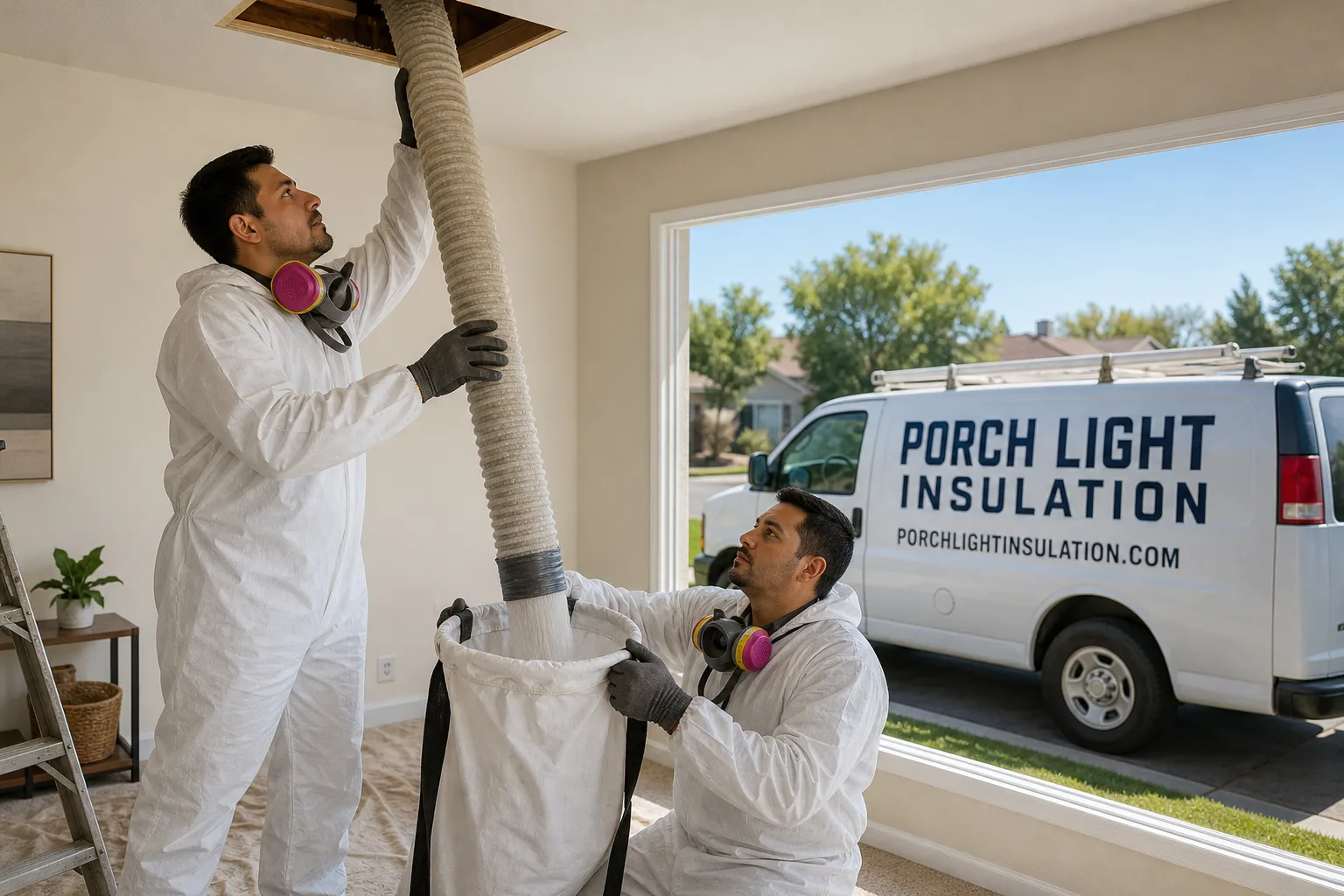
Fast, Reliable Spray Foam Insulation Across Studio City
Spray foam insulation in Studio City typically costs $2.40 to $6.75 per board foot installed, with most whole-attic projects landing between $4,200 and $11,000 depending on whether you choose open-cell or closed-cell. We’re out in Studio City most weeks, and we know the difference between a Tujunga Village ranch and a hillside contemporary off Mulholland. If you’re weighing options, call (877) 521-4987 and we’ll walk you through what actually makes sense for your house, not what’s easiest for us to sell.
Porch Light Insulation has worked on homes from the flat streets south of Ventura Boulevard up into the canyon slopes, and the one thing every Studio City homeowner shares is heat. The Valley side cooks in summer. The canyon side bakes. Where your house sits determines which foam we recommend, how thick it goes on, and whether fire-hardening details matter.
Why Porch Light Insulation Is Studio City’s Preferred Spray Foam Insulation Company
Insulation is the only trade we practice. That focus means our Spray Foam Insulation estimators aren’t also bidding roofing jobs or HVAC replacements. When we look at a Studio City attic, we’re looking at air sealing, R-value, vapor control, and how the foam will interact with the existing framing. Gil Tanner built the company around that single-trade discipline, and every one of our techs carries it into the field.
We carry eight manufacturer lines, including Demilec, Owens Corning, and Johns Manville, so the material gets matched to your house rather than whatever happens to be in the warehouse. That matters in Studio City because a 1950s ranch on a flat lot and a 1970s hillside build with exposed beams need entirely different approaches. Homeowners across 91604 and 91614 have called us for open-cell in garage ceilings, closed-cell on roof decks, and rim joist sealing under floors that never stop leaking air. The pattern is consistent: matching the product to the problem, not forcing one product into every job.
Most Studio City calls get a site visit scheduled within the week, same-week service availability during fall and winter when demand eases. Estimates are free, and we quote by the board foot so you can compare line items directly.
Closed Cell Spray Foam Insulation in Studio City
Closed cell spray foam insulation is the heavier, denser option Studio City homeowners choose when they need high R-value per inch plus a vapor barrier and structural rigidity in one pass. In canyon homes where roof decks face direct afternoon sun, closed-cell applied to the rafter bays does double duty: it stops heat gain and acts as an air and moisture seal. Typical closed-cell spray foam work in Studio City runs $3.80 to $6.75 per board foot, with a standard 1,200-square-foot attic at 3 inches running $9,100 to $14,600.
Rafter Bays and Roof Decks
Hillside homes south of Ventura Boulevard often have vented attics or cathedral ceilings with exposed framing. Closed-cell foam sprayed directly to the underside of the roof deck converts that space into a conditioned, sealed assembly. That’s the fix when upper rooms won’t hold temperature no matter how much attic insulation gets added.
WUI Fire-Hardening Applications
Studio City sits in a very-high fire severity zone along the Wildland-Urban Interface. Closed-cell spray foam, properly coated, adds a fire-resistant layer at the roofline that also blocks ember entry paths through gable vents and eave gaps. It’s not a stand-alone fireproofing solution, but it’s a meaningful piece of the hardening picture for canyon-exposed homes.
Open Cell Spray Foam in Studio City
Open cell spray foam is the lighter, more affordable foam that Studio City homeowners use for interior walls, garage ceilings, and sound dampening between floors. It expands aggressively, fills irregular cavities, and deadens noise, which matters on tight lots where houses sit close together. Open-cell work in Studio City ranges from $2.40 to $4.10 per board foot, putting a typical 1,200-square-foot attic at 5 inches around $3,800 to $6,500.
Noise Control for Close-Set Lots
Streets north of Ventura Boulevard have older tract homes packed side by side. Open-cell foam in shared walls and floor cavities cuts sound transfer noticeably, both from street traffic and from adjacent rooms. It’s a practical upgrade for homes where bedrooms back up to Laurel Canyon traffic or a neighbor’s HVAC condenser.
Garage Ceilings and Rim Joists
The rim joist is where floor framing meets the foundation, and in Studio City’s older builds it’s a persistent air leak. A 2-inch open-cell application along the rim joist band seals that path and stops conditioned air from bleeding into the crawlspace. Garage ceilings get the same treatment, especially when a finished room sits above.
Both foam types come from our eight-brand bench, which includes Icynene and Demilec for spray foam. We’ll show you both options on the same quote so you can compare cost against performance without guessing.
Trusted Brands We Service in Studio City
We service and install spray foam from Demilec, Owens Corning, and Johns Manville, among others. Eight manufacturers, one goal: the right fit for the specific conditions of your Studio City house. Because we’re not limited to a single brand, we can be direct about which foam performs best in a WUI fire zone, which holds up under Santa Ana wind pressure, and which makes sense when budget drives the decision. We stock the materials our Studio City jobs need and bring what’s required on the truck the first day.
Common Spray Foam Insulation Problems We See in Studio City Homes
- Scorched, degraded foam on west-facing roof planes. Canyon homes take brutal afternoon heat, and unprotected foam breaks down faster than homeowners expect. We see this consistently on homes along the slopes where Mulholland-adjacent exposure means no shade.
- Foam applied over rodent-compromised attic insulation. Older ranches north of Ventura Boulevard often have attics that raccoons or rats have worked through. Spraying foam over that mess traps contamination and leaves air gaps underneath, and the only real fix is removal before application.
- Vented attics with open-beam ceilings that stay hot. Hillside homes with cathedral spaces and no air barrier don’t respond to adding insulation on the floor. The heat comes through the roof deck itself, which means the fix has to happen at the rafter line.
- Moisture trapped behind foam in winter condensation cycles. When nights dip into the 30s and days climb back into the 60s, improperly detailed foam assemblies can hold moisture. On hillside builds, this shows up as dampness at eave lines and staining on ceiling drywall.
Pricing for Spray Foam Insulation in Studio City, CA
Here’s what we quote in Studio City, honestly and by the line item. Open-cell attic work runs $2.40 to $4.10 per board foot. Closed-cell runs $3.80 to $6.75 per board foot. Rim joist sealing jobs typically land between $1,100 and $2,400. Garage ceiling spray foam runs $1,600 to $4,200 depending on square footage and existing ceiling condition. Hillside homes with steep roof pitches and limited staging access run 15-25% higher than flat-lot ranches because of ladder work, scaffolding, and longer setup. We itemize everything on the estimate and you’ll see the same number whether we’re there for a day or a week.
Call (877) 521-4987 and we’ll schedule a free walk-through. You’ll get a written quote with board-foot pricing and no pressure to commit on the spot.
We Also Serve Cities Near Studio City
Our service area from our Universal City base covers the neighborhoods around Studio City and throughout the San Fernando Valley. We’re regularly in North Hollywood, Universal City, Sherman Oaks, and West Hollywood for the same spray foam install work. If you’re in one of those areas, the process is the same: call, schedule a walk-through, and get a written board-foot quote. Learn more about our work across the broader area on our Studio City service page.
Serving Studio City, CA — Our Local Coverage Area
We’re based in the Studio City area and know this community well. Use the map below to see our service coverage — if you’re nearby, we can almost certainly help.
FAQs About Spray Foam Insulation in Studio City
Closed-cell spray foam applied to the roof deck does add a fire-resistant layer at the assembly level, and when installed with proper coatings it helps block ember intrusion through eave gaps, gable vents, and unsealed framing joints. It is not a replacement for defensible space, ember-resistant venting, or fire-rated roof assemblies, but it is part of the hardening equation for homes in Studio City’s WUI zone. Open-cell foam does not offer the same level of fire resistance and isn’t what we recommend for exposed rafter bays in canyon-exposed homes.
Because the heat is entering through the roof deck and framing, not just radiating up from the floor below. On Studio City hillside homes with open-beam ceilings or vented attics, west-facing roof planes absorb afternoon sun and transfer that heat directly into the upper rooms. Floor insulation in the attic doesn’t stop this. The answer is sealing the rafter bays with closed-cell foam applied to the underside of the roof deck, which turns that space into a conditioned, blocked assembly. Call (877) 521-4987 and we’ll inspect the specific roof orientation and framing on your house.
Yes, but only after the compromised material is removed. Spraying foam over settled or rodent-damaged insulation traps contamination, leaves air gaps underneath, and in Studio City’s winter condensation cycles can create moisture problems inside the assembly. In older 1940s-60s ranches north of Ventura Boulevard, we remove the old material, air seal the ceiling plane, and then apply the foam to a clean substrate. It’s the right order of operations for both performance and air quality.
Closed-cell spray foam performs well during Santa Ana conditions because it’s an air barrier as well as insulation. It seals the gaps and cracks in framing where wind-driven dust and embers enter, and it doesn’t sag, shift, or blow out of place the way loose-fill can at eave lines. Canyon homes along the Studio City slopes take the brunt of wind channeling through the passes, and a sealed assembly at the roof line reduces both heat loss and ember entry during those events.
Closed-cell foam is denser, costs more, and delivers roughly double the R-value per inch while acting as a vapor barrier and moisture seal. It’s the better choice for roof decks, rafter bays, and anywhere you need fire-resistance properties at the assembly. Open-cell foam is cheaper, lighter, and better for sound dampening and filling irregular cavities in interior walls and garage ceilings. For hillside homes facing direct sun and WUI exposure, we typically recommend closed-cell at the roofline and open-cell everywhere else. The quote shows both options so you’re not guessing.
Ready to Fix the Heat in Your Studio City Home?
If your upstairs rooms bake in summer, your energy bills keep climbing, or you’re in the canyon zone and worried about ember intrusion, let’s get a walk-through scheduled. We’ll inspect the attic, check the rim joists and roof deck, and tell you what your house actually needs. The estimate is free, the quote is itemized, and the work is insulation only, done by people who do this every day. Call (877) 521-4987 and ask for Gil or any of our spray foam crew. We’ll be out to Studio City within the week.
Written by Gil Tanner, Owner at Porch Light Insulation, serving Studio City and the San Fernando Valley since day one.